x

 PaintingArts and Crafts
 189019th Century
 50.0 x 40.0 cm
 William Morris Gallery
Rankiniu būdu tapytas aliejus ant droblio jūsų pageidaujamame dydį ir rėmuose – mūsų menininkų darbas pagal užsakymą. ( Perejti prie spausdinimo Perjungti į vaizdą)





























Pasirinkite iš mūsų nustatytų dydžių, atitinkančių originalaus meno kūrinio proporcijas.

Galite įvesti savo matmenis, kad jie atitiktų konkretų rėmą ar erdvę. Jei pasirinktas dydis neatitinka originalaus paveikslėlio proporcijų, mes arba apkropsime meno kūrinį, arba papildysime tapybą rankomis dažytい elementais. Prieš pradėdami gamybą, jūsų patvirtinimui atsiųsime skaitmeninį maketą.
Atkreipkite dėmesį, kad ekrane rodomas vaizdas neatspindi tikrojo apkarpymo ar papildymo. Tik maketas tiksliai parodys galutinę kompoziciją.
Nors galima rinktis ir individualius dydžius, rekomenduojame pasirinkti matmenis iš nustatytos sąrašo, kad būtų išlaikytos originalios proporcijos.
Pristatymas visame pasaulyje () per 3–4 savaites, o ne įprastai – per 5 savaites. (9 rugpjūtis). Kokybė lieka nepakeičiama.


Floral pattern
Reprodukcijos matmenys
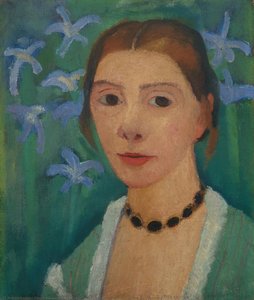
In the delicate dance of Arthur Heygate Mackmurdo’s Floral Pattern, we find a breathtaking intersection where the structured discipline of the Arts and Crafts movement meets the fluid, organic whispers of early Art Nouveau. Created around 1890, this exquisite work serves as more than just a decorative motif; it is a window into a transformative era of design history. The painting presents a mesmerizing tapestry of deep cerulean blues and lush verdant greens, punctuated by the vibrant, rhythmic arrival of crimson berries. Each element is rendered with a meticulousness that speaks to Mackmurdo’s architectural training, yet there is an undeniable softness to the composition, a sense of life breathing through the pigment that invites the viewer into a secret, botanical garden frozen in time.
The technique employed in this piece reveals a master at work, balancing the weight of color with the lightness of line. The artist utilizes varying shades of blue to create a profound sense of atmospheric depth, ensuring that the background is not merely a flat plane but a rich, nocturnal space. Against this cool expanse, the green leaves emerge with a sculptural quality, their edges defined by a careful hand that celebrates the natural geometry of flora. The red berries act as brilliant focal points, scattered across the canvas like precious rubies dropped upon silk. This deliberate use of contrast—the warmth of the red against the coolness of the blue—creates a visual vibration that keeps the eye moving, discovering new clusters and subtle gradients with every glance.
Beyond its aesthetic splendor, the Floral Pattern carries a profound symbolic resonance. During the late 19th century, as industrialization threatened to strip the soul from craftsmanship, Mackmurdo sought to re-enchant the everyday through nature-inspired motifs. The berry and leaf pattern symbolizes fertility, abundance, and the enduring cycle of life. For the modern collector or interior designer, this piece offers a sophisticated way to introduce organic warmth into a contemporary space. It possesses a unique ability to anchor a room, providing a sense of historical prestige while maintaining a timeless elegance that complements both minimalist modernism and classical opulence.
To possess a reproduction of this work is to bring a fragment of the Aesthetic Movement into one's home. It is an invitation to slow down and appreciate the intricate details of the natural world. Whether placed as a centerpiece in a grand salon or as a subtle accent in a private study, Mackmurdo’s vision continues to inspire awe. The emotional impact of the painting lies in its ability to evoke tranquility and wonder, reminding us that even within a structured design, there is room for the wild, beautiful spontaneity of nature to flourish.


1851 - 1942 , Anglija

Immerse yourself in the captivating world of slate blue! Explore 10 iconic paintings by Monet, Van Gogh & Renoir. Discover their stories, techniques & find museum-quality art reproductions for your home at .

Explore the rich history & symbolism of green in art! Discover iconic paintings, techniques, and how to bring verdant harmony into your home with Most-Famous-Paintings's expert guide.

Explore the rich history of blue in art! Discover its symbolism, from ancient pigments to modern masterpieces by Kandinsky & Seurat. Uncover the psychological impact and cultural meanings behind this captivating hue.

Explore 10 iconic paintings where dark olive green reigns supreme! From Van Gogh to Rembrandt, discover art history's most captivating masterpieces & the stories behind them. Find museum-quality reproductions and curated decor ideas at .

Explore 10 famous paintings where 'Chrome Green' reigns supreme! Discover Monet, Manet & Van Gogh’s masterpieces. Learn the stories behind these iconic artworks and find museum-quality art reproductions for your home at .


Sekite naujausias meno naujienas, išskirtinius pasiūlymus ir dekoravimo idėjas.
Pasakokite mums apie savo projektą, o mūsų meno ekspertai parengs jums 3 asmeniškus meno pasiūlymus.
Leiskite mums parinkti 3 variantus būtent jums – nemokamai!


 Peržiūrėti realybėje
 Pasidalinti
 Dalintis
 Išsamiau

 Atsisiųsti
 Panašūs eksponatai
 Rentgeno nuotrauka
 Automatinė diorama
 Skaityti daugiau







 Stiklo variantas prieinamas tik pasirinkus dydį iki 110 cm