x

 Acrylic On CanvasWallArtModern Sculpture
 1971
1971 81.0 x 58.0 cm
 The Hepworth Wakefield
Rankiniu būdu tapytas aliejus ant droblio jūsų pageidaujamame dydį ir rėmuose – mūsų menininkų darbas pagal užsakymą. ( Pirkti spaudinį Pirkti vaizdą)





























Pasirinkite iš mūsų nustatytų dydžių, atitinkančių originalaus meno kūrinio proporcijas.

Galite įvesti savo matmenis, kad jie atitiktų konkretų rėmą ar erdvę. Jei pasirinktas dydis neatitinka originalaus paveikslėlio proporcijų, mes arba apkropsime meno kūrinį, arba papildysime tapybą rankomis dažytい elementais. Prieš pradėdami gamybą, jūsų patvirtinimui atsiųsime skaitmeninį maketą.
Atkreipkite dėmesį, kad ekrane rodomas vaizdas neatspindi tikrojo apkarpymo ar papildymo. Tik maketas tiksliai parodys galutinę kompoziciją.
Nors galima rinktis ir individualius dydžius, rekomenduojame pasirinkti matmenis iš nustatytos sąrašo, kad būtų išlaikytos originalios proporcijos.
Pristatymas visame pasaulyje () per 3–4 savaites, o ne įprastai – per 5 savaites. (20 rugpjūtis). Kokybė lieka nepakeičiama.


Desert Forms
Reprodukcijos matmenys
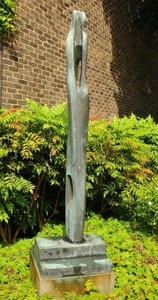
Dame Barbara Hepworth (1903–1975) stands as an icon of British modernism, particularly the sculptural movement that emerged in the mid-20th century. Her work transcends mere representation; it delves into fundamental geometric forms—circles and squares—to convey profound emotional resonance and philosophical contemplation. “Desert Forms,” created in 1971, exemplifies Hepworth’s unwavering commitment to abstraction and her masterful manipulation of material and space.
The artwork itself is a striking monochrome piece executed in bronze. Hepworth meticulously crafted two white circles—one larger than the other—upon a textured yellow background. This seemingly simple composition belies its complexity, reflecting Hepworth’s fascination with exploring the relationship between solid form and negative space. The subtle variations in surface texture contribute to an ethereal quality, mimicking the undulating contours of desert dunes.
Hepworth's approach to sculpture was deeply rooted in her belief that forms should communicate directly with the viewer’s subconscious mind. Influenced by Surrealism and Expressionism, she sought to liberate art from descriptive accuracy, prioritizing instead the conveyance of feeling and intuition. Her method involved carving away material from a block of stone—a process she termed “subtraction”—allowing the inherent form of the stone to guide her artistic vision.
“Desert Forms” speaks powerfully to themes of stillness, contemplation, and resilience. The circular shapes evoke notions of wholeness and cyclical time, mirroring the natural rhythms of the desert landscape. Simultaneously, the textured surface suggests an underlying dynamism—a hidden energy that contrasts with the apparent serenity of the piece. It’s a testament to Hepworth's ability to distill complex ideas into elegant visual forms.
The artwork resides within Tate Britain’s Prints and Drawings Room, offering visitors the opportunity to experience Hepworth’s artistic legacy firsthand. Its enduring appeal lies in its timeless beauty and its capacity to provoke introspection—a reflection of Hepworth's profound engagement with the human condition and her unwavering pursuit of artistic innovation.


1903 - 1975 , Jungtinė Karalystė

Explore the profound impact of Minimalism and Geometric Abstraction. From Mondrian to Malevich, discover how stripping art to its essential forms revolutionized modern aesthetics through our expert-led historical guide.

Explore the profound history of sculpture, from classical realism to modern abstraction. Discover the mastery of form, texture, and medium through an expert art-historical lens designed for discerning collectors and enthusiasts.


Sekite naujausias meno naujienas, išskirtinius pasiūlymus ir dekoravimo idėjas.
Pasakokite mums apie savo projektą, o mūsų meno ekspertai parengs jums 3 asmeniškus meno pasiūlymus.
Leiskite mums parinkti 3 variantus būtent jums – nemokamai!


 Peržiūrėti realybėje
 Pasidalinti
 Dalintis
 Išsamiau

 Atsisiųsti
 Panašūs eksponatai
 Rentgeno nuotrauka
 Automatinė diorama
 Skaityti daugiau







 Stiklo variantas prieinamas tik pasirinkus dydį iki 110 cm