x

Rankiniu būdu tapytas aliejus ant droblio jūsų pageidaujamame dydį ir rėmuose – mūsų menininkų darbas pagal užsakymą. ( Pirkti spaudinį Pirkti vaizdą)





























Pasirinkite iš mūsų nustatytų dydžių, atitinkančių originalaus meno kūrinio proporcijas.

Galite įvesti savo matmenis, kad jie atitiktų konkretų rėmą ar erdvę. Jei pasirinktas dydis neatitinka originalaus paveikslėlio proporcijų, mes arba apkropsime meno kūrinį, arba papildysime tapybą rankomis dažytい elementais. Prieš pradėdami gamybą, jūsų patvirtinimui atsiųsime skaitmeninį maketą.
Atkreipkite dėmesį, kad ekrane rodomas vaizdas neatspindi tikrojo apkarpymo ar papildymo. Tik maketas tiksliai parodys galutinę kompoziciją.
Nors galima rinktis ir individualius dydžius, rekomenduojame pasirinkti matmenis iš nustatytos sąrašo, kad būtų išlaikytos originalios proporcijos.
Pristatymas visame pasaulyje () per 3–4 savaites, o ne įprastai – per 5 savaites. (16 rugpjūtis). Kokybė lieka nepakeičiama.


Yosemite i (2)
Reprodukcijos matmenys
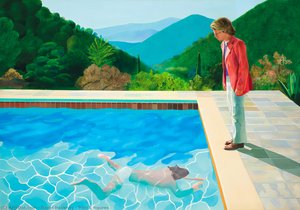
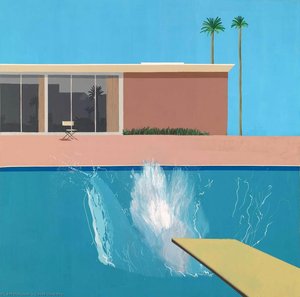
David Hockney's "Pine Forest," created in 1968, stands as a pivotal moment in British art history—a defiant assertion of optimism amidst the bleakness of the Cold War era. More than just a depiction of woodland scenery, it’s an exploration of perception itself, reflecting Hockney’s groundbreaking embrace of aerial perspective and his pioneering use of color theory.
The technique employed was revolutionary for its time. Hockney eschewed traditional methods of blending colors to achieve a luminous effect, opting instead for layering pigments thickly onto the canvas. This impasto technique—creating textured surfaces by applying paint in visible brushstrokes—was inspired by Cézanne’s landscapes and signaled a decisive break from academic conventions.
Historically, “Pine Forest” emerged during a period of significant artistic experimentation in Britain. Hockney’s work aligned with the broader movement toward abstraction and color exploration championed by artists like Matisse and Kandinsky—artists who sought to liberate painting from representational constraints. The piece embodies a spirit of humanist optimism—a belief in the transformative power of art to inspire joy and wonder.
Symbolically, the pine tree itself holds profound significance in Western culture—representing resilience, immortality, and spiritual aspiration. Hockney’s masterful rendering captures this essence, transforming the forest into a visual embodiment of hope and renewal. The vibrant yellow hues on the needles serve as beacons of light, illuminating the darkness and conveying an emotional resonance that transcends mere observation.
Ultimately, “Pine Forest” remains a testament to Hockney's genius—a captivating artwork that invites contemplation and inspires awe. Its textured surface, luminous colors, and bold simplification continue to captivate audiences worldwide, cementing its place as one of the most influential paintings of the 1960s.


1937 - , Jungtinė Karalystė
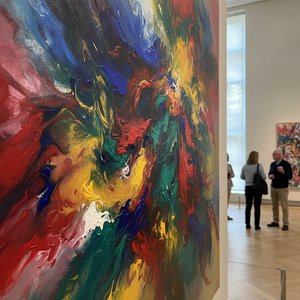
Explore the profound emotional depth of Lyrical Abstraction. Discover how masters like Raymond Parker used color and form to bridge Impressionism and Abstract Expressionism. Learn about this pivotal movement through our expert-led art history guide.


Sekite naujausias meno naujienas, išskirtinius pasiūlymus ir dekoravimo idėjas.
Pasakokite mums apie savo projektą, o mūsų meno ekspertai parengs jums 3 asmeniškus meno pasiūlymus.
Leiskite mums parinkti 3 variantus būtent jums – nemokamai!


 Peržiūrėti realybėje
 Pasidalinti
 Dalintis
 Išsamiau

 Atsisiųsti
 Panašūs eksponatai
 Rentgeno nuotrauka
 Automatinė diorama
 Skaityti daugiau







 Stiklo variantas prieinamas tik pasirinkus dydį iki 110 cm