x

Muziejų lygio „giclée“ arba drobos spausdinimas: greita gamyba ir lankstios apdailos parinktys. ( Pirkti rankomis tapytą paveikslą Pirkti vaizdą)





























Pasirinkite iš mūsų nustatytų dydžių, atitinkančių originalaus meno kūrinio proporcijas.

Galite nurodyti savo matmenis, kad vaizdas atitiktų konkretų rėmą ar erdvę. Jei pasirinktas dydis nesutaps su originalaus paveikslėlio proporcijomis, mes arba apkirpsime kūrinį, arba išplėsime vaizdą naudojant veideliu atspindėtą arba vientisą šoną. Skaitmeninis maketas bus išsiųstas jums patvirtinti prieš pradedant gamybą.
Atkreipkite dėmesį, kad ekrane matomas vaizdinys neatspindi tikrojo apkirpimo ar išplėtimo. Tik maketas tiksliai parodytų galutinę kompoziciją.
Nors galima rinktis ir individualius dydžius, rekomenduojame pasirinkti vieną iš išanksti nustatytų matmenų, kad būtų išlaikytos originalios proporcijos.
Pristatymas visame pasaulyje () per 2 weeks, o ne įprastas 4/5 savaičių laikotarpis. (18 rugpjūtis)


The Murderess
Reprodukcijos matmenys
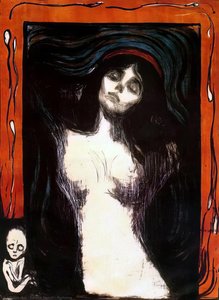
In the hauntingly evocative masterpiece “The Murderess,” completed in 1906, Edvard Munch invites the viewer into a psychological landscape where the boundaries between reality and nightmare begin to dissolve. This work stands as a profound pillar of the Symbolist movement, transcending mere portraiture to become an embodiment of existential dread. Rather than capturing a fleeting moment of light or a simple social gathering, Munch delves into the pervasive darkness that lurks beneath the surface of everyday existence. The painting serves as a visual distillation of his own deep-seated anxieties regarding mortality and the fragility of the human psyche, making it a captivating piece for those who appreciate art that challenges the soul.
The composition is masterfully arranged to evoke a sense of profound unease. At the heart of the scene sits a woman, her figure rendered in profile with a gaze deliberately averted from the observer. This subtle gesture creates an immediate sense of isolation and vulnerability, as if she is trapped within her own unspoken secrets. Flanking her are two other figures, positioned near chairs arranged for a social gathering, yet their presence feels heavy with silent complicity. The room itself, bathed in a jarring, sickly yellowish hue, creates a visual dissonance that mirrors the psychological turmoil of the subjects. A pristine white vase stands prominently near the center, its stark clarity contrasting sharply with the surrounding shadows, adding an unsettling layer of tension to the domestic setting.
Munch’s technical execution in “The Murderess” is a triumph of early Expressionism. Eschewing the delicate, light-filled brushwork of the Impressionists, Munch utilized a much more visceral approach. He employed thick impasto—a heavy, tactile application of paint—to create a surface that feels physically palpable and emotionally charged. The texture of the canvas itself seems to vibrate with the artist's agitation. His palette is intentionally discordant; bold, aggressive strokes of yellow dominate the background, clashing against muted browns and deep blacks. This use of color is not decorative but functional, designed to trigger a visceral emotional response in the viewer.
For collectors and interior designers, this painting offers a powerful focal point that commands attention through its sheer emotional weight. The distorted forms and heavy textures provide a sophisticated depth that elevates any space, turning a room into a gallery of contemplation. To possess a reproduction of such a work is to bring a piece of art history’s most profound psychological explorations into one's personal environment.
To understand the gravity of “The Murderess,” one must look to the intellectual ferment of early 20th-century Europe. The painting emerged during an era defined by the shattering of traditional certainties, most notably following Nietzsche’s provocative declaration that "God is dead." This cultural shift toward uncertainty and the questioning of established moral frameworks is etched into every stroke of Munch's brush. The artist himself was a man haunted by personal demons—the loss of his mother and sister to tuberculosis, and the shadow of mental illness within his family—all of which informed his preoccupation with themes of guilt, repression, and the darker aspects of human nature.
Every element in the room serves as a symbol for the unseen. The way the figures are positioned suggests a world of suppressed emotions and unspoken truths, where the domestic sphere is not a place of comfort, but a stage for psychological drama. For the discerning art lover, “The Murderess” is more than a painting; it is an invitation to explore the complexities of the human condition, making it an enduringly relevant and breathtaking addition to any serious collection.


1863 - 1944 , Švedija

Explore the profound history and technical mastery of woodcut relief printing. From ancient origins to German Expressionism, discover how artists use the subtractive process to create iconic works. A definitive guide for art students, collectors, and historians.


Sekite naujausias meno naujienas, išskirtinius pasiūlymus ir dekoravimo idėjas.
Pasakokite mums apie savo projektą, o mūsų meno ekspertai parengs jums 3 asmeniškus meno pasiūlymus.
Leiskite mums parinkti 3 variantus būtent jums – nemokamai!


 Peržiūrėti realybėje
 Pasidalinti
 Dalintis
 Išsamiau

 Atsisiųsti
 Panašūs eksponatai
 Rentgeno nuotrauka
 Automatinė diorama

 Skaityti daugiau







 Stiklo variantas prieinamas tik pasirinkus dydį iki 110 cm