x

 Giclée PrintDigitalContemporary Realism
 1922Modern
 20.0 x 24.0 cm
Muziejų lygio „giclée“ arba drobos spausdinimas: greita gamyba ir lankstios apdailos parinktys. ( Pirkti rankomis tapytą paveikslą Pirkti vaizdą)
Pasirinkite iš mūsų nustatytų dydžių, atitinkančių originalaus meno kūrinio proporcijas.

Galite nurodyti savo matmenis, kad vaizdas atitiktų konkretų rėmą ar erdvę. Jei pasirinktas dydis nesutaps su originalaus paveikslėlio proporcijomis, mes arba apkirpsime kūrinį, arba išplėsime vaizdą naudojant veideliu atspindėtą arba vientisą šoną. Skaitmeninis maketas bus išsiųstas jums patvirtinti prieš pradedant gamybą.
Atkreipkite dėmesį, kad ekrane matomas vaizdinys neatspindi tikrojo apkirpimo ar išplėtimo. Tik maketas tiksliai parodytų galutinę kompoziciją.
Nors galima rinktis ir individualius dydžius, rekomenduojame pasirinkti vieną iš išanksti nustatytų matmenų, kad būtų išlaikytos originalios proporcijos.
Pristatymas visame pasaulyje () per 2 weeks, o ne įprastas 4/5 savaičių laikotarpis. (14 rugpjūtis)


East Side Interior
Reprodukcijos matmenys
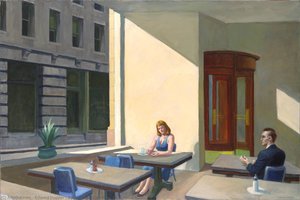
Edward Hopper’s “East Side Interior,” rendered in 1922, is more than just a depiction of a room; it’s a distilled essence of American loneliness and the poignant beauty found within moments of solitary contemplation. This meticulously crafted black and white drawing captures a scene brimming with understated drama – a woman seated by a window, lost in observation, surrounded by the quiet formality of an upper-class dining space. The image immediately evokes a sense of detachment, a feeling that is central to Hopper’s enduring appeal and a hallmark of American art during the early 20th century.
Hopper's technique in “East Side Interior” is characterized by a precise realism, honed through his training under William Merritt Chase. The drawing showcases a remarkable attention to detail – the texture of the fabric on the chairs, the sheen of the vase, the subtle variations in light and shadow. This meticulous approach isn’t merely about accurate representation; it's about capturing the *essence* of the scene, imbuing it with a palpable sense of atmosphere. Hopper’s style aligns perfectly with the broader Realist movement, but he elevates it through his ability to convey complex emotional states within seemingly simple compositions.
The use of black and white further intensifies the drawing's impact, stripping away any distractions and focusing attention on form, light, and shadow. This monochrome palette contributes significantly to the artwork’s melancholic mood, a signature element of Hopper’s oeuvre.
"East Side Interior" was created during a period of significant social and cultural change in America – the rise of industrialization, urbanization, and increasing mobility. Hopper's work reflects this shift by portraying individuals grappling with feelings of alienation and displacement within modern urban environments. The dining room itself can be interpreted as a symbol of domesticity and tradition, yet the woman’s solitary presence suggests a disconnect from these values. The clock, a recurring motif in Hopper’s art, adds another layer of symbolism – a reminder of the relentless passage of time and the inevitability of mortality.
“East Side Interior” resonates with viewers precisely because it taps into universal human emotions – loneliness, contemplation, and a yearning for connection. Hopper’s ability to evoke these feelings through seemingly mundane scenes is what has cemented his place as one of America's most important artists. This drawing exemplifies the quiet power of Hopper’s vision, offering a timeless meditation on the complexities of modern life and the enduring human need for solace and understanding. Its compact size (20 x 24 cm) makes it an ideal addition to any collection or interior space, providing a constant reminder of Hopper's profound insights.


1931 - 1967 , JAV

Explore the profound artistry of black and white photography. From the chemistry of gelatin silver to the chiaroscuro of the Old Masters, discover how monochrome captures the eternal essence of light, form, and emotion for the discerning art collector.


Sekite naujausias meno naujienas, išskirtinius pasiūlymus ir dekoravimo idėjas.
Pasakokite mums apie savo projektą, o mūsų meno ekspertai parengs jums 3 asmeniškus meno pasiūlymus.
Leiskite mums parinkti 3 variantus būtent jums – nemokamai!


 Pasidalinti
 Dalintis
 Išsamiau

 Atsisiųsti
 Panašūs eksponatai
 Automatinė diorama
 Skaityti daugiau




































 Stiklo variantas prieinamas tik pasirinkus dydį iki 110 cm