


x

Muziejų lygio „giclée“ arba drobos spausdinimas: greita gamyba ir lankstios apdailos parinktys. ( Pirkti rankomis tapytą paveikslą Pirkti vaizdą)





























Pasirinkite iš mūsų nustatytų dydžių, atitinkančių originalaus meno kūrinio proporcijas.

Galite nurodyti savo matmenis, kad vaizdas atitiktų konkretų rėmą ar erdvę. Jei pasirinktas dydis nesutaps su originalaus paveikslėlio proporcijomis, mes arba apkirpsime kūrinį, arba išplėsime vaizdą naudojant veideliu atspindėtą arba vientisą šoną. Skaitmeninis maketas bus išsiųstas jums patvirtinti prieš pradedant gamybą.
Atkreipkite dėmesį, kad ekrane matomas vaizdinys neatspindi tikrojo apkirpimo ar išplėtimo. Tik maketas tiksliai parodytų galutinę kompoziciją.
Nors galima rinktis ir individualius dydžius, rekomenduojame pasirinkti vieną iš išanksti nustatytų matmenų, kad būtų išlaikytos originalios proporcijos.
Pristatymas visame pasaulyje () per 2 weeks, o ne įprastas 4/5 savaičių laikotarpis. (24 rugpjūtis)


Stepsin Paris
Reprodukcijos matmenys
Edward Hopper’s "Steps in Paris," painted in 1906, is far more than a mere depiction of an architectural element; it is a masterful distillation of the anxieties and aspirations inherent in the early 20th-century consciousness. Executed in oil on wood—a medium favored by the artist for its unique ability to capture subtle tonal variations—the painting embodies a signature style where stark realism is infused with an almost palpable sense of solitude. Upon first encounter, the viewer is drawn into a meticulously crafted scene, dominated by muted, earthy hues and punctuated by the assertive red railing that bisects the composition diagonally, acting as both a visual guide and a sharp emotional accent.
The staircase itself serves as a profound visual anchor, guiding the eye upward through the frame while simultaneously emphasizing the heavy emptiness surrounding it. Hopper utilizes light—emanating from an unseen source—to sculpt the forms within the painting, highlighting the contours of the stone steps and casting long, melancholic shadows that deepen the sense of stillness. The presence of two figures adds a layer of narrative tension: a man positioned near the top gazing out of a window, representing an individual adrift in the bustling city, and another figure descending the stairs, offering a fleeting glimpse of companionship that is ultimately overshadowed by the pervasive atmosphere of isolation.
Hopper’s technical prowess is evident in his precise brushstrokes and careful blending, which create textures that feel both tactile and luminous. While the painting leans into the traditions of New Realism, it transcends simple documentation through its atmospheric suggestion. The palette, dominated by browns, grays, and the striking red of the railing, contributes to an overall mood of quiet contemplation. This careful manipulation of color and light allows the artwork to function as a window into a psychological landscape, where the physical structure of the Parisian stairs becomes a metaphor for the transitions and thresholds of human life.
For the discerning collector or interior designer, this piece offers a sophisticated focal point that brings a sense of timelessness and intellectual depth to any space. The composition’s balance between movement—suggested by the diagonal railing and the descending figure—and profound stillness makes it an ideal selection for environments seeking to evoke introspection. Whether placed in a modern gallery setting or a classic study, "Steps in Paris" commands attention through its ability to tell a story without words, inviting viewers to linger within its shadows and find beauty in the quiet moments of urban existence.


1931 - 1967 , JAV
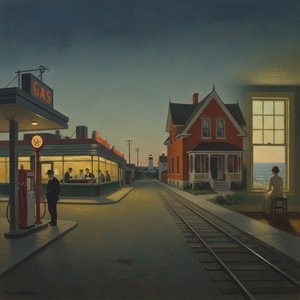
Atraskite 25 ikoninius Edward Hopper paveikslus! Gilinkitės į amerikietiškojo realizmo šedevrus, spalvų žaidimą ir interjero dekoravimo idėjas. Aliejinės tapybos meistras – Most-Famous-Paintings.com kolekcijoje. Explore the full collection online!
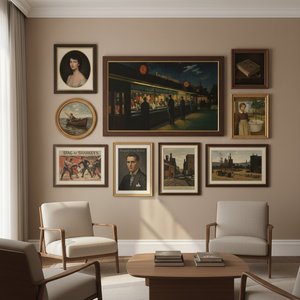
Explore 10 defining American Realism masterpieces – Hopper, Homer & more. Discover the stories behind these iconic paintings and bring timeless art to your home with Most-Famous-Paintings's museum-quality reproductions. Explore the full collection online.

Explore the profound beauty of American Realism. From the Ashcan School's urban grit to intimate portraits, discover how artists captured the authentic soul of a nation through unvarnished truth and masterful observation.

Explore the powerful social commentary & artistic representation of American Realism. Discover key artists like Bellows & Sloan, and understand the movement's lasting impact on 20th-century art history.

Explore the life & legacy of Robert Henri, a pivotal figure in American Realism. Discover his captivating portraits, influence on the Ashcan School, and enduring impact on art history. Learn more at Most-Famous-Paintings.


Sekite naujausias meno naujienas, išskirtinius pasiūlymus ir dekoravimo idėjas.
Pasakokite mums apie savo projektą, o mūsų meno ekspertai parengs jums 3 asmeniškus meno pasiūlymus.
Leiskite mums parinkti 3 variantus būtent jums – nemokamai!


 Peržiūrėti realybėje
 Pasidalinti
 Dalintis
 Išsamiau

 Atsisiųsti
 Panašūs eksponatai
 Rentgeno nuotrauka
 Automatinė diorama

 Skaityti daugiau







 Stiklo variantas prieinamas tik pasirinkus dydį iki 110 cm


