x

Rankiniu būdu tapytas aliejus ant droblio jūsų pageidaujamame dydį ir rėmuose – mūsų menininkų darbas pagal užsakymą. ( Pirkti spaudinį Pirkti vaizdą)





























Pasirinkite iš mūsų nustatytų dydžių, atitinkančių originalaus meno kūrinio proporcijas.

Galite įvesti savo matmenis, kad jie atitiktų konkretų rėmą ar erdvę. Jei pasirinktas dydis neatitinka originalaus paveikslėlio proporcijų, mes arba apkropsime meno kūrinį, arba papildysime tapybą rankomis dažytい elementais. Prieš pradėdami gamybą, jūsų patvirtinimui atsiųsime skaitmeninį maketą.
Atkreipkite dėmesį, kad ekrane rodomas vaizdas neatspindi tikrojo apkarpymo ar papildymo. Tik maketas tiksliai parodys galutinę kompoziciją.
Nors galima rinktis ir individualius dydžius, rekomenduojame pasirinkti matmenis iš nustatytos sąrašo, kad būtų išlaikytos originalios proporcijos.
Pristatymas visame pasaulyje () per 3–4 savaites, o ne įprastai – per 5 savaites. (18 rugpjūtis). Kokybė lieka nepakeičiama.


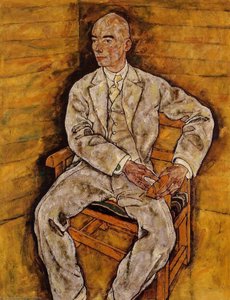
Sarena Lederer
Reprodukcijos matmenys
Egon Schiele’s 1917 painting, “Sarena Lederer,” is not merely a portrait; it's a carefully constructed distillation of introspection and subtle emotion. Rendered in delicate watercolor on paper, the work immediately draws the viewer into a world of quiet contemplation—a space where the subject’s gaze meets our own with an almost unnerving directness. The painting captures Sarena Lederer, a prominent figure in Vienna's cultural circles during the early 20th century and a close friend and patron of Schiele and Klimt, at a pivotal moment in her life. It’s a study in restraint, revealing far more about the artist’s psychological landscape than a conventional likeness might offer.
Schiele's signature style—characterized by elongated figures, sharp angles, and an intense use of line—is powerfully evident here. The composition is remarkably simple: Sarena Lederer sits poised, her hands gently clasped in front of her as if lost in thought. Her short hair frames a face marked by a thoughtful expression, hinting at a depth of feeling beyond the surface. Notice how Schiele doesn’t shy away from depicting the subtle lines of age and experience—the slight furrow between her brows, the delicate wrinkles around her eyes—adding layers of complexity to the portrait. The muted color palette – primarily browns, grays, and hints of red – contributes significantly to the painting's somber yet captivating mood.
Created during a period marked by personal tragedy for Schiele—the loss of his father and sister— “Sarena Lederer” resonates with themes of mortality and vulnerability. The artist’s own struggles with illness, grief, and a profound awareness of human fragility are palpable in the painting's atmosphere. Yet, despite this underlying melancholy, there is also an undeniable sense of intimacy. Schiele doesn’t present Sarena as an object of idealized beauty; instead, he invites us to share in her quiet moment of reflection. The directness of her gaze suggests a connection—a silent exchange between the artist and his subject.
The painting's historical context is crucial to understanding its deeper meaning. Vienna at the turn of the 20th century was a city undergoing rapid social, political, and artistic change. The rise of Expressionism, with its focus on subjective experience and emotional intensity, provided a framework for Schiele’s unique vision. His work reflected the anxieties and uncertainties of the era—the looming threat of war, the decline of traditional values, and the growing awareness of psychological complexities.
Schiele's masterful use of watercolor allows him to create a remarkably luminous effect, capturing the subtle nuances of light and shadow. The loose brushstrokes contribute to the painting’s sense of immediacy and spontaneity—as if we are witnessing a fleeting moment captured on paper. The composition itself is carefully balanced, with Sarena occupying the central space and drawing our attention directly to her face. Notice how Schiele uses line not just to define form but also to convey emotion—the sharp angles of her features reflecting an inner tension.
While the painting lacks overt symbolism, it’s filled with subtle visual cues that invite interpretation. The closed hands suggest a desire for introspection or perhaps a longing for connection. The muted color palette reinforces the mood of quiet contemplation and hints at the underlying sadness within the portrait. The overall effect is one of profound psychological depth—a testament to Schiele's ability to capture the complexities of human experience on canvas.
Most-Famous-Paintings offers meticulously crafted, hand-painted reproductions of Egon Schiele’s “Sarena Lederer,” allowing you to bring this iconic work into your home or office. Our skilled artists replicate the painting's delicate brushwork, nuanced color palette, and evocative atmosphere with exceptional precision. Whether you are an art collector, a design enthusiast, or simply someone who appreciates beautiful artwork, our reproduction provides a stunning tribute to Schiele’s genius.
Explore our high-resolution images and select the perfect size and framing option for your space. Each reproduction is created on archival-quality materials, ensuring that it will retain its beauty and vibrancy for generations to come. Don't miss this opportunity to own a piece of art history—a window into the soul of Egon Schiele and the captivating world he so brilliantly portrayed.

Austrijos pozicija dviejų pasaulinio karo horizonte buvo labai abejojanti: vienu metu ji buvo šiek tiek iš Šiaurės į rytus, lengvai įsitikinusi veiksmų vyrai. Mažėjęs šalis po 1918 m., beveik visiškai neišplitusi tarptautiniu pasauliu buvo lengvai įvykdinta Hitlerio Reichui 1938 m.; meno srityje tai reiškė kad modernizmo istorija buvo išvykstanti nuo Šiaurės iki pietų, su pagrindiniu dėmesiu į formą. Vokelių šiek tiek pripažino ekspresionizmą kaip svarbų meno srovę; jis buvo vienas iš žymiausius austrių artistas XX amžiaus pradžioje – kartu su Gustavu Klimtu ir Oskar Kokoschka išvykę į Vieną buvo laikomas vienu iš Žyduvo šimtmečio svarbiausių vizualinių menininkų.
Egonas Šylė gimė 1890 m. vasario 3 d. Tulne, Austrijoje. Jo tėvas Adolfas Šylė buvo Tulno geležinkelio stoties direktorius ir gimė 1851 m. Vienoje Adolfo Šyly tevai turėjo tris jaunesnes seseris: Elvirą, Melaniją ir Gertrūdą. Elvira mirė vaikyste dėl gimtinių sifiliso. Jo tėvas buvo užsikrėtęs sifiliu įsimėlynėje savo jaunystės metais po vienos jo naujosios žmonos išėjimo iš kambario.
Šylė mokytojo Christian Griepenkerl įtaką išgyveno Vienoje 1907 m. ir G. Klimtas tapo jo svarbiu rėmėju. Šylė paliko akademiją 1906 m., nes jos mokymo metodai buvo labai konservatyvus, ir įkūrė Naują austrių dailės grupę 1909 m. Grupėje vyravo ekspresionistinė estetika, kuri iššūkiant šiuolaikinėms kultūros normas.
Šylė buvo vienas iš žymiausius austrių artistas XX amžiaus pradžioje – kartu su Gustavu Klimtu ir Oskar Kokoschka išvykę į Vieną buvo laikomas vienu iš Žyduvo šimtmečio svarbiausių vizualinių menininkų. Šylė buvo ekspresionizmo meno srovės atstovas.
Šylė buvo žinomas dėl savo iššūkiantį įžiūrą į pasaulio problemas ir šiuolaikinę estetika, kuri iššūkiant šiuolaikinėms kultūros normas. Šylė buvo ekspresionizmo meno srovės atstovas.
1890 - 1918 , Austrija

Explore the profound history and technical mastery of watercolor painting. From medieval manuscripts to the luminous works of John Singer Sargent, discover how artists capture light and transparency through this delicate, enduring medium.

Explore the profound history of Expressionism. From Edvard Munch to Jackson Pollock, discover how artists used distortion and color to convey raw emotion. A definitive guide for art lovers seeking deep historical context and mastery in fine art reproductions.

Explore the profound history of Surrealist Expressionism. Discover how artists blended dream logic with raw emotion to navigate post-war trauma through masterful, evocative imagery and psychological depth.


Sekite naujausias meno naujienas, išskirtinius pasiūlymus ir dekoravimo idėjas.
Pasakokite mums apie savo projektą, o mūsų meno ekspertai parengs jums 3 asmeniškus meno pasiūlymus.
Leiskite mums parinkti 3 variantus būtent jums – nemokamai!


 Peržiūrėti realybėje
 Pasidalinti
 Dalintis
 Išsamiau

 Atsisiųsti
 Panašūs eksponatai
 Rentgeno nuotrauka
 Automatinė diorama

 Skaityti daugiau







 Stiklo variantas prieinamas tik pasirinkus dydį iki 110 cm