x

Rankiniu būdu tapytas aliejus ant droblio jūsų pageidaujamame dydį ir rėmuose – mūsų menininkų darbas pagal užsakymą. ( Pirkti spaudinį Pirkti vaizdą)





























Pasirinkite iš mūsų nustatytų dydžių, atitinkančių originalaus meno kūrinio proporcijas.

Galite įvesti savo matmenis, kad jie atitiktų konkretų rėmą ar erdvę. Jei pasirinktas dydis neatitinka originalaus paveikslėlio proporcijų, mes arba apkropsime meno kūrinį, arba papildysime tapybą rankomis dažytい elementais. Prieš pradėdami gamybą, jūsų patvirtinimui atsiųsime skaitmeninį maketą.
Atkreipkite dėmesį, kad ekrane rodomas vaizdas neatspindi tikrojo apkarpymo ar papildymo. Tik maketas tiksliai parodys galutinę kompoziciją.
Nors galima rinktis ir individualius dydžius, rekomenduojame pasirinkti matmenis iš nustatytos sąrašo, kad būtų išlaikytos originalios proporcijos.
Pristatymas visame pasaulyje () per 3–4 savaites, o ne įprastai – per 5 savaites. (13 rugpjūtis). Kokybė lieka nepakeičiama.


Sunflowers 2
Reprodukcijos matmenys
In the hauntingly beautiful realm of Austrian Expressionism, few works capture the visceral tension between life and mortality as poignantly as Egon Schiele’s "Sunflowers 2." Painted during the turbulent years of 1917-18, this masterpiece transcends a mere botanical study to become a profound psychological landscape. At first glance, the viewer is met with a dense, vibrant arrangement of sunflowers, yet a closer gaze reveals a narrative far more complex than simple floral beauty. Schiele presents us with a composition where the vitality of the blooms is inextricably linked to the unsettling presence of decay. The petals appear fragmented and brittle, almost as if they might crumble at a touch, mirroring the fragile nature of existence itself. Amidst this botanical drama, a solitary bird perches delicately, acting as a silent witness to the cyclical dance of growth and dissolution that defines the natural world.
The emotional weight of the piece is anchored by Schiele’s masterful use of Expressionist technique. Eschewing the soft, light-drenched aesthetics of the Impressionists, Schiele utilized bold, angular lines to carve emotion directly into the canvas. His brushwork is far from smooth; instead, he employs a heavy impasto, applying thick layers of oil paint that lend a rugged, tactile quality to the sunflowers. This textural depth creates a sense of movement and unrest, as if the very surface of the painting is breathing with the artist's inner turmoil. The color palette—a sophisticated interplay of muted greens, earthy browns, and sudden bursts of golden yellow—serves to heighten the atmospheric tension, making the artwork feel less like a static image and more like a living, breathing entity caught in a moment of existential reflection.
To understand "Sunflowers 2" is to understand the psyche of Egon Schiele himself. Living through an era marked by the shadows of World War I and personal loss, Schiele infused his subjects with a sense of profound isolation and vulnerability. The sunflowers, while traditionally symbols of adoration and longevity, are reinterpreted here through a lens of memento mori. They represent the beauty found within the ephemeral; they are magnificent even as they wilt. This preoccupation with the intersection of eros and death—a recurring theme in Schiele's oeuvre—is palpable in every jagged stroke. The painting invites collectors and enthusiasts to contemplate the unsettling truth that beauty is often most profound when it is most fleeting.
For the discerning interior designer or art collector, this piece offers more than just visual splendor; it provides a focal point of deep intellectual and emotional resonance. A high-quality reproduction of "Sunflowers 2" brings a sophisticated, avant-garde energy to any space, acting as a conversation piece that challenges the viewer to look beneath the surface. Whether placed in a contemporary gallery setting or a classic study, the painting’s raw intensity and masterful command of form command attention, offering a timeless window into one of the most transformative periods in art history.
Austrijos pozicija dviejų pasaulinio karo horizonte buvo labai abejojanti: vienu metu ji buvo šiek tiek iš Šiaurės į rytus, lengvai įsitikinusi veiksmų vyrai. Mažėjęs šalis po 1918 m., beveik visiškai neišplitusi tarptautiniu pasauliu buvo lengvai įvykdinta Hitlerio Reichui 1938 m.; meno srityje tai reiškė kad modernizmo istorija buvo išvykstanti nuo Šiaurės iki pietų, su pagrindiniu dėmesiu į formą. Vokelių šiek tiek pripažino ekspresionizmą kaip svarbų meno srovę; jis buvo vienas iš žymiausius austrių artistas XX amžiaus pradžioje – kartu su Gustavu Klimtu ir Oskar Kokoschka išvykę į Vieną buvo laikomas vienu iš Žyduvo šimtmečio svarbiausių vizualinių menininkų.
Egonas Šylė gimė 1890 m. vasario 3 d. Tulne, Austrijoje. Jo tėvas Adolfas Šylė buvo Tulno geležinkelio stoties direktorius ir gimė 1851 m. Vienoje Adolfo Šyly tevai turėjo tris jaunesnes seseris: Elvirą, Melaniją ir Gertrūdą. Elvira mirė vaikyste dėl gimtinių sifiliso. Jo tėvas buvo užsikrėtęs sifiliu įsimėlynėje savo jaunystės metais po vienos jo naujosios žmonos išėjimo iš kambario.
Šylė mokytojo Christian Griepenkerl įtaką išgyveno Vienoje 1907 m. ir G. Klimtas tapo jo svarbiu rėmėju. Šylė paliko akademiją 1906 m., nes jos mokymo metodai buvo labai konservatyvus, ir įkūrė Naują austrių dailės grupę 1909 m. Grupėje vyravo ekspresionistinė estetika, kuri iššūkiant šiuolaikinėms kultūros normas.
Šylė buvo vienas iš žymiausius austrių artistas XX amžiaus pradžioje – kartu su Gustavu Klimtu ir Oskar Kokoschka išvykę į Vieną buvo laikomas vienu iš Žyduvo šimtmečio svarbiausių vizualinių menininkų. Šylė buvo ekspresionizmo meno srovės atstovas.
Šylė buvo žinomas dėl savo iššūkiantį įžiūrą į pasaulio problemas ir šiuolaikinę estetika, kuri iššūkiant šiuolaikinėms kultūros normas. Šylė buvo ekspresionizmo meno srovės atstovas.
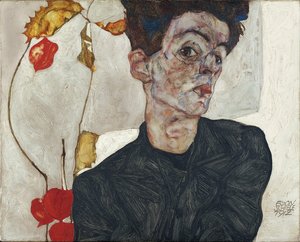
1890 - 1918 , Austrija

Explore the profound history of Expressionism. From Edvard Munch to Jackson Pollock, discover how artists used distortion and color to convey raw emotion. A definitive guide for art lovers seeking deep historical context and mastery in fine art reproductions.

Explore the profound history of Surrealist Expressionism. Discover how artists blended dream logic with raw emotion to navigate post-war trauma through masterful, evocative imagery and psychological depth.

Explore the profound emotional depth of Expressionist portraiture. From Edvard Munch to Francis Bacon, discover how masters used distortion and color to reveal inner truths. Learn about this pivotal movement and find museum-quality oil reproductions for your collection.
Explore the profound depth of Figurative Expressionism. From Edvard Munch to William H. Johnson, learn how masters use the human form to capture raw emotion through color and distortion in this expert art history guide.


Sekite naujausias meno naujienas, išskirtinius pasiūlymus ir dekoravimo idėjas.
Pasakokite mums apie savo projektą, o mūsų meno ekspertai parengs jums 3 asmeniškus meno pasiūlymus.
Leiskite mums parinkti 3 variantus būtent jums – nemokamai!


 Peržiūrėti realybėje
 Pasidalinti
 Dalintis
 Išsamiau

 Atsisiųsti
 Panašūs eksponatai
 Rentgeno nuotrauka
 Automatinė diorama

 Skaityti daugiau







 Stiklo variantas prieinamas tik pasirinkus dydį iki 110 cm