


x

Muziejų lygio „giclée“ arba drobos spausdinimas: greita gamyba ir lankstios apdailos parinktys. ( Pirkti rankomis tapytą paveikslą Pirkti vaizdą)





























Pasirinkite iš mūsų nustatytų dydžių, atitinkančių originalaus meno kūrinio proporcijas.

Galite nurodyti savo matmenis, kad vaizdas atitiktų konkretų rėmą ar erdvę. Jei pasirinktas dydis nesutaps su originalaus paveikslėlio proporcijomis, mes arba apkirpsime kūrinį, arba išplėsime vaizdą naudojant veideliu atspindėtą arba vientisą šoną. Skaitmeninis maketas bus išsiųstas jums patvirtinti prieš pradedant gamybą.
Atkreipkite dėmesį, kad ekrane matomas vaizdinys neatspindi tikrojo apkirpimo ar išplėtimo. Tik maketas tiksliai parodytų galutinę kompoziciją.
Nors galima rinktis ir individualius dydžius, rekomenduojame pasirinkti vieną iš išanksti nustatytų matmenų, kad būtų išlaikytos originalios proporcijos.
Pristatymas visame pasaulyje () per 2 weeks, o ne įprastas 4/5 savaičių laikotarpis. (23 rugpjūtis)


Woodland Prayer
Reprodukcijos matmenys
In the hauntingly beautiful oeuvre of Egon Schiele, few works capture the intersection of spiritual longing and earthly texture as profoundly as “Woodland Prayer.” Completed in 1915, this monumental oil on canvas serves as a visceral window into the soul of an artist who lived at the precipice of modernity. To gaze upon this piece is to enter a realm where the boundaries between the human spirit and the natural world dissolve. Schiele, a master of Austrian Expressionism, does not merely depict a scene; he invites the viewer into a psychological landscape, meticulously crafted to convey profound spiritual contemplation alongside the raw, unshielded beauty of the forest.
The painting presents an intricate, almost labyrinthine view of a church interior and its surrounding architecture, where every corner holds a story. The walls are adorned with numerous paintings of figures and sacred scenes, creating a dense tapestry of iconography that mirrors the complexity of human belief. As the eye wanders through the ornate design and past the statues that guard the exterior, one feels the weight of history and the presence of the divine. For the discerning collector or interior designer, this artwork offers a centerpiece of immense depth, providing a focal point that commands attention through its sheer narrative richness and visual complexity.
Schiele’s technical mastery in “Woodland Prayer” lies in his rejection of academic perfection in favor of emotional truth. Moving away from the polished finishes of traditional portraiture, he employs thick impasto brushstrokes that lend a palpable sense of texture and dynamism to the canvas. This tactile quality makes the artwork feel alive, as if the very pigment is vibrating with the nervous energy characteristic of his style. The artist’s manipulation of color is equally masterful; he utilizes a palette of muted greens and earthy browns to establish a serene, grounded backdrop, which is then brilliantly punctuated by sudden, unexpected flashes of vibrant reds and yellows.
This deliberate use of contrast serves to heighten the painting's emotive power. The interplay between the somber tones of the woodland and the brilliant highlights within the church interior creates a rhythmic tension, guiding the viewer’s gaze through the composition. For those seeking to incorporate fine art into a sophisticated living space, the textural richness of this piece provides a sensory experience that transcends mere decoration, offering a sophisticated layer of movement and light to any curated environment.
To understand “Woodland Prayer,” one must consider the turbulent Vienna of 1915. Schiele was working in a city grappling with the seismic shifts of the waning Austro-Hungarian Empire and the burgeoning psychological revelations of Sigmund Freud. The painting reflects this era of profound anxiety and intellectual ferment. It is not simply a depiction of a religious structure, but a reflection of a generation wrestling with questions of identity, morality, and the fragility of existence. The church becomes a symbol of sanctuary amidst societal upheaval, a place where the individual seeks refuge from the encroaching shadows of a world at war.
The symbolism within the work is layered and deeply personal. Schiele’s preoccupation with mortality—a theme fueled by the early loss of his father—is subtly woven into the very fabric of the landscape. The "prayer" suggested by the title is not just a religious act, but an existential plea for meaning in a transient world. This profound emotional resonance makes “Woodland Prayer” more than a beautiful object; it is a piece of intellectual history. Owning a high-quality reproduction of such a masterpiece allows one to possess a fragment of this historical dialogue, bringing the transformative power of Expressionism into the modern home.

Austrijos pozicija dviejų pasaulinio karo horizonte buvo labai abejojanti: vienu metu ji buvo šiek tiek iš Šiaurės į rytus, lengvai įsitikinusi veiksmų vyrai. Mažėjęs šalis po 1918 m., beveik visiškai neišplitusi tarptautiniu pasauliu buvo lengvai įvykdinta Hitlerio Reichui 1938 m.; meno srityje tai reiškė kad modernizmo istorija buvo išvykstanti nuo Šiaurės iki pietų, su pagrindiniu dėmesiu į formą. Vokelių šiek tiek pripažino ekspresionizmą kaip svarbų meno srovę; jis buvo vienas iš žymiausius austrių artistas XX amžiaus pradžioje – kartu su Gustavu Klimtu ir Oskar Kokoschka išvykę į Vieną buvo laikomas vienu iš Žyduvo šimtmečio svarbiausių vizualinių menininkų.
Egonas Šylė gimė 1890 m. vasario 3 d. Tulne, Austrijoje. Jo tėvas Adolfas Šylė buvo Tulno geležinkelio stoties direktorius ir gimė 1851 m. Vienoje Adolfo Šyly tevai turėjo tris jaunesnes seseris: Elvirą, Melaniją ir Gertrūdą. Elvira mirė vaikyste dėl gimtinių sifiliso. Jo tėvas buvo užsikrėtęs sifiliu įsimėlynėje savo jaunystės metais po vienos jo naujosios žmonos išėjimo iš kambario.
Šylė mokytojo Christian Griepenkerl įtaką išgyveno Vienoje 1907 m. ir G. Klimtas tapo jo svarbiu rėmėju. Šylė paliko akademiją 1906 m., nes jos mokymo metodai buvo labai konservatyvus, ir įkūrė Naują austrių dailės grupę 1909 m. Grupėje vyravo ekspresionistinė estetika, kuri iššūkiant šiuolaikinėms kultūros normas.
Šylė buvo vienas iš žymiausius austrių artistas XX amžiaus pradžioje – kartu su Gustavu Klimtu ir Oskar Kokoschka išvykę į Vieną buvo laikomas vienu iš Žyduvo šimtmečio svarbiausių vizualinių menininkų. Šylė buvo ekspresionizmo meno srovės atstovas.
Šylė buvo žinomas dėl savo iššūkiantį įžiūrą į pasaulio problemas ir šiuolaikinę estetika, kuri iššūkiant šiuolaikinėms kultūros normas. Šylė buvo ekspresionizmo meno srovės atstovas.
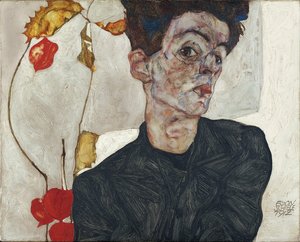
1890 - 1918 , Austrija

Immerse yourself in the lush beauty of nature through 10 iconic paintings defined by rich sap green tones. From Impressionist landscapes to timeless classics, explore the stories behind these verdant masterpieces and find museum-quality art reproductions on Most-Famous-Paintings.com.

Explore the profound history and symbolism of the world's greatest religious artworks. From Byzantine icons to Renaissance masters, journey through sacred iconography with our expert guide and discover museum-quality, hand-painted oil reproductions for your collection.


Sekite naujausias meno naujienas, išskirtinius pasiūlymus ir dekoravimo idėjas.
Pasakokite mums apie savo projektą, o mūsų meno ekspertai parengs jums 3 asmeniškus meno pasiūlymus.
Leiskite mums parinkti 3 variantus būtent jums – nemokamai!


 Peržiūrėti realybėje
 Pasidalinti
 Dalintis
 Išsamiau

 Atsisiųsti
 Panašūs eksponatai
 Rentgeno nuotrauka
 Automatinė diorama

 Skaityti daugiau







 Stiklo variantas prieinamas tik pasirinkus dydį iki 110 cm


