x

Muziejų lygio „giclée“ arba drobos spausdinimas: greita gamyba ir lankstios apdailos parinktys. ( Pirkti rankomis tapytą paveikslą Pirkti vaizdą)





























Pasirinkite iš mūsų nustatytų dydžių, atitinkančių originalaus meno kūrinio proporcijas.

Galite nurodyti savo matmenis, kad vaizdas atitiktų konkretų rėmą ar erdvę. Jei pasirinktas dydis nesutaps su originalaus paveikslėlio proporcijomis, mes arba apkirpsime kūrinį, arba išplėsime vaizdą naudojant veideliu atspindėtą arba vientisą šoną. Skaitmeninis maketas bus išsiųstas jums patvirtinti prieš pradedant gamybą.
Atkreipkite dėmesį, kad ekrane matomas vaizdinys neatspindi tikrojo apkirpimo ar išplėtimo. Tik maketas tiksliai parodytų galutinę kompoziciją.
Nors galima rinktis ir individualius dydžius, rekomenduojame pasirinkti vieną iš išanksti nustatytų matmenų, kad būtų išlaikytos originalios proporcijos.
Pristatymas visame pasaulyje () per 2 weeks, o ne įprastas 4/5 savaičių laikotarpis. (18 rugpjūtis)


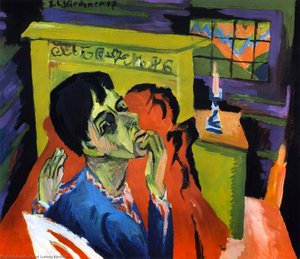
Albert Müller and Hermann
Reprodukcijos matmenys
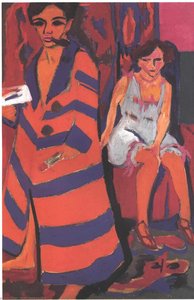
Ernst Ludwig Kirchner's "Albert Müller and Hermann" isn’t merely a portrait; it’s a carefully constructed distillation of emotion, a visual embodiment of the anxieties and intense relationships that defined German Expressionism. Painted in 1924, this work offers a glimpse into the artist’s close circle and his exploration of human connection amidst a period of profound social and psychological upheaval. The painting immediately commands attention with its bold, almost jarring color palette – deep blues and greens wrestle with fiery oranges and purples, creating a dynamic tension that mirrors the potential for both intimacy and conflict within the scene. Kirchner masterfully employs thick, angular lines to delineate the figures and the abstracted landscape, imbuing the composition with a sense of restless energy and underlying unease.
The subjects themselves, Albert Müller and Hermann Scherer, were key members of Kirchner’s “Rot-Blau” group – a collective dedicated to pushing the boundaries of artistic expression. Their inclusion within this painting speaks volumes about Kirchner's interest in portraying not just outward appearances but also the internal lives and emotional dynamics of his friends. The figures are rendered with a deliberate distortion, their elongated limbs and simplified features contributing to an atmosphere of vulnerability and perhaps even alienation. This stylistic choice is characteristic of Expressionism’s rejection of realistic representation in favor of conveying subjective experience.
Kirchner's compositional strategy further emphasizes the painting’s emotional core. The figures are positioned centrally within a vertically oriented frame, dominating the space and drawing the viewer’s eye immediately to their interaction. A simplified horizon line separates them from a stylized sky and distant hills – elements rendered in broad blocks of color that reinforce the overall sense of abstraction. Notably, perspective is deliberately flattened and distorted; there's little attempt to create spatial depth or realistic scale. This flattening contributes significantly to the painting’s two-dimensional quality, focusing attention on the figures and their immediate relationship rather than a convincing illusion of space.
The technique employed is equally striking. Kirchner utilizes bold brushstrokes and a layering of colors to build up a vibrant and expressive surface. The visible texture suggests an energetic application of paint, reflecting the artist’s passionate engagement with his subject matter. It's likely that the reproduction you are viewing captures this original dynamism, though the photographic process inevitably smooths out some of the inherent physicality of oil paint on canvas.
Beyond its formal elements, “Albert Müller and Hermann” is rich in symbolic potential. The distorted forms and intense colors strongly suggest feelings of anxiety, alienation, and perhaps even a degree of emotional turmoil. The closeness of the figures – their proximity to one another – could be interpreted as representing intimacy or, conversely, a charged tension. Considering Kirchner’s own struggles with mental health and his exploration of themes related to loneliness and isolation in other works, it's reasonable to suggest that this painting reflects a deeper meditation on the complexities of human relationships.
The work resonates powerfully within the context of German Expressionism, a movement characterized by its rejection of academic conventions and its focus on subjective experience. Kirchner’s exploration of emotion, distorted forms, and unconventional color palettes aligns perfectly with the core tenets of this influential artistic style. “Albert Müller and Hermann” stands as a testament to his ability to capture the raw emotional power of human interaction within a rapidly changing world.

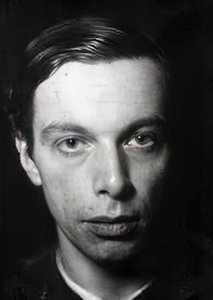
1880 - 1938 , Գերմանիա

Explore the visceral power of German Expressionism. From Ernst Ludwig Kirchner to Die Brücke, discover how bold colors and distorted forms unmask raw human emotion in this expert art history guide for collectors and enthusiasts.


Sekite naujausias meno naujienas, išskirtinius pasiūlymus ir dekoravimo idėjas.
Pasakokite mums apie savo projektą, o mūsų meno ekspertai parengs jums 3 asmeniškus meno pasiūlymus.
Leiskite mums parinkti 3 variantus būtent jums – nemokamai!


 Peržiūrėti realybėje
 Pasidalinti
 Dalintis
 Išsamiau

 Atsisiųsti
 Panašūs eksponatai
 Rentgeno nuotrauka
 Automatinė diorama

 Skaityti daugiau







 Stiklo variantas prieinamas tik pasirinkus dydį iki 110 cm