x

Rankiniu būdu tapytas aliejus ant droblio jūsų pageidaujamame dydį ir rėmuose – mūsų menininkų darbas pagal užsakymą. ( Perejti prie spausdinimo Perjungti į vaizdą)
Pasirinkite iš mūsų nustatytų dydžių, atitinkančių originalaus meno kūrinio proporcijas.

Galite įvesti savo matmenis, kad jie atitiktų konkretų rėmą ar erdvę. Jei pasirinktas dydis neatitinka originalaus paveikslėlio proporcijų, mes arba apkropsime meno kūrinį, arba papildysime tapybą rankomis dažytい elementais. Prieš pradėdami gamybą, jūsų patvirtinimui atsiųsime skaitmeninį maketą.
Atkreipkite dėmesį, kad ekrane rodomas vaizdas neatspindi tikrojo apkarpymo ar papildymo. Tik maketas tiksliai parodys galutinę kompoziciją.
Nors galima rinktis ir individualius dydžius, rekomenduojame pasirinkti matmenis iš nustatytos sąrašo, kad būtų išlaikytos originalios proporcijos.
Pristatymas visame pasaulyje () per 3–4 savaites, o ne įprastai – per 5 savaites. (11 rugpjūtis). Kokybė lieka nepakeičiama.


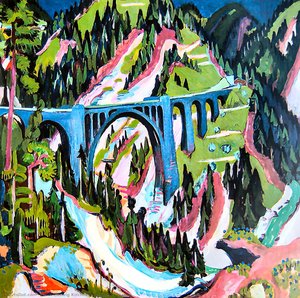
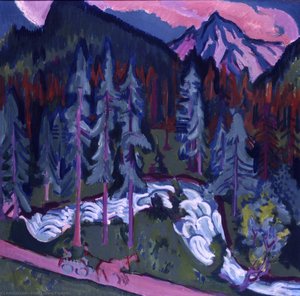
Bergwald
Reprodukcijos matmenys
Ernst Ludwig Kirchner’s “Bergwald,” or Mountain Forest, stands as a cornerstone of German Expressionism, encapsulating the movement's core tenets: subjective emotion rendered through distorted form and vibrant color. Painted in 1913, before the looming shadow of World War I cast its pall over Europe, this monumental canvas isn’t merely a depiction of a forest; it’s an embodiment of anxiety, isolation, and a primal confrontation with nature's overwhelming force.
Kirchner’s “Bergwald” emerged during a period of profound intellectual ferment in Germany. The Expressionist movement reacted against the prevailing academic conventions of its time, rejecting idealized beauty for raw emotion and psychological truth. Kirchner drew inspiration from artists like Albrecht Dürer, whose meticulous detail contrasted sharply with the expressive distortions characteristic of Expressionism. However, he also absorbed influences from Cubism and Futurism, experimenting with fragmented forms and dynamic spatial relationships.
The dense foliage and winding path symbolize not only the physical landscape but also the psychological journey undertaken by the viewer—a confrontation with the unknown and a surrender to the forces of nature. Kirchner’s deliberate use of unsettling colors and distorted perspective aims to evoke feelings of anxiety and disorientation, mirroring the anxieties prevalent in German society at the time. The painting compels us to contemplate our relationship with the natural world and to acknowledge its capacity for both awe and terror.
Kirchner executed “Bergwald” on canvas using oil paints—a medium favored by Expressionists for its ability to achieve rich color saturation and textural depth. His technique involved layering colors rapidly, prioritizing feeling over precise accuracy. This impulsive approach resulted in a surface marked by visible brushstrokes that capture the artist’s energetic engagement with his subject matter.

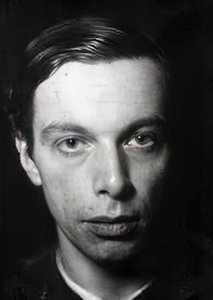
1880 - 1938 , Գերմանիա

Atraskite naujausias sienų tapybos tendencijas! Ekspertai pataria dėl geometrinių formų, aukso lapelių ir džiunglių motyvų. Kokybiškas interjero dizainas Jūsų namams – nuo idėjų iki profesionalios įgyvendinimo.

Explore the revolutionary art of Giacomo Balla, a key figure in Futurism. Discover his dynamic paintings capturing speed, light & movement. Learn about his techniques, masterpieces & legacy with our comprehensive guide.

Explore the powerful impact of color in art history! Discover how master artists evoked emotion & built movements through bold palettes. Expert insights for collectors – Most-Famous-Paintings.

Explore the profound impact of color on emotion & artistic expression. Discover how master artists like Klee & Matisse used palettes to evoke feeling and build lasting legacies. A guide for discerning art collectors.

Explore the revolutionary art of André Derain, co-founder of Fauvism. Discover his bold use of color, evolution from radical expressionism to classicism, and lasting influence on modern art history. Learn more at Most-Famous-Paintings.


Sekite naujausias meno naujienas, išskirtinius pasiūlymus ir dekoravimo idėjas.
Pasakokite mums apie savo projektą, o mūsų meno ekspertai parengs jums 3 asmeniškus meno pasiūlymus.
Leiskite mums parinkti 3 variantus būtent jums – nemokamai!


 Peržiūrėti realybėje
 Pasidalinti
 Dalintis
 Išsamiau

 Atsisiųsti
 Panašūs eksponatai
 Rentgeno nuotrauka
 Automatinė diorama
 Skaityti daugiau




































 Stiklo variantas prieinamas tik pasirinkus dydį iki 110 cm