x

Rankiniu būdu tapytas aliejus ant droblio jūsų pageidaujamame dydį ir rėmuose – mūsų menininkų darbas pagal užsakymą. ( Pirkti spaudinį Pirkti vaizdą)





























Pasirinkite iš mūsų nustatytų dydžių, atitinkančių originalaus meno kūrinio proporcijas.

Galite įvesti savo matmenis, kad jie atitiktų konkretų rėmą ar erdvę. Jei pasirinktas dydis neatitinka originalaus paveikslėlio proporcijų, mes arba apkropsime meno kūrinį, arba papildysime tapybą rankomis dažytい elementais. Prieš pradėdami gamybą, jūsų patvirtinimui atsiųsime skaitmeninį maketą.
Atkreipkite dėmesį, kad ekrane rodomas vaizdas neatspindi tikrojo apkarpymo ar papildymo. Tik maketas tiksliai parodys galutinę kompoziciją.
Nors galima rinktis ir individualius dydžius, rekomenduojame pasirinkti matmenis iš nustatytos sąrašo, kad būtų išlaikytos originalios proporcijos.
Pristatymas visame pasaulyje () per 3–4 savaites, o ne įprastai – per 5 savaites. (23 rugpjūtis). Kokybė lieka nepakeičiama.


Dancer Blue
Reprodukcijos matmenys
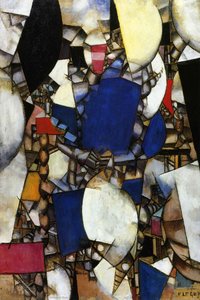
To encounter Fernand Léger's "Dancer Blue" is to step directly into the rhythmic, metallic heartbeat of the twentieth century. Created in 1930, this masterpiece serves as a crystallized moment of artistic rebellion, standing as a cornerstone of Cubist aesthetics that defies the soft, fleeting shadows of Impressionism. The painting presents a stylized female figure, bathed in deep, evocative shades of azure, who seems to emerge from a fractured landscape of modern progress. It is not merely a depiction of a subject, but an exploration of movement itself—a visual symphony where the grace of the human form meets the structured precision of the machine age.
Léger, whose early life was rooted in the pastoral rhythms of Normandy, brings a unique tension to this canvas. While his roots were in the organic world, his vision was irrevocently shaped by the industrial transformation of Paris. In "Dancer Blue," we see this duality manifest through a complex tapestry of geometric forms. Squares, rectangles, and circles intersect with sweeping curves, creating a flattened plane that rejects traditional perspective in favor of a dynamic, layered depth. This technique forces the viewer to become an active participant, reconstructing the image through an intellectual dance of perception.
Beneath the vibrant surface of blues, oranges, and reds lies a profound symbolic narrative regarding the evolution of human experience. The central dancer represents more than just physical grace; she embodies the vitality of life amidst a rapidly changing world. Surrounding her, the composition is populated by elements that evoke the technological marvels of her era—shapes suggestive of airplane wings, mechanical components, and even stylized birds that navigate the geometric sky. This juxtaposition of the organic and the industrial creates a sense of "tubism," a personal variation of Cubism where cylindrical forms and bold outlines celebrate the strength and structural beauty of modern existence.
The color palette is intentionally striking, designed to heighten emotional impact and reinforce the painting's energetic pulse. The dominance of blue provides a sense of ethereal transition, while the sharp accents of red and white inject a high-voltage energy into the scene. For the discerning collector or interior designer, this artwork offers a commanding presence. It possesses the rare ability to anchor a room with its bold, angular lines while simultaneously providing a sense of fluid motion that prevents the space from feeling static.
For those seeking to curate an environment of intellectual depth and aesthetic vigor, "Dancer Blue" offers unparalleled inspiration. The painting’s texture—achieved through meticulous oil application on canvas—retains a slight, beautiful graininess that speaks to the materiality of the art itself. It is a piece that invites close inspection, revealing new layers of complexity with every glance. Whether placed in a contemporary gallery setting or as a focal point in a sophisticated residential lounge, the work radiates a sense of progress and optimism.
Owning a high-quality reproduction of this Léger masterpiece allows one to bring the transformative energy of the machine age into the modern home. It is an investment in a visual legacy that celebrates the intersection of human grace and industrial power, making it an essential acquisition for anyone moved by the enduring power of Cubist innovation.


1881 - 1955 , Prancūzija

Explore the profound impact of Minimalism and Geometric Abstraction. From Mondrian to Malevich, discover how stripping art to its essential forms revolutionized modern aesthetics through our expert-led historical guide.

Explore the revolutionary world of Cubism. Discover how masters Pablo Picasso and Georges Braque dismantled reality through geometric abstraction to redefine modern art history.


Sekite naujausias meno naujienas, išskirtinius pasiūlymus ir dekoravimo idėjas.
Pasakokite mums apie savo projektą, o mūsų meno ekspertai parengs jums 3 asmeniškus meno pasiūlymus.
Leiskite mums parinkti 3 variantus būtent jums – nemokamai!


 Peržiūrėti realybėje
 Pasidalinti
 Dalintis
 Išsamiau

 Atsisiųsti
 Panašūs eksponatai
 Rentgeno nuotrauka
 Automatinė diorama

 Skaityti daugiau







 Stiklo variantas prieinamas tik pasirinkus dydį iki 110 cm