x

 Preview
 Pirkti atspaudą Pirkti skaitmeninį paveikslą
 Pasidalinti
 Išsamiau
 Pridėti į mėgstamiausius
 Atsisiųsti
 Panašūs eksponatai
 Rentgeno nuotrauka
 Automatinė diorama
 Oil On CanvasWallArtSymbolist Movement
 188619th Century
 141.0 x 110.0 cm
 Tate Gallery
Rankiniu būdu tapytas aliejus ant droblio jūsų pageidaujamame dydį ir rėmuose – mūsų menininkų darbas pagal užsakymą.





























Pasirinkite iš mūsų nustatytų dydžių, atitinkančių originalaus meno kūrinio proporcijas.

Galite įvesti savo matmenis, kad jie atitiktų konkretų rėmą ar erdvę. Jei pasirinktas dydis neatitinka originalaus paveikslėlio proporcijų, mes arba apkropsime meno kūrinį, arba papildysime tapybą rankomis dažytい elementais. Prieš pradėdami gamybą, jūsų patvirtinimui atsiųsime skaitmeninį maketą.
Atkreipkite dėmesį, kad ekrane rodomas vaizdas neatspindi tikrojo apkarpymo ar papildymo. Tik maketas tiksliai parodys galutinę kompoziciją.
Nors galima rinktis ir individualius dydžius, rekomenduojame pasirinkti matmenis iš nustatytos sąrašo, kad būtų išlaikytos originalios proporcijos.
Pristatymas visame pasaulyje () per 3–4 savaites, o ne įprastai – per 5 savaites. (23 liepa). Kokybė lieka nepakeičiama.


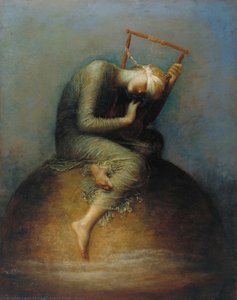
Hope
Reprodukcijos matmenys
To stand before George Frederic Watts' Hope is not merely to observe paint on canvas; it is to encounter a profound meditation on the human spirit itself. Created in 1886, this painting remains one of the most emotionally resonant works of the Victorian era. The composition immediately draws the eye to the central figure—a woman seated upon a sphere, her posture conveying an exquisite blend of sorrow and tenacious endurance. Her hands are clasped near her face, suggesting a moment caught between weeping and profound contemplation. It is in this delicate tension that the viewer finds themselves drawn into the narrative Watts so masterfully constructed.
The symbolism within Hope is as rich and layered as the deep blue background against which it is set. The sphere upon which she rests can be interpreted as the world, or perhaps the cyclical nature of human experience itself. More compelling still is the subtle suggestion that she holds onto a string—a fragile tether connecting her to something unseen, something ethereal, perhaps even the heavens. This thread embodies the very concept of hope: tenuous yet utterly vital. Watts, deeply influenced by Symbolism, rarely painted simply what was visible; he painted what could not be spoken aloud. The presence of other figures in the periphery adds depth, suggesting that this personal struggle is witnessed, understood, and shared within a broader human context.
George Frederic Watts himself was a pivotal figure in the Symbolist movement, an artist whose work consistently explored weighty themes of morality and the enduring condition of man. His background, steeped in classical influences yet grappling with modern anxieties, is palpable here. The painting speaks to the Victorian preoccupation with inner life—the struggle for virtue against adversity. For the contemporary admirer or collector, this piece offers a window into an era that valued introspection above all else. It is art that does not merely decorate a wall but prompts deep, necessary conversation within the quiet sanctity of a room.
For those seeking to incorporate such potent artistry into their own spaces, reproductions of Hope offer an unparalleled opportunity. Imagine this evocative scene rendered in exquisite detail, allowing its emotional gravity to permeate your home décor. Whether placed above a mantelpiece or within a gallery setting, the painting’s narrative power elevates any interior design scheme. It serves not just as decoration, but as a constant, beautiful reminder of resilience—a visual anchor for perseverance against life's inevitable shadows.


1817 - 1904 , Jungtinė Karalystė

Atraskite 25 įspūdingiausius Metropoliteno meno muziejaus kūrinius! Claude Monet, van Gogh ir kiti meistrai – paveikslų istorijos, spalvų paletės bei interjero dekoravimo idėjos. Meno reprodukcijos aukščiausia kokybe Most-Famous-Paintings.com
Atraskite 25 įspūdingiausius Džeimso Ebboto Maknilo Vislerio kūrinius! Tonalizmo meistras, noktiurnai ir portretai – meno istorijos šedevrai jūsų interjerui. Pirkti aukštos kokybės reprodukcijas Most-Famous-Paintings.com
Atraskite 25 įspūdingiausius Henri Matisse šedevrus! Sužinokite apie Fauvizmą, spalvų magiją ir prancūzų dailininko kūrybos istorijas. Meno reprodukcijos jūsų interjerui – Most-Famous-Paintings.com
Atraskite 25 Nacionalinės galerijos meno perlus! Išsami istorija apie Monet, Picasso ir kitų žymiausių dailininkų kūrinius. Įkvėpimo interjerui ir aukštos kokybės meno reprodukcijos – Most-Famous-Paintings.com

Atraskite 25 Paul Klee šedevrus! Išsami analizė, meno istorija ir įkvėpimas interjerui. Abstraktaus meno kūriniai, ekspresionizmas, spalvų harmonijos. Aukštos kokybės reprodukcijos – Most-Famous-Paintings.com


Sekite naujausias meno naujienas, išskirtinius pasiūlymus ir dekoravimo idėjas.
Pasakokite mums apie savo projektą, o mūsų meno ekspertai parengs jums 3 asmeniškus meno pasiūlymus.
Leiskite mums parinkti 3 variantus būtent jums – nemokamai!


 Dalintis

 Skaityti daugiau







 Stiklo variantas prieinamas tik pasirinkus dydį iki 110 cm