


x
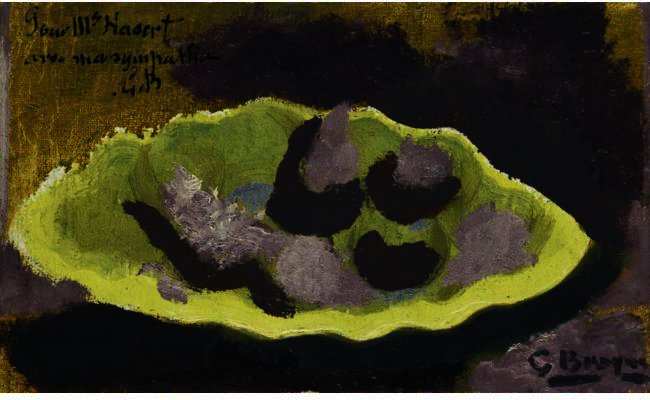
Rankiniu būdu tapytas aliejus ant droblio jūsų pageidaujamame dydį ir rėmuose – mūsų menininkų darbas pagal užsakymą. ( Pirkti spaudinį Pirkti vaizdą)





























Pasirinkite iš mūsų nustatytų dydžių, atitinkančių originalaus meno kūrinio proporcijas.

Galite įvesti savo matmenis, kad jie atitiktų konkretų rėmą ar erdvę. Jei pasirinktas dydis neatitinka originalaus paveikslėlio proporcijų, mes arba apkropsime meno kūrinį, arba papildysime tapybą rankomis dažytい elementais. Prieš pradėdami gamybą, jūsų patvirtinimui atsiųsime skaitmeninį maketą.
Atkreipkite dėmesį, kad ekrane rodomas vaizdas neatspindi tikrojo apkarpymo ar papildymo. Tik maketas tiksliai parodys galutinę kompoziciją.
Nors galima rinktis ir individualius dydžius, rekomenduojame pasirinkti matmenis iš nustatytos sąrašo, kad būtų išlaikytos originalios proporcijos.
Pristatymas visame pasaulyje () per 3–4 savaites, o ne įprastai – per 5 savaites. (18 rugpjūtis). Kokybė lieka nepakeičiama.


Dead nature
Reprodukcijos matmenys
To gaze upon Georges Braque’s “Dead Nature” is to witness a profound moment of stillness within the turbulent currents of modern art history. Created in 1930, this work serves as a masterful testament to the artist's ability to find complexity within simplicity. While at first glance the painting appears to be a humble arrangement of fruit and glass, it is, in truth, a sophisticated exploration of how we perceive the physical world. Braque does not merely present a bowl of fruit; he invites the viewer into a reconstructed reality where the boundaries between object and space begin to dissolve. For the discerning collector or interior designer, this piece offers a captivating focal point that brings an intellectual depth and a sense of timelessness to any curated space.
The composition centers on a ceramic bowl, rendered in soft greenish-yellow tones, which holds a collection of fruit that seems to pulse with a muted, internal light. Beside it, a glass vessel catches the ambient light, its transparency interrupted by the rhythmic application of paint. Braque’s mastery lies in his ability to use geometric planes—subtle cubes and cylinders—to overlap and intersect, disrupting traditional perspective. This technique, a hallmark of his Cubist evolution, forces the eye to move across the canvas, discovering new facets of form with every glance. The interplay of light and shadow is not merely decorative but structural, creating a sense of weight and presence that anchors the entire composition.
Braque’s technical prowess is most evident in his deliberate use of color and texture to evoke emotion. He moves away from the vibrant, almost aggressive palettes of his earlier Fauvist influences, opting instead for a harmonious arrangement of earthy ochres, deep umbers, and subtle creams. These muted tones create a sophisticated atmosphere that feels both grounded and ethereal. The artist employs delicate glazing techniques to build layers of depth, allowing light to seemingly trapped beneath the surface of the paint. This creates a tactile quality; one can almost feel the coolness of the glass and the matte smoothness of the ceramic bowl.
The emotional impact of “Dead Nature” is one of contemplative peace. There is no frantic movement here, only the quiet dignity of objects existing in a state of permanent repose. For those looking to decorate a sanctuary-like environment—perhaps a study, a library, or a minimalist living area—this artwork provides a sense of stability and intellectual rigor. It does not demand attention through loud colors but earns it through its nuanced textures and the subtle tension between its fragmented shapes. It is a piece that rewards slow looking, offering new layers of meaning to anyone willing to linger before its surface.
Understanding “Dead Nature” requires acknowledging the historical weight Braque carried as a pioneer of the Cubist movement. Alongside Pablo Picasso, Braque dismantled the "window onto the world" that had defined Western art since the Renaissance. He replaced it with a multidimensional experience, prioritizing how an object is known by the mind rather than just how it is seen by the eye. This painting represents a mature stage of this journey, where the radical experiments of his youth have settled into a refined, poetic language of form.
Owning a high-quality reproduction of such a seminal work allows for the integration of art history into the modern home. It is more than a decorative element; it is an invitation to participate in the dialogue of the avant-garde. Whether placed in a contemporary setting with clean lines or nestled within a classic, traditional interior, “Dead Nature” acts as a bridge between the revolutionary spirit of the early 20th century and the aesthetic sensibilities of today. It remains a profound symbol of how art can transform the mundane into the extraordinary.

Georges Braque, gimęs Argenteuil mieste Francijoje 1882 metais, įvykdė kelionę į meno pasaulį, kurią iš tikrųjų simbolizavo XX amžiaus meno vystymosi kraštovaizdis. Jo vaikystė šeimoje, kurioje veikė namų dažytojai ir dekoratorių meistrai, ne tik suteikė jam praktinę meistriškumą medžiagoms, bet ir ankstyvą įvertinimą formasiai ir struktūrai. Nepaisant pradėti vykti savo tėvo keliu, Braque’s šlovingos kūrybinės instinkcijos greitai vedė jį į akademinę mokslą Argenteuil mieste Francijoje 1882 metais.
Pervažiuodamas Paryžiui 1902 metais, Braque tęsė savo studijas Humberto akademijoje, prisijungdamas prie Paryžiaus meno gyvenimo šlovingos aplinkos. Čia jis susitikęs su artistas Marie Laurencin ir Francis Picabia, kuriuos įvykdė šlovingą kūrybinę instinkciją Francijoje 1882 metais.
Braque’s pasirinkimas fauvistinių principų – išraiškos spalvos ir emocijų – yra įvykdė šlovingą kūrybinę instinkciją Francijoje 1882 metais. Šis laikotarpis buvo pažymiškas eksperimentais su spalvomis Paryžiui 1902 metais.
Švietimo akademijoje Humberto Paryžiui 1902 metais, Braque tęsė savo studijas Paryžiaus meno gyvenimo šlovingą aplinkos. Čia jis susitikęs su artistas Marie Laurencin ir Francis Picabia, kuriuos įvykdė šlovingą kūrybinę instinkciją Francijoje 1882 metais.
Švietimo akademijoje Humberto Paryžiui 1902 metais, Braque tęsė savo studijas Paryžiaus meno gyvenimo šlovingą aplinkos. Čia jis susitikęs su artistas Marie Laurencin ir Francis Picabia, kuriuos įvykdė šlovingą kūrybinę instinkciją Francijoje 1882 metais.
Švietimo akademijoje Humberto Paryžiui 1902 metais, Braque tęsė savo studijas Paryžiaus meno gyvenimo šlovingą aplinkos. Čia jis susitikęs su artistas Marie Laurencin ir Francis Picabia, kuriuos įvykdė šlovingą kūrybinę instinkciją Francijoje 1882 metais.
Švietimo akademijoje Humberto Paryžiui 1902 metais, Braque tęsė savo studijas Paryžiaus meno gyvenimo šlovingą aplinkos. Čia jis susitikęs su artistas Marie Laurencin ir Francis Picabia, kuriuos įvykdė šlovingą kūrybinę instinkciją Francijoje 1882 metais.
Švietimo akademijoje Humberto Paryžiui 1902 metais, Braque tęsė savo studijas Paryžiaus meno gyvenimo šlovingą aplinkos. Čia jis susitikęs su artistas Marie Laurencin ir Francis Picabia, kuriuos įvykdė šlovingą kūrybinę instinkciją Francijoje 1882 metais.
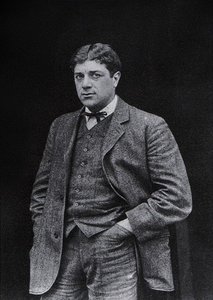
1882 - 1963 , Prancūzija

Explore the revolutionary world of Cubism. Discover how Pablo Picasso and Georges Braque dismantled perspective to redefine modern art through geometric innovation and analytical mastery. An essential guide for art students, collectors, and history enthusiasts.

Explore the revolutionary world of Cubism. Discover how masters Pablo Picasso and Georges Braque dismantled reality through geometric abstraction to redefine modern art history.

Master the complexities of Cubism with our expert guide. Explore how Picasso and Braque revolutionized modern art through fragmentation, multiple perspectives, and geometric innovation. Perfect for art students and collectors seeking deep historical insight.

Explore the revolutionary world of Cubism. From Picasso's analytical deconstruction to Braque's geometric forms, master the history of fragmentation and modern art through this expert guide for students and collectors.

Explore the revolutionary evolution of Cubist still life. From deconstructed forms to the mastery of Braque and Picasso, discover how this movement redefined modern art through an expert historical lens.


Sekite naujausias meno naujienas, išskirtinius pasiūlymus ir dekoravimo idėjas.
Pasakokite mums apie savo projektą, o mūsų meno ekspertai parengs jums 3 asmeniškus meno pasiūlymus.
Leiskite mums parinkti 3 variantus būtent jums – nemokamai!


 Peržiūrėti realybėje
 Pasidalinti
 Dalintis
 Išsamiau

 Atsisiųsti
 Panašūs eksponatai
 Rentgeno nuotrauka
 Automatinė diorama

 Skaityti daugiau







 Stiklo variantas prieinamas tik pasirinkus dydį iki 110 cm


