


x

 Preview
 Pirkti atspaudą Pirkti skaitmeninį paveikslą
 Pasidalinti
 Išsamiau
 Pridėti į mėgstamiausius
 Atsisiųsti
 Panašūs eksponatai
 Rentgeno nuotrauka
 Automatinė diorama
Rankiniu būdu tapytas aliejus ant droblio jūsų pageidaujamame dydį ir rėmuose – mūsų menininkų darbas pagal užsakymą.
Pasirinkite iš mūsų nustatytų dydžių, atitinkančių originalaus meno kūrinio proporcijas.

Galite įvesti savo matmenis, kad jie atitiktų konkretų rėmą ar erdvę. Jei pasirinktas dydis neatitinka originalaus paveikslėlio proporcijų, mes arba apkropsime meno kūrinį, arba papildysime tapybą rankomis dažytい elementais. Prieš pradėdami gamybą, jūsų patvirtinimui atsiųsime skaitmeninį maketą.
Atkreipkite dėmesį, kad ekrane rodomas vaizdas neatspindi tikrojo apkarpymo ar papildymo. Tik maketas tiksliai parodys galutinę kompoziciją.
Nors galima rinktis ir individualius dydžius, rekomenduojame pasirinkti matmenis iš nustatytos sąrašo, kad būtų išlaikytos originalios proporcijos.
Pristatymas visame pasaulyje () per 3–4 savaites, o ne įprastai – per 5 savaites. (24 liepa). Kokybė lieka nepakeičiama.


Sao
Reprodukcijos matmenys
Georges Braque's *Sao*, a deceptively simple monochrome drawing, isn’t merely an exercise in line and space; it’s a profound meditation on containment, fragmentation, and the very nature of representation. Executed around 1932, this work embodies the core tenets of Cubism while simultaneously hinting at the nascent explorations of collage that would soon redefine Braque's artistic trajectory. The piece immediately commands attention with its stark contrast: a dense, black void punctuated by a network of precise, white lines – a visual vocabulary that speaks volumes about the artist’s intent.
The composition centers on an abstracted human figure, roughly delineated within a large, encompassing circle. This isn't portraiture in the traditional sense; rather, it’s a deconstruction of the form, reduced to its essential elements – lines that suggest limbs, torso, and head, yet never fully resolve into recognizable features. The asymmetry inherent in the arrangement—the figure subtly off-center—introduces an element of dynamism, preventing the image from feeling static or overly formal. A smaller oval at the base adds a layer of ambiguity, perhaps representing legs or a lower body, further contributing to the sense of incompleteness and ongoing construction.
Braque’s masterful control of line is paramount to *Sao*'s impact. The lines aren't smooth or flowing; they possess a deliberate, almost hesitant quality, as if drawn with charcoal or chalk on a slightly textured surface. This gestural approach imbues the work with a sense of immediacy and spontaneity, contrasting sharply with the precision required for rendering a realistic image. The varying thickness and density of the lines create a subtle textural landscape, adding depth and visual interest without relying on shading or modeling – techniques that Braque would later abandon in favor of more fragmented approaches.
Considering the materials—likely charcoal or chalk on paper—the work’s longevity is remarkable. The monochrome palette amplifies the impact of the lines themselves, forcing the viewer to engage with their form and spatial relationships. It's a testament to Braque’s ability to create a powerful visual statement using minimal resources.
*Sao* firmly situates itself within the context of early Cubism, a movement that challenged traditional notions of perspective and representation. Like Picasso, Braque sought to depict objects from multiple viewpoints simultaneously, fracturing forms into geometric shapes and reassembling them on the canvas. However, *Sao* feels particularly prescient in its anticipation of collage – a technique that would soon become synonymous with Braque’s name. The very act of layering lines within a defined space echoes the principles of collage, suggesting an exploration of surface and texture.
The circle itself is a potent symbol—representing wholeness, containment, or perhaps even the cyclical nature of existence. Juxtaposed against the fragmented figure, it creates a compelling tension between order and chaos, stability and disintegration. The ambiguity surrounding the figure’s identity invites interpretation, prompting viewers to project their own emotions and experiences onto the image.
Despite its apparent simplicity, *Sao* possesses a remarkable emotional depth. It's not a work that shouts for attention; rather, it whispers with an understated intensity. The stark contrast between black and white evokes feelings of isolation, introspection, and perhaps even melancholy. The fragmented figure suggests a sense of loss or incompleteness, while the enclosing circle offers a fragile promise of protection. *Sao* is a powerful reminder that art can communicate complex emotions through the most subtle means – a carefully considered line, a strategic placement, and a profound understanding of form.
Georges Braque, gimęs Argenteuil mieste Francijoje 1882 metais, įvykdė kelionę į meno pasaulį, kurią iš tikrųjų simbolizavo XX amžiaus meno vystymosi kraštovaizdis. Jo vaikystė šeimoje, kurioje veikė namų dažytojai ir dekoratorių meistrai, ne tik suteikė jam praktinę meistriškumą medžiagoms, bet ir ankstyvą įvertinimą formasiai ir struktūrai. Nepaisant pradėti vykti savo tėvo keliu, Braque’s šlovingos kūrybinės instinkcijos greitai vedė jį į akademinę mokslą Argenteuil mieste Francijoje 1882 metais.
Pervažiuodamas Paryžiui 1902 metais, Braque tęsė savo studijas Humberto akademijoje, prisijungdamas prie Paryžiaus meno gyvenimo šlovingos aplinkos. Čia jis susitikęs su artistas Marie Laurencin ir Francis Picabia, kuriuos įvykdė šlovingą kūrybinę instinkciją Francijoje 1882 metais.
Braque’s pasirinkimas fauvistinių principų – išraiškos spalvos ir emocijų – yra įvykdė šlovingą kūrybinę instinkciją Francijoje 1882 metais. Šis laikotarpis buvo pažymiškas eksperimentais su spalvomis Paryžiui 1902 metais.
Švietimo akademijoje Humberto Paryžiui 1902 metais, Braque tęsė savo studijas Paryžiaus meno gyvenimo šlovingą aplinkos. Čia jis susitikęs su artistas Marie Laurencin ir Francis Picabia, kuriuos įvykdė šlovingą kūrybinę instinkciją Francijoje 1882 metais.
Švietimo akademijoje Humberto Paryžiui 1902 metais, Braque tęsė savo studijas Paryžiaus meno gyvenimo šlovingą aplinkos. Čia jis susitikęs su artistas Marie Laurencin ir Francis Picabia, kuriuos įvykdė šlovingą kūrybinę instinkciją Francijoje 1882 metais.
Švietimo akademijoje Humberto Paryžiui 1902 metais, Braque tęsė savo studijas Paryžiaus meno gyvenimo šlovingą aplinkos. Čia jis susitikęs su artistas Marie Laurencin ir Francis Picabia, kuriuos įvykdė šlovingą kūrybinę instinkciją Francijoje 1882 metais.
Švietimo akademijoje Humberto Paryžiui 1902 metais, Braque tęsė savo studijas Paryžiaus meno gyvenimo šlovingą aplinkos. Čia jis susitikęs su artistas Marie Laurencin ir Francis Picabia, kuriuos įvykdė šlovingą kūrybinę instinkciją Francijoje 1882 metais.
Švietimo akademijoje Humberto Paryžiui 1902 metais, Braque tęsė savo studijas Paryžiaus meno gyvenimo šlovingą aplinkos. Čia jis susitikęs su artistas Marie Laurencin ir Francis Picabia, kuriuos įvykdė šlovingą kūrybinę instinkciją Francijoje 1882 metais.
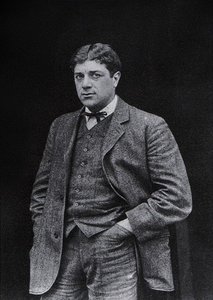
1882 - 1963 , Prancūzija
Explore the power of black, white & gray abstraction in modern interior design. Discover how minimalist art impacts spatial perception & creates sophisticated hotel spaces. Expert insights for designers.
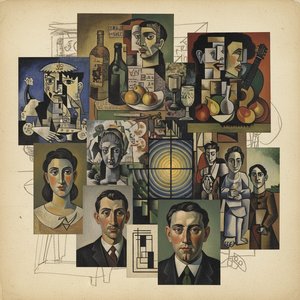
Explore 10 Cubist masterpieces by Picasso, Braque & more! Delve into the history of this revolutionary art movement. Find museum-quality reproductions and elevate your home decor with Most-Famous-Paintings. Discover all masterpieces on Most-Famous-Paintings.com
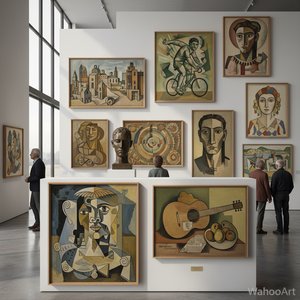
Atraskite 10 legendinių kubizmo šedevrų! Pažinkite Picassą, Braką ir kitus menininkus. Sužinokite apie spalvas, stilių bei meno istoriją. Aukštos kokybės dailės reprodukcijos jūsų interjerui – Most-Famous-Paintings.com.

Explore the revolutionary art of Georges Braque, a pioneer of Cubism alongside Picasso. Discover his artistic evolution, key works, and lasting impact on modern art. A guide for discerning collectors.
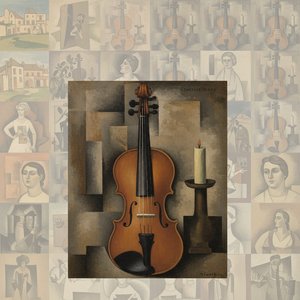
Atraskite 25 Georges Braque šedevrus! Kubizmo meistro paveikslai, interjero dekoras ir meno istorija. Meno reprodukcijos aukščiausia kokybe – Most-Famous-Paintings.com. Išsamesnės informacijos rasite internetu.


Sekite naujausias meno naujienas, išskirtinius pasiūlymus ir dekoravimo idėjas.
Pasakokite mums apie savo projektą, o mūsų meno ekspertai parengs jums 3 asmeniškus meno pasiūlymus.
Leiskite mums parinkti 3 variantus būtent jums – nemokamai!


 Dalintis


 Skaityti daugiau




































 Stiklo variantas prieinamas tik pasirinkus dydį iki 110 cm


