


x

 Acrylic On CanvasWallArtMinimalism
 1998Contemporary
 420.0 x 250.0 cm
 Albertina Klosterneuburg
Rankiniu būdu tapytas aliejus ant droblio jūsų pageidaujamame dydį ir rėmuose – mūsų menininkų darbas pagal užsakymą. ( Pirkti spaudinį Pirkti vaizdą)
Pasirinkite iš mūsų nustatytų dydžių, atitinkančių originalaus meno kūrinio proporcijas.

Galite įvesti savo matmenis, kad jie atitiktų konkretų rėmą ar erdvę. Jei pasirinktas dydis neatitinka originalaus paveikslėlio proporcijų, mes arba apkropsime meno kūrinį, arba papildysime tapybą rankomis dažytい elementais. Prieš pradėdami gamybą, jūsų patvirtinimui atsiųsime skaitmeninį maketą.
Atkreipkite dėmesį, kad ekrane rodomas vaizdas neatspindi tikrojo apkarpymo ar papildymo. Tik maketas tiksliai parodys galutinę kompoziciją.
Nors galima rinktis ir individualius dydžius, rekomenduojame pasirinkti matmenis iš nustatytos sąrašo, kad būtų išlaikytos originalios proporcijos.
Pristatymas visame pasaulyje () per 3–4 savaites, o ne įprastai – per 5 savaites. (18 rugpjūtis). Kokybė lieka nepakeičiama.


Untitled
Reprodukcijos matmenys
In the vast, immersive expanse of "Untitled" (1998), the viewer is immediately enveloped by a luminous atmosphere that defies the boundaries of the canvas. This monumental work, measuring an awe-inspiring 420 x 250 cm, serves as a profound testament to the late German master Günther Förg's ability to manipulate space and light through a minimalist lens. At first glance, the eye is drawn to the vibrant yellow background, a field of warmth that radiates with an almost solar intensity. Yet, this brightness is rhythmically interrupted by delicate blue lines that traverse the surface, creating a structural tension that pulls the gaze across the massive scale of the work. The interplay of these primary hues, accented by subtle traces of brown and orange, creates a chromatic dialogue that feels both spontaneous and meticulously calculated.
The technique employed in this piece reflects Förg’s mastery of acrylic on canvas, where the medium is used not merely to coat a surface, but to build a layered, atmospheric depth. The brushwork, while appearing fluid, possesses a controlled precision characteristic of his fascination with architectural geometry. There is a palpable sense of weightlessness in the way the blue lines float atop the yellow expanse, yet the inclusion of earthier tones provides an essential grounding. This duality—the ethereal and the structural—is a hallmark of Förg’s oeuvre, inviting the observer to contemplate the thin veil between abstraction and the physical reality of the space they inhabit.
To understand "Untitled," one must look toward the historical currents that shaped Förg’s artistic consciousness. Deeply influenced by the Bauhaus movement and the stark, imposing aesthetics of 20th-century architecture, Förg utilized abstraction to explore themes of structure, void, and memory. His work often acts as a geometric echo, where lines function as architectural blueprints for an imagined space. In this particular painting, the blue striations act as skeletal frameworks, suggesting windows, corridors, or horizons that exist only in the mind's eye. This connection to architectural form allows the painting to transcend mere decoration, becoming a window into a structured, yet dreamlike, reality.
Beyond the purely formal, there is an underlying emotional resonance that speaks to the collector and the designer alike. The piece possesses a transformative power; in a contemporary interior, its massive scale and vibrant palette can serve as a focal point of profound energy, while its minimalist discipline ensures it complements sophisticated, modern environments. For those seeking to bring a sense of historical depth and intellectual rigor into a space, this reproduction offers more than just color—it offers an encounter with the sublime. It is a work that demands presence, inviting a meditative stillness as one loses themselves in its rhythmic, colorful depths.

Born amidst the serene, sweeping landscapes of Füssen, Bavaria, in 1952, Günther Förg developed an artistic vision that would eventually bridge the gap between the tranquil Alpine periphery and the intense, intellectual heart of international contemporary art. His early life, shaped by the meticulous precision of a father who served as a customs officer, instilled in him a profound sensitivity to detail and structure—qualents that would later become the bedrock of his visual language. As he moved toward formal training at the Akademie der Bildenden Künste München under Karl Fred Dahmen, Förg began to navigate the complex intersections of color, form, and history, setting the stage for a career defined by a restless, searching intellect.
Förg’s artistic evolution was not a linear progression but rather a sophisticated dialogue between disparate worlds. In the mid-1970s, his work emerged with a stark, monochromatic intensity, characterized by black acrylic canvases layered with translucent grey to create a milky, veiled surface that seemed to breathe with a quiet, ghostly light. As he matured, his practice expanded into a multidisciplinary exploration that seamlessly blended painting, sculpture, photography, and graphic design. He became a master of the minimalist ethos, yet he refused to let his work remain purely formalist. Instead, he infused the geometric rigor of American Minimalism—reminiscent of Donald Judd and Sol LeWitt—with a uniquely European consciousness, one that grappled with the heavy shadows of architectural history.
The true power of Förg’s oeuvre lies in its ability to evoke the weight of the past through the simplicity of the present. His work often functions as an architectural echo, where the lines on a canvas or the composition of a photograph serve as meditations on space and power. He was deeply moved by the tension between the utopian, clean lines of Bauhaus aesthetics and the imposing, unsettling grandeur of fascist iconography. Through his large-scale architectural photographs, he captured the rhythmic patterns and monumental scales of structures that carried the psychological weight of 20th-century history, turning stone and concrete into poetic symbols of order and anxiety.
This preoccupation with materiality and space led him to experiment with unconventional mediums, most notably his celebrated lead paintings. In these works, the physical heaviness of the metal meets the ethereal quality of abstract form, creating a sensory experience that is both grounded and transcendent. His use of color was equally strategic; while he often retreated into a disciplined palette of greys and blacks, he could just as easily command the viewer with vibrant, luminous fields of yellow or blue that manipulated light and atmosphere to redefine the boundaries of the canvas.
Beyond the studio, Förg was a vital presence in the academic community, shaping the trajectory of contemporary art through his roles as a lecturer at the Staatliche Hochschule für Gestaltung Karlsruhe and later as a professor in Munich. His influence extended far beyond his own canvases, as he maintained a profound connection to the European legacy of American Minimal Art, a lineage shared with contemporaries like Blinky Palermo. His ability to strip away the superfluous to reveal fundamental truths about perception allowed him to remain relevant across decades of shifting artistic movements.
The historical significance of Günther Förg rests in his refusal to settle into a single identity. He was simultaneously a painter of profound stillness and a photographer of architectural tension; a minimalist who embraced the complexity of historical memory. His legacy is found in the way his works continue to haunt and inspire, standing as enduring monuments to the idea that abstraction is never merely about shape, but about the deep, resonant echoes of the human experience within the spaces we inhabit.

1952 - 2013
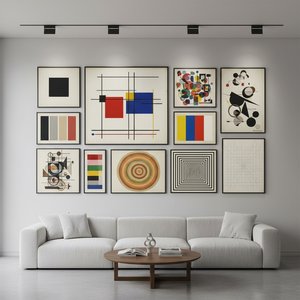
Atraskite 10 geometrinės abstrakcijos šedevrų – nuo Mondriano iki Malevičiaus! Sužinokite apie Piet Mondrian, Kazimir Malevič ir kitus menininkus. Meno kūriniai jūsų interjerui | Most-Famous-Paintings.com
Journey through Wassily Kandinsky's 25 most iconic abstract paintings. Explore his revolutionary use of color, form & spiritual expressionism. Find museum-quality Kandinsky reproductions and elevate your home decor with Most-Famous-Paintings.com. Discover all masterpieces on Most-Famous-Paintings.com!

Immerse yourself in the captivating world of slate blue! Explore 10 iconic paintings by Monet, Van Gogh & Renoir. Discover their stories, techniques & find museum-quality art reproductions for your home at .
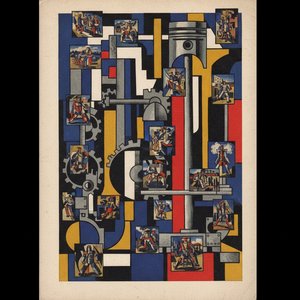
Atraskite 25 įspūdingiausius Fernand Léger šedevrus! Kubizmo meistro paveikslai, atspindintys pramonės amžių ir modernaus meno spalvas. Meno reprodukcijos interjerui – Most-Famous-Paintings.com

Atraskite 10 legendinių abstraktus ekspresionizmo kūrinių! Pažinkite Pollocko, Rothko ir kitų genijų istorijas bei jų spalvingas meno interpretacijas. Puikios meninės reprodukcijos jūsų namams – Most-Famous-Paintings.com


Sekite naujausias meno naujienas, išskirtinius pasiūlymus ir dekoravimo idėjas.
Pasakokite mums apie savo projektą, o mūsų meno ekspertai parengs jums 3 asmeniškus meno pasiūlymus.
Leiskite mums parinkti 3 variantus būtent jums – nemokamai!


 Peržiūrėti realybėje
 Pasidalinti
 Dalintis
 Išsamiau

 Atsisiųsti
 Panašūs eksponatai
 Rentgeno nuotrauka
 Automatinė diorama
 Skaityti daugiau




































 Stiklo variantas prieinamas tik pasirinkus dydį iki 110 cm


