x

Rankiniu būdu tapytas aliejus ant droblio jūsų pageidaujamame dydį ir rėmuose – mūsų menininkų darbas pagal užsakymą. ( Perejti prie spausdinimo Perjungti į vaizdą)
Pasirinkite iš mūsų nustatytų dydžių, atitinkančių originalaus meno kūrinio proporcijas.

Galite įvesti savo matmenis, kad jie atitiktų konkretų rėmą ar erdvę. Jei pasirinktas dydis neatitinka originalaus paveikslėlio proporcijų, mes arba apkropsime meno kūrinį, arba papildysime tapybą rankomis dažytい elementais. Prieš pradėdami gamybą, jūsų patvirtinimui atsiųsime skaitmeninį maketą.
Atkreipkite dėmesį, kad ekrane rodomas vaizdas neatspindi tikrojo apkarpymo ar papildymo. Tik maketas tiksliai parodys galutinę kompoziciją.
Nors galima rinktis ir individualius dydžius, rekomenduojame pasirinkti matmenis iš nustatytos sąrašo, kad būtų išlaikytos originalios proporcijos.
Pristatymas visame pasaulyje () per 3–4 savaites, o ne įprastai – per 5 savaites. (8 rugpjūtis). Kokybė lieka nepakeičiama.


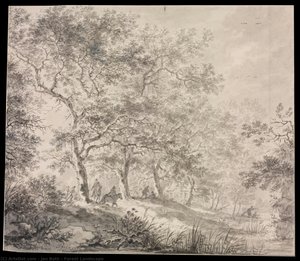
Forest Landscape
Reprodukcijos matmenys

In the grand, sweeping tapestry of the Flemish Baroque, where the names of Rubens and Rembrandt often command the spotlight, there exists a more intimate, contemplative thread woven by Hendrik van der Borcht. Born in Brussels around 1583, Van der Borcht was an artist of profound sensitivity, a master who found divinity not in grand historical spectacles, but in the quiet textures of the natural world and the silent stories told by forgotten relics. His life, spanning from the late sixteenth to the mid-seventeenth century, was one of movement and transition, as he carried the artistic traditions of his Belgian roots into the heart of Germany and beyond.
The early years of Van der Borcht’s development were shaped by a rigorous discipline of sight. Apprenticeship under Abraham Jansz van Basel in Antwerp provided him with a foundational mastery of light and color, teaching him how to manipulate shadow to create volume and atmosphere. This training instilled in him a lifelong devotion to precision. As he matured, his work began to reflect a unique duality: the ability to capture the expansive, breathing life of a forest landscape alongside the microscopic, frozen stillness of a vanitas still life. His journey was not merely one of stylistic evolution, but an intellectual pursuit, as he became an eminent antiquarian, finding deep inspiration in the ancient coins and artifacts that populated the collections of his era.
To step into a Van der Borcht landscape is to enter a sanctuary of dappled sunlight and emerald depths. Unlike the panoramic vistas that sought to overwhelm the viewer with scale, his forest interiors invite a closer, more spiritual engagement. He possessed an unparalleled ability to use chiaroscuro—the dramatic interplay between light and dark—to breathe life into the woodland floor. Through his brush, one can almost feel the humidity of the shaded thickets and the warmth of a stray sunbeam piercing through a dense canopy. These works were far more than mere scenery; they served as meditative spaces where the viewer could contemplate themes of regeneration and the eternal cycle of nature.
This mastery of atmosphere extended seamlessly into his celebrated still lifes, particularly his Rarity Collections. In these compositions, Van der Borcht transformed collections of objects into complex philosophical narratives. A single canvas might feature:
Each element was meticulously placed within a richly textured, dark background, ensuring that every glint of gold or curve of shell commanded absolute attention. His technique allowed these disparate objects to coalesce into a unified meditation on wealth, mortality, and the fleeting beauty of earthly possessions.
The historical significance of Hendrik van der Borcht lies in his ability to bridge the gap between the scientific observation of the Renaissance and the emotional intensity of the Baroque. While he may have been overshadowed by the titans of his age, his contribution to the genres of still life and landscape remains indispensable. He did not merely record the world; he interpreted it through a lens of profound reverence. His work stands as a testament to the power of detail, proving that the smallest snail shell or the most shadowed corner of a forest can hold as much weight as the grandest royal portrait.
Today, his legacy continues to resonate within the halls of museums and the hearts of art enthusiasts alike. He remains a pivotal figure whose work captures the very essence of the Dutch Golden Age—a period defined by an exquisite tension between the celebration of material abundance and a haunting awareness of its transience. Through his eyes, we are reminded that true beauty is often found in the quietest moments of observation.

1583 - 1655 , Belgium


Sekite naujausias meno naujienas, išskirtinius pasiūlymus ir dekoravimo idėjas.
Pasakokite mums apie savo projektą, o mūsų meno ekspertai parengs jums 3 asmeniškus meno pasiūlymus.
Leiskite mums parinkti 3 variantus būtent jums – nemokamai!


 Peržiūrėti realybėje
 Pasidalinti
 Dalintis
 Išsamiau

 Atsisiųsti
 Panašūs eksponatai
 Rentgeno nuotrauka
 Automatinė diorama
 Skaityti daugiau




































 Stiklo variantas prieinamas tik pasirinkus dydį iki 110 cm