x

Muziejų lygio „giclée“ arba drobos spausdinimas: greita gamyba ir lankstios apdailos parinktys. ( Pirkti rankomis tapytą paveikslą Pirkti vaizdą)





























Pasirinkite iš mūsų nustatytų dydžių, atitinkančių originalaus meno kūrinio proporcijas.

Galite nurodyti savo matmenis, kad vaizdas atitiktų konkretų rėmą ar erdvę. Jei pasirinktas dydis nesutaps su originalaus paveikslėlio proporcijomis, mes arba apkirpsime kūrinį, arba išplėsime vaizdą naudojant veideliu atspindėtą arba vientisą šoną. Skaitmeninis maketas bus išsiųstas jums patvirtinti prieš pradedant gamybą.
Atkreipkite dėmesį, kad ekrane matomas vaizdinys neatspindi tikrojo apkirpimo ar išplėtimo. Tik maketas tiksliai parodytų galutinę kompoziciją.
Nors galima rinktis ir individualius dydžius, rekomenduojame pasirinkti vieną iš išanksti nustatytų matmenų, kad būtų išlaikytos originalios proporcijos.
Pristatymas visame pasaulyje () per 2 weeks, o ne įprastas 4/5 savaičių laikotarpis. (19 rugpjūtis)


untitled (3457)
Reprodukcijos matmenys
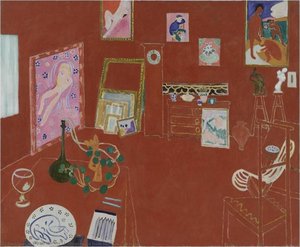
Henri Matisse's "Untitled (3457)" is not merely a depiction of a woman seated on a couch; it’s an immersion into the heart of his signature style – a vibrant, almost ecstatic exploration of color and form. Born in 1869 in Le Cateau-Cambrésis, France, Matisse's artistic journey was far from predetermined. A youthful bout of illness redirected him from law towards the intoxicating world of painting, a path he embraced with an unwavering passion that would define his entire career. This particular work, created during his mature period – roughly between 1930 and 1941 – exemplifies this dedication to simplifying subjects into their essential elements, prioritizing emotional resonance over meticulous realism.
The painting immediately captivates with its audacious use of color. The woman’s dress is a rich, saturated purple, a hue that vibrates with both luxury and introspection. This isn't the cool, muted purple of mourning; it’s a joyous, almost flamboyant shade, reflecting Matisse’s belief in the power of color to evoke feeling. The couch itself is rendered in blocks of warm ochre and terracotta, creating a sense of grounded comfort while simultaneously contributing to the overall visual harmony. Notice how he avoids shading or detailed rendering – instead, he relies on variations in tone and hue to create depth and volume. This technique, characteristic of his “Fauvist” period (though he moved beyond that style later), prioritizes the immediate impact of color over traditional representation.
The composition is deceptively simple yet profoundly layered. The woman’s crossed legs suggest a moment of repose, a quiet contemplation. She appears relaxed, almost lost in thought – an invitation for the viewer to share in her stillness. Crucially, the presence of two clocks immediately draws our attention. One, positioned near the top left corner, hints at the passage of time, while the other, situated on the center-left, seems to freeze it altogether. This juxtaposition creates a subtle tension within the scene, suggesting an awareness of both the fleeting nature of existence and the desire for permanence – perhaps mirroring Matisse’s own lifelong pursuit of capturing beauty and emotion on canvas.
The handbag resting beside her legs adds another layer of intrigue. It's not overtly significant, yet it speaks to a woman’s life, her possessions, and her readiness to engage with the world. It’s a small detail that anchors the image in a specific reality while simultaneously elevating it to a more universal state of being. The crowns she wears is also an interesting element; it can be interpreted as a symbol of royalty, power, or perhaps simply a reflection of Matisse's fascination with decorative elements and their ability to transform everyday objects into works of art.
Matisse’s technique in “Untitled (3457)” is characterized by bold, confident brushstrokes. He employs a ‘cut-out’ style, particularly evident in the simplified forms of the woman's dress and the couch. These shapes are not meticulously rendered but rather defined by strong outlines and vibrant color fields. This approach, developed during his later years, allowed him to create works that were both visually striking and emotionally resonant. The painting is executed with a loose, almost improvisational quality – as if Matisse was simply letting the colors and forms flow from his brush.
The use of flat planes of color, devoid of traditional shading or perspective, contributes significantly to the work’s sense of immediacy and emotional intensity. He deliberately avoids creating a realistic illusion; instead, he aims to evoke an *feeling* through the manipulation of color and form. This commitment to pure abstraction – while not entirely without precedent in his oeuvre – is particularly evident here, showcasing his desire to strip away unnecessary detail and focus on the essential elements of beauty.
"Untitled (3457)" represents a pivotal moment in Matisse’s artistic development. It embodies his lifelong exploration of color as a primary means of expression, demonstrating his ability to create works that are both visually stunning and deeply moving. Most-Famous-Paintings offers meticulously crafted hand-painted reproductions of this iconic piece, allowing you to experience the full impact of Matisse's genius in your own space. Whether you’re an art enthusiast, a collector seeking a statement piece, or simply someone drawn to the beauty of color, a Most-Famous-Paintings reproduction of “Untitled (3457)” is a timeless addition to any collection – a vibrant reminder of Matisse’s enduring legacy.


1869 - 1954 , Prancūzija

Explore the vibrant revolution of Fauvism. Discover how masters like Henri Matisse liberated color from reality to express pure emotion. A deep dive into art history for students and collectors seeking to understand the 'Wild Beasts' of modern art.


Sekite naujausias meno naujienas, išskirtinius pasiūlymus ir dekoravimo idėjas.
Pasakokite mums apie savo projektą, o mūsų meno ekspertai parengs jums 3 asmeniškus meno pasiūlymus.
Leiskite mums parinkti 3 variantus būtent jums – nemokamai!


 Peržiūrėti realybėje
 Pasidalinti
 Dalintis
 Išsamiau

 Atsisiųsti
 Panašūs eksponatai
 Rentgeno nuotrauka
 Automatinė diorama
 Skaityti daugiau







 Stiklo variantas prieinamas tik pasirinkus dydį iki 110 cm