


x
 Acrylic On CanvasWallArtRomanticism
 177519th Century
 59.0 x 47.0 cm
 Museo Thyssen-Bornemisza
Įsigykite aukštos skiriamosios raiškos, patobulintą skaitmeninį vaizdą, gerokai pranašesnį už internetinę peržiūrą.
Kiekvieną failą mūsų specialistai kruopščiai paruošia naudojant pažangias technologijas ir profesionalų rankinį retušavimą. Užtikriname, kad kiekvienas vaizdas pasižymėtų išskirtiniu aiškumu, tikslia spalvų atspalviu ir smulkiomis detalėmis.
Baigiamas failas el. paštu pristatomas per 72 valandas; jis optimizuotas nedelsiant naudojimui profesionalioje, redakcinėje ir spausdinimo aplinkoje. Tai ta pati kokybė, kuria pasitiki aukščiausios klasės dizaino studijos, leidyklos ir galerijos.
Atsisiųskite didelės raiškos failą asmeniniam naudojimui, spausdinimui ir kūrybiniams projektams. ( Pirkti spaudinį Pirkti rankomis tapytą paveikslą)
Pasirinkę Most-Famous-Paintings.com, jūs ne tik gaunate paveikslėlį – jūs gaunate profesionaliai patobudintą skaitmeninį kūrinį, sukurtą itin tikniai ir užtikrinantį pasitenkinimą. Štai viską, kas automatiškai pritékia jūsų užsakymui:

Jūsų aukštos raiškos skaitmeninis vaizdo failas bus išsiųstas jums el. paštu per 72 valaudas nuo užsakymo – paruoštas naudojimui be jokių papildomų veiksmų.

Jūsų meno kūrinys profesionaliai optimizuojamas naudojant pažangius dirbtinio intelekto įrankius ir rankinį redagavimą, užtikrinant maksimalią detalę, aiškumą ir spalvų tikslumą.

Atsitiktinai ištrytikote ar praradote savo failą? Nebijokite – bet kuriuo metu atsiųsime jį jums vėl nemokamai.

Mėgaukitės savo meno kūriniu akimirka – skaitiniai failai visada yra neapmokestinami, todėl nereikės mokėti muitinės, mokesčių ar pristatymo mokesčių.

Naudodami profesionalią įrangą ir spalvų valdymo sistemas, užtikriname, kad jūsų skaitmeninis vaizdas kuo tiksliau atspindėtų originalias spalvas.

Jei nebuvate patenkinti savo skaitinio vaizdo, per 60 dienų jį pertaisysime arba grąkinsime 100% sumą – be jokių klausimų.

Nepat 만족inti? Gaukite visą sumokėtą sumą per 60 dienų nuo skaitmeninio failo gavimo – be jokių papildomų klausimų.

Pirkti 3 nuotraukas – pasiūla 10% - Pirkti 5 – pasiūla 15% - Pirkti 10 ir daugiau – pasiūla 20%. Puikiai tinka kūrybiniams projektams, galerijoms bei agentūroms.
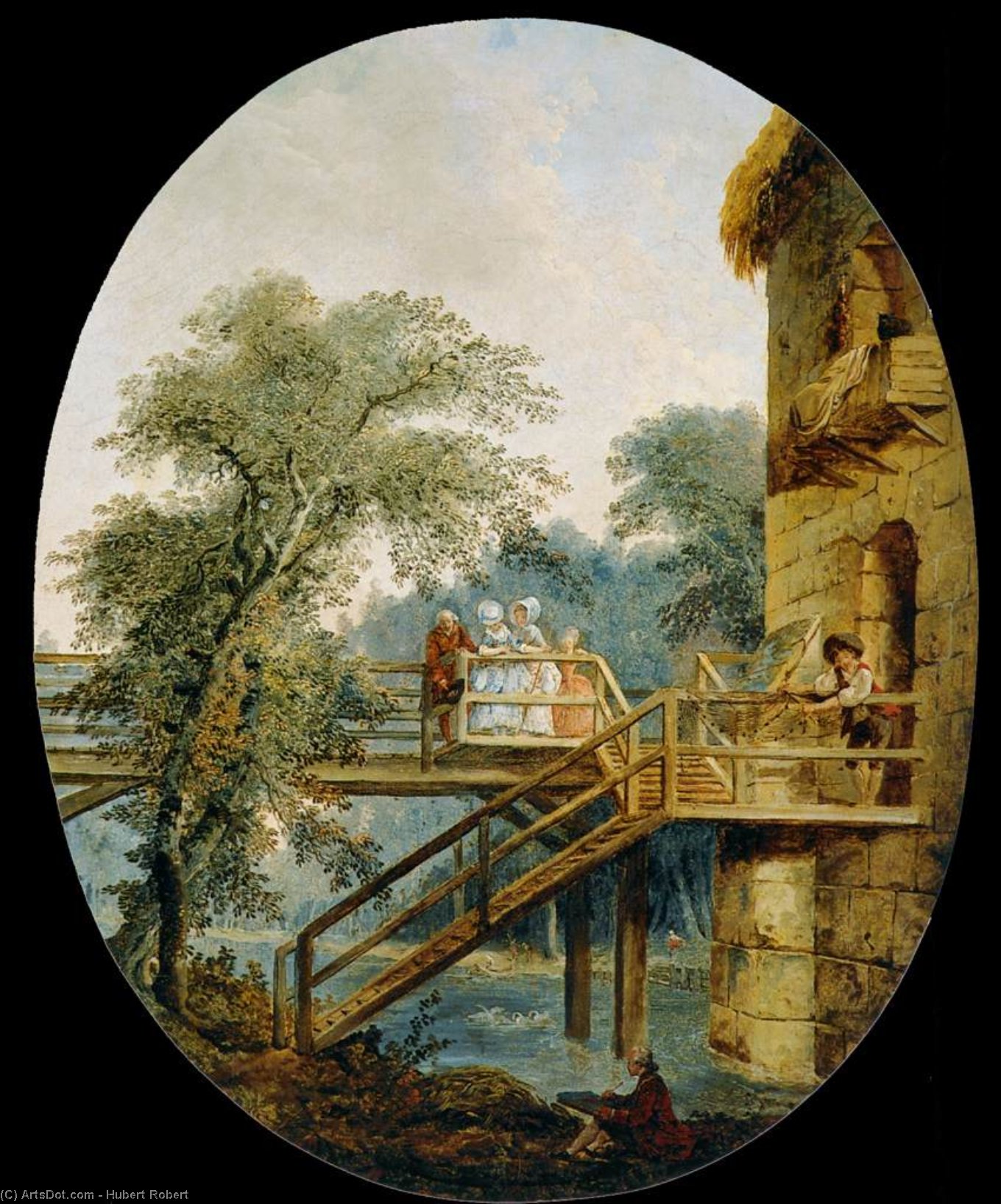
Hubert Robert's "The Footbridge," painted in 1775, isn’t merely a landscape; it’s a carefully constructed dreamscape—a poignant meditation on the passage of time, the allure of ruins, and the delicate balance between nature and human intervention. This captivating oval canvas, now housed within the Thyssen-Bornemisza Museum in Madrid, transports the viewer to a serene yet subtly melancholic world where ancient structures intertwine with the vibrant energy of a bustling scene. Robert, a master of “capriccio,” expertly blends observation with imagination, creating an atmosphere thick with romanticism and a profound sense of nostalgia.
The painting unfolds across a gently sloping hillside, dominated by the skeletal remains of a Roman bridge—a deliberate echo of the grandeur that once was. This isn’t a literal depiction of decay; rather, Robert transforms the ruins into symbols of enduring beauty and timelessness. The weathered stones, draped with ivy and moss, possess an almost ethereal quality, suggesting they are not merely crumbling remnants but portals to another era. The artist's skillful use of light and shadow further enhances this effect, bathing the scene in a soft, diffused glow that evokes the golden hour—a time when reality seems to soften and dreams take flight.
Robert’s fascination with ruins stemmed from his extended sojourn in Rome during the 1760s. Immersed in the city's ancient history, he meticulously sketched and studied the remnants of its imperial past—the Colosseum, the Forum, and countless other crumbling monuments. These observations profoundly shaped his artistic vision, leading him to develop a unique style characterized by an almost obsessive attention to detail and a masterful ability to evoke atmosphere. His technique is distinctly informed by Giovanni Battista Piranesi and Giovanni Paolo Panini, both Roman artists known for their depictions of architecture and ruins. Robert absorbed their techniques—particularly the use of perspective and light—and integrated them into his own distinctive style.
The painting’s composition is meticulously balanced, drawing the eye through a series of carefully orchestrated elements. The figures in the foreground – a man sketching with a small easel and a dog near a bench – are rendered with a delicate realism that contrasts subtly with the idealized beauty of the ruins. Robert employs a loose, expressive brushstroke—a hallmark of his style—to capture the textures of stone, foliage, and water. The color palette is restrained yet evocative, dominated by muted greens, blues, and browns, punctuated by flashes of vibrant color in the flowers and foliage. This careful orchestration creates a sense of harmony and tranquility, inviting the viewer to lose themselves in the scene’s timeless beauty.
Beyond its aesthetic appeal, “The Footbridge” is rich in symbolic meaning. The bridge itself represents connection—a link between past and present, reality and imagination. It also symbolizes transition and impermanence, mirroring the fleeting nature of human life and the inevitable decay of all things. The ruins, far from being symbols of despair, embody a sense of resilience and enduring beauty. They remind us that even in destruction, there is still grace and wonder to be found.
Robert’s painting taps into deep-seated emotions—a longing for the past, a fascination with the sublime, and a recognition of the transience of earthly existence. It evokes a sense of melancholy and nostalgia, yet also offers a glimmer of hope through its celebration of beauty and imagination. The scene invites contemplation on themes of memory, loss, and the enduring power of art to transcend time.
Hubert Robert’s “The Footbridge” stands as a quintessential example of 18th-century Romanticism—a movement that emphasized emotion, imagination, and the beauty of nature. His work profoundly influenced subsequent generations of artists, including Caspar David Friedrich and J.M.W. Turner, who continued to explore themes of ruins, landscapes, and the relationship between humanity and the natural world. Today, “The Footbridge” remains a beloved masterpiece—a testament to Robert’s artistic genius and his ability to capture the essence of beauty in a fleeting moment.


1733 - 1808 , Prancūzija


Sekite naujausias meno naujienas, išskirtinius pasiūlymus ir dekoravimo idėjas.
Pasakokite mums apie savo projektą, o mūsų meno ekspertai parengs jums 3 asmeniškus meno pasiūlymus.
Leiskite mums parinkti 3 variantus būtent jums – nemokamai!


 Peržiūrėti realybėje
 Pasidalinti
 Dalintis
 Išsamiau

 Atsisiųsti
 Panašūs eksponatai
 Rentgeno nuotrauka
 Automatinė diorama
 Skaityti daugiau


