x

Rankiniu būdu tapytas aliejus ant droblio jūsų pageidaujamame dydį ir rėmuose – mūsų menininkų darbas pagal užsakymą. ( Pirkti spaudinį Pirkti vaizdą)





























Pasirinkite iš mūsų nustatytų dydžių, atitinkančių originalaus meno kūrinio proporcijas.

Galite įvesti savo matmenis, kad jie atitiktų konkretų rėmą ar erdvę. Jei pasirinktas dydis neatitinka originalaus paveikslėlio proporcijų, mes arba apkropsime meno kūrinį, arba papildysime tapybą rankomis dažytい elementais. Prieš pradėdami gamybą, jūsų patvirtinimui atsiųsime skaitmeninį maketą.
Atkreipkite dėmesį, kad ekrane rodomas vaizdas neatspindi tikrojo apkarpymo ar papildymo. Tik maketas tiksliai parodys galutinę kompoziciją.
Nors galima rinktis ir individualius dydžius, rekomenduojame pasirinkti matmenis iš nustatytos sąrašo, kad būtų išlaikytos originalios proporcijos.
Pristatymas visame pasaulyje () per 3–4 savaites, o ne įprastai – per 5 savaites. (16 rugpjūtis). Kokybė lieka nepakeičiama.


sappho and phaon
Reprodukcijos matmenys
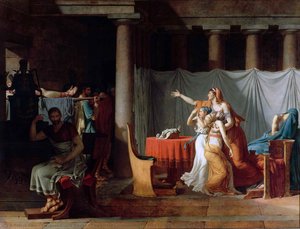
Jacques-Louis David’s “Sappho & Phaon,” completed in 1809, stands as a testament to the enduring power of Neoclassical art—a beacon of serene beauty amidst the turbulent backdrop of Napoleon’s reign and the reverberations of the French Revolution. More than just a depiction of mythic love, this painting embodies David's unwavering commitment to classical ideals while subtly reflecting the anxieties and aspirations of his era.
The artwork portrays Sappho, revered poetess of Lesbos, reclining on a bed alongside Phaon, her admirer. The scene is bathed in soft light, emphasizing tranquility and intimacy—a deliberate contrast to the violent upheavals that gripped France during David’s lifetime. Two angelic figures flank the composition, lending an aura of divine grace and reinforcing the painting's moral seriousness.
David meticulously adhered to the tenets of Neoclassicism—a movement championed for its return to Greco-Roman artistic principles after the excesses of Rococo. His brushstrokes are deliberate, controlled, and strive for anatomical accuracy, mirroring the sculptural style favored by artists like Michelangelo. The artist skillfully employs chiaroscuro – dramatic contrasts between light and shadow – to sculpt form and heighten emotional impact. Observe how David renders Sappho’s delicate posture and Phaon's attentive gaze with remarkable detail.
"Sappho & Phaon" was created during a pivotal moment in European history—the Napoleonic era, following the overthrow of Louis XVI. While David championed Napoleon’s vision of order and grandeur, he simultaneously wrestled with the burgeoning Romantic movement's emphasis on emotion and imagination. The painting reflects this tension: its idealized depiction of love speaks to classical notions of beauty and virtue, yet it is imbued with a palpable sense of vulnerability and longing.
The mythological narrative itself carries significant symbolic weight. Sappho represents intellectual purity and artistic devotion—qualities valued by Neoclassical thinkers. Phaon embodies passionate desire and admiration, highlighting the complexities inherent in human relationships. The inclusion of angels underscores the painting’s moral dimension, suggesting that true love possesses a transcendent quality.
"Sappho & Phaon" transcends mere visual representation; it evokes profound emotion. The serene stillness of the scene invites contemplation and offers solace from the anxieties of its time. David’s masterful composition captures not only the physical beauty of the figures but also their inner states—a testament to his ability to convey complex psychological nuances through art. It remains a captivating image, demonstrating how classical ideals can inspire timeless artistic expression.


1748 - 1800 , Prancūzija

Explore the profound elegance of Neoclassicism. Discover how Enlightenment ideals, the discovery of Pompeii, and masters like Jacques-Louis David revived the glory of Greek and Roman antiquity through art defined by order, reason, and timeless beauty.

Explore the profound elegance of Neoclassicism. Discover how the Enlightenment era embraced Greek and Roman ideals of order, reason, and symmetry to redefine art history through masters like Mengs and Hamilton. A definitive guide for history lovers and art collectors.


Sekite naujausias meno naujienas, išskirtinius pasiūlymus ir dekoravimo idėjas.
Pasakokite mums apie savo projektą, o mūsų meno ekspertai parengs jums 3 asmeniškus meno pasiūlymus.
Leiskite mums parinkti 3 variantus būtent jums – nemokamai!


 Peržiūrėti realybėje
 Pasidalinti
 Dalintis
 Išsamiau

 Atsisiųsti
 Panašūs eksponatai
 Rentgeno nuotrauka
 Automatinė diorama
 Skaityti daugiau







 Stiklo variantas prieinamas tik pasirinkus dydį iki 110 cm