x


 Pirkti atspaudą Pirkti skaitmeninį paveikslą
 Pasidalinti
 Išsamiau
 Pridėti į mėgstamiausius
 Atsisiųsti
 Panašūs eksponatai
 Rentgeno nuotrauka
 Automatinė diorama
 Oil On CanvasWallArtExpressionistic Symbolism
 1883
1883 115.0 x 165.0 cm
Rankiniu būdu tapytas aliejus ant droblio jūsų pageidaujamame dydį ir rėmuose – mūsų menininkų darbas pagal užsakymą.





























Pasirinkite iš mūsų nustatytų dydžių, atitinkančių originalaus meno kūrinio proporcijas.

Galite įvesti savo matmenis, kad jie atitiktų konkretų rėmą ar erdvę. Jei pasirinktas dydis neatitinka originalaus paveikslėlio proporcijų, mes arba apkropsime meno kūrinį, arba papildysime tapybą rankomis dažytい elementais. Prieš pradėdami gamybą, jūsų patvirtinimui atsiųsime skaitmeninį maketą.
Atkreipkite dėmesį, kad ekrane rodomas vaizdas neatspindi tikrojo apkarpymo ar papildymo. Tik maketas tiksliai parodys galutinę kompoziciją.
Nors galima rinktis ir individualius dydžius, rekomenduojame pasirinkti matmenis iš nustatytos sąrašo, kad būtų išlaikytos originalios proporcijos.
Pristatymas visame pasaulyje () per 3–4 savaites, o ne įprastai – per 5 savaites. (20 liepa). Kokybė lieka nepakeičiama.


The Drunkards
Reprodukcijos matmenys
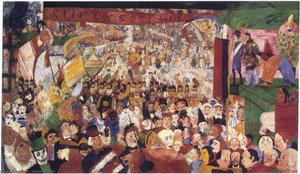
James Ensor's "The Drunkards," painted in 1883, isn’t merely a depiction of two men enjoying wine; it’s a meticulously crafted exploration of human vulnerability and the unsettling beauty found within moments of shared experience. Housed at The Minneapolis Institute of Arts, this oil on canvas offers a glimpse into the artist's uniquely dark and psychologically astute vision – a world saturated with masks, shadows, and an underlying current of melancholy. Ensor, born in Ostend, Belgium, to an English father and Belgian mother, possessed a perspective shaped by his upbringing amidst the vibrant chaos of a seaside resort town, a place brimming with theatricality and the allure of hidden identities. This early exposure undoubtedly fueled his lifelong preoccupation with disguise and the performance inherent in human interaction, themes powerfully realized within this evocative work.
“The Drunkards” is a masterclass in controlled darkness. Ensor’s deliberate choice of a predominantly black and white palette immediately establishes an atmosphere of introspection and quiet unease. The stark contrast amplifies the figures' isolation, drawing our attention to their faces – etched with weariness and perhaps a hint of resignation. The brushstrokes themselves are not smooth or polished; instead, they possess a restless energy, conveying a sense of urgency and emotional turbulence. This expressive technique is particularly evident in the rendering of the seated man’s face, where the paint seems to writhe with unspoken thoughts. The texture of the canvas itself contributes to this effect, inviting us to linger and examine the subtle shifts in tone and form.
Beyond its immediate depiction, “The Drunkards” is rich with symbolic weight. The bottle of wine, positioned centrally between the two men, can be interpreted as a potent symbol of connection – a shared ritual that momentarily bridges the gap between them. However, it also represents an escape, a temporary reprieve from the burdens of existence. The drunken state of one figure speaks to this desire for release, suggesting a yearning for oblivion or perhaps simply a rejection of societal expectations. The other man’s posture, observing his companion with a mixture of concern and perhaps even amusement, hints at the complexities of friendship and the acceptance of flawed humanity. The surrounding chairs and table further reinforce the sense of intimacy, while simultaneously highlighting the precariousness of their shared moment.
James Ensor’s work stands as a pivotal bridge between traditional academic painting and the burgeoning avant-garde movements of the late 19th century. Influenced by artists like Pierre-Auguste Renoir and Edouard Manet, yet forging his own distinct path, Ensor embraced elements of Expressionism and Surrealism – foreshadowing their later developments. His exploration of psychological themes, coupled with his unconventional use of color and composition, positioned him as a visionary artist ahead of his time. “The Drunkards” exemplifies this spirit of innovation, offering a raw and unflinching portrayal of human experience that continues to resonate with viewers today. It’s a piece that invites contemplation, prompting us to consider the hidden depths beneath the surface of everyday life and the enduring power of shared moments, however fleeting or unsettling they may be.


1860 - 1949 , Belgija
Atraskite 25 įspūdingiausius Džeimso Ebboto Maknilo Vislerio kūrinius! Tonalizmo meistras, noktiurnai ir portretai – meno istorijos šedevrai jūsų interjerui. Pirkti aukštos kokybės reprodukcijas Most-Famous-Paintings.com

Explore 10 iconic white paintings by Monet, Whistler & Rothko! Discover the stories behind these serene masterpieces and their impact on art history. Find museum-quality reproductions for your home decor at .

Explore 25 iconic Sir Alfred Munnings paintings! Discover the beauty of British Impressionism, equine art & rural England. Find museum-quality reproductions and elevate your home decor with Most-Famous-Paintings. Explore the full collection online.

Explore the unsettling yet captivating world of James Ensor, a pioneer of Expressionism. Discover his satirical masterpieces, symbolic imagery & lasting influence on modern art. High-quality reproductions available at Most-Famous-Paintings.

Explore 10 iconic paintings dominated by black tones, from Rembrandt’s chiaroscuro to Goya's dark expressions. Discover the stories behind these masterpieces & find museum-quality art reproductions for your home at .


Sekite naujausias meno naujienas, išskirtinius pasiūlymus ir dekoravimo idėjas.
Pasakokite mums apie savo projektą, o mūsų meno ekspertai parengs jums 3 asmeniškus meno pasiūlymus.
Leiskite mums parinkti 3 variantus būtent jums – nemokamai!


 Dalintis

 Skaityti daugiau







 Stiklo variantas prieinamas tik pasirinkus dydį iki 110 cm