x

 Preview
 Užsisakyti kopiją Pirkti skaitmeninį paveikslą
 Pasidalinti
 Išsamiau
 Pridėti į mėgstamiausius
 Atsisiųsti
 Panašūs eksponatai
 Rentgeno nuotrauka
 Automatinė diorama
 WatercolorWallArtImpressionism
 190319th Century
 46.0 x 62.0 cm
Muziejų lygio „giclée“ arba drobos spausdinimas: greita gamyba ir lankstios apdailos parinktys.





























Pasirinkite iš mūsų nustatytų dydžių, atitinkančių originalaus meno kūrinio proporcijas.

Galite nurodyti savo matmenis, kad vaizdas atitiktų konkretų rėmą ar erdvę. Jei pasirinktas dydis nesutaps su originalaus paveikslėlio proporcijomis, mes arba apkirpsime kūrinį, arba išplėsime vaizdą naudojant veideliu atspindėtą arba vientisą šoną. Skaitmeninis maketas bus išsiųstas jums patvirtinti prieš pradedant gamybą.
Atkreipkite dėmesį, kad ekrane matomas vaizdinys neatspindi tikrojo apkirpimo ar išplėtimo. Tik maketas tiksliai parodytų galutinę kompoziciją.
Nors galima rinktis ir individualius dydžius, rekomenduojame pasirinkti vieną iš išanksti nustatytų matmenų, kad būtų išlaikytos originalios proporcijos.
Pristatymas visame pasaulyje () per 2 weeks, o ne įprastas 4/5 savaičių laikotarpis. (26 liepa)


Venice
Reprodukcijos matmenys
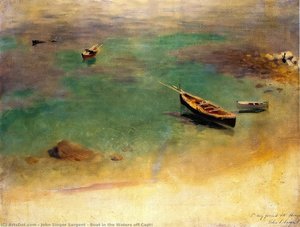
John Singer Sargent’s "Venice," painted in 1903, is a captivating watercolor that transports viewers to the heart of this iconic Italian city at twilight. The artwork embodies the essence of Venetian charm while showcasing Sargent's masterful handling of light and color.
The painting depicts a quintessential Venetian canal scene. Vertical elements—arched doorways and building facades—dominate the composition, contrasted by horizontal lines representing the water’s surface. The perspective is somewhat flattened, characteristic of watercolor renderings, with distant elements becoming less defined. Sargent focuses on architectural details within the canal setting, evoking a strong sense of place and history. The scene captures a moment of quietude, likely dusk or dawn, where the fading light softens forms and obscures details.
Sargent’s style leans towards Impressionism, evident in his loose brushstrokes and emphasis on capturing fleeting moments of light and color rather than precise detail. The technique utilizes wet-on-wet watercolor, creating soft edges and blending colors, particularly noticeable in the reflections on the water's surface. Pools of color, accented by curving brushstrokes, evoke the gentle undulation of the canal’s murky water. Texture is visible through the brushwork and variations in paint application. The overall effect is one of atmospheric depth and a sense of immediacy.
Sargent visited Venice almost every year between 1898 and 1913, drawn to its beauty and the community of artists who gathered there. Contemporary travel accounts often described the melancholy beauty of Venice at night, suggesting a sense of fading grandeur. The painting reflects this sentiment, capturing not just the visual splendor but also an underlying feeling of nostalgia. Symbolically, the scene might represent serenity, urban decay, or the enduring allure of a historic city.
“Venice” evokes a contemplative and peaceful mood with a hint of wistfulness. The muted, cool color palette—dominated by shades of grey, blue, and brown—contributes to this atmosphere. The painting invites viewers to pause and reflect on the beauty of Venice, its history, and the passage of time. It is a testament to Sargent’s ability to capture not just what he saw but also how he felt about it.


1856 - 1925 , Italija

Explore the short but impactful career of Richard Parkes Bonington, a pivotal figure bridging British Romanticism & French plein air painting. Discover his luminous landscapes and lasting influence on Delacroix & beyond.

Explore the life & art of Alice Pike Barney, a pioneering American Impressionist painter who defied convention and fostered Washington D.C.'s vibrant arts scene. Discover her unique style, portraits, and lasting legacy.

Explore 25 iconic John Singer Sargent paintings – from dazzling portraits to Impressionist landscapes. Discover the stories behind Madame X, El Jaleo & more! Find museum-quality art reproductions and elevate your home decor with Most-Famous-Paintings.com.

Explore the captivating history of watercolor painting, from ancient techniques to modern masters like Kandinsky & Blake. Discover essential artists, collecting tips & the emotional power of this luminous medium. Expert insights for art enthusiasts.

Explore the rich history of river scenes in painting! From Renaissance masters to Impressionist visions, discover renowned artists & movements. Find your perfect serene escape with Most-Famous-Paintings.


Sekite naujausias meno naujienas, išskirtinius pasiūlymus ir dekoravimo idėjas.
Pasakokite mums apie savo projektą, o mūsų meno ekspertai parengs jums 3 asmeniškus meno pasiūlymus.
Leiskite mums parinkti 3 variantus būtent jums – nemokamai!


 Dalintis

 Skaityti daugiau







 Stiklo variantas prieinamas tik pasirinkus dydį iki 110 cm