x

Rankiniu būdu tapytas aliejus ant droblio jūsų pageidaujamame dydį ir rėmuose – mūsų menininkų darbas pagal užsakymą. ( Pirkti spaudinį Pirkti vaizdą)





























Pasirinkite iš mūsų nustatytų dydžių, atitinkančių originalaus meno kūrinio proporcijas.

Galite įvesti savo matmenis, kad jie atitiktų konkretų rėmą ar erdvę. Jei pasirinktas dydis neatitinka originalaus paveikslėlio proporcijų, mes arba apkropsime meno kūrinį, arba papildysime tapybą rankomis dažytい elementais. Prieš pradėdami gamybą, jūsų patvirtinimui atsiųsime skaitmeninį maketą.
Atkreipkite dėmesį, kad ekrane rodomas vaizdas neatspindi tikrojo apkarpymo ar papildymo. Tik maketas tiksliai parodys galutinę kompoziciją.
Nors galima rinktis ir individualius dydžius, rekomenduojame pasirinkti matmenis iš nustatytos sąrašo, kad būtų išlaikytos originalios proporcijos.
Pristatymas visame pasaulyje () per 3–4 savaites, o ne įprastai – per 5 savaites. (15 rugpjūtis). Kokybė lieka nepakeičiama.


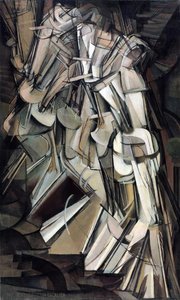
Rotoreliefs (Optical Discs) 2
Reprodukcijos matmenys
Marcel Duchamp, a name synonymous with artistic rebellion and intellectual provocation, stands as one of the most influential figures of the 20th century. While celebrated for his “readymades” – ordinary manufactured objects elevated to the status of art – his earlier explorations into kinetic art, embodied in the Rotoreliefs, reveal a fascinating precursor to his conceptual concerns and a profound engagement with the nature of perception itself. These weren’t static paintings meant for passive observation; they were designed to be *experienced*, set in motion to challenge our understanding of form, space, and even reality.
Created primarily in 1935, though conceived earlier, the Rotoreliefs (Optical Discs) are a series of optical illusion discs. Duchamp wasn’t interested in traditional painting techniques; instead, he employed lithography to create these circular compositions featuring abstract designs – often concentric circles and spiraling patterns rendered in stark black and white or bold color contrasts. The genius lies not just in the imagery itself, but in its intended function. These discs were designed to be mounted on a turntable (originally a modified phonograph) and spun at approximately 33 revolutions per minute. As they rotated, the designs would morph and distort, creating a mesmerizing optical effect – a sense of depth, movement, and even instability. The experience wasn’t about *seeing* a picture; it was about witnessing an illusion unfold before your eyes.
To understand the Rotoreliefs, one must grasp Duchamp’s evolving artistic philosophy. He increasingly rejected what he termed “retinal” art – works that merely pleased the eye without engaging the intellect. He sought to move beyond aesthetics, aiming instead for a cerebral and conceptual approach. The spinning discs were an attempt to bypass purely visual appreciation and tap into the mechanics of perception itself. Duchamp was fascinated by optics and how our brains interpret what we see. He deliberately created ambiguity and instability, forcing the viewer to actively participate in constructing meaning from the shifting forms. This active engagement foreshadowed his later readymades, where the artist’s choice – rather than skillful execution – became the primary artistic gesture.
The Rotoreliefs weren't simply a fleeting experiment; they represent a pivotal moment in art history. They anticipated Op Art (Optical Art) by decades, influencing artists like Bridget Riley and Victor Vasarely who similarly explored the perceptual effects of geometric abstraction. More broadly, Duchamp’s work paved the way for Conceptual Art, where the idea behind the artwork takes precedence over its physical manifestation. The Rotoreliefs, with their emphasis on process, illusion, and intellectual engagement, embody this shift in artistic priorities. Owning a reproduction of one of these works isn't just acquiring an aesthetically pleasing image; it’s possessing a piece of art history – a testament to Duchamp’s revolutionary spirit and his enduring impact on the way we think about art and perception.


1887 - 1968 , Prancūzija

Explore the profound impact of Minimalism and Geometric Abstraction. From Mondrian to Malevich, discover how stripping art to its essential forms revolutionized modern aesthetics through our expert-led historical guide.


Sekite naujausias meno naujienas, išskirtinius pasiūlymus ir dekoravimo idėjas.
Pasakokite mums apie savo projektą, o mūsų meno ekspertai parengs jums 3 asmeniškus meno pasiūlymus.
Leiskite mums parinkti 3 variantus būtent jums – nemokamai!


 Peržiūrėti realybėje
 Pasidalinti
 Dalintis
 Išsamiau

 Atsisiųsti
 Panašūs eksponatai
 Rentgeno nuotrauka
 Automatinė diorama

 Skaityti daugiau







 Stiklo variantas prieinamas tik pasirinkus dydį iki 110 cm