


x

Rankiniu būdu tapytas aliejus ant droblio jūsų pageidaujamame dydį ir rėmuose – mūsų menininkų darbas pagal užsakymą. ( Pirkti spaudinį Pirkti vaizdą)





























Pasirinkite iš mūsų nustatytų dydžių, atitinkančių originalaus meno kūrinio proporcijas.

Galite įvesti savo matmenis, kad jie atitiktų konkretų rėmą ar erdvę. Jei pasirinktas dydis neatitinka originalaus paveikslėlio proporcijų, mes arba apkropsime meno kūrinį, arba papildysime tapybą rankomis dažytい elementais. Prieš pradėdami gamybą, jūsų patvirtinimui atsiųsime skaitmeninį maketą.
Atkreipkite dėmesį, kad ekrane rodomas vaizdas neatspindi tikrojo apkarpymo ar papildymo. Tik maketas tiksliai parodys galutinę kompoziciją.
Nors galima rinktis ir individualius dydžius, rekomenduojame pasirinkti matmenis iš nustatytos sąrašo, kad būtų išlaikytos originalios proporcijos.
Pristatymas visame pasaulyje () per 3–4 savaites, o ne įprastai – per 5 savaites. (21 rugpjūtis). Kokybė lieka nepakeičiama.


Trinity (detail)
Reprodukcijos matmenys
Masaccio’s “Trinity (detail),” housed within the magnificent Santa Maria Novella in Florence, isn't merely a fresco; it’s a pivotal moment in art history – a visual manifesto declaring the arrival of the High Renaissance. Painted between 1425 and 1427, this intimate section captures the essence of Masaccio’s revolutionary approach to depicting reality, a departure from the stylized elegance of the preceding Gothic era and a profound influence on generations of artists to come. The scene, centered around an elder figure representing God the Father, is imbued with a startling sense of depth, volume, and emotional resonance that was unprecedented for its time.
The fresco’s immediate impact lies in its masterful use of linear perspective. Masaccio didn't simply depict space; he created it – a meticulously constructed illusion of three-dimensionality that draws the viewer directly into the scene. The architecture, modeled after Roman precedents and likely informed by Filippo Brunelleschi’s groundbreaking experiments with perspective, recedes realistically towards a vanishing point, anchoring the figures within a believable environment. This isn't a flat surface; it’s a stage where forms exist in relation to each other, creating an astonishingly convincing sense of space.
Masaccio’s palette is restrained yet remarkably effective. Earth tones – ochres, siennas, and umbers – dominate the composition, lending it a dignified solemnity. However, within this muted range, he skillfully employs chiaroscuro—the dramatic interplay of light and shadow—to sculpt the figures and define their forms. The light source, emanating from an unseen point above and to the right, casts deep shadows that accentuate the musculature of the Father’s body, imbuing him with a palpable sense of weight and presence. This subtle manipulation of light isn't merely decorative; it’s integral to Masaccio’s goal of creating realistic figures that appear to exist within a tangible world.
The figure of the Father is particularly striking. His face, rendered with astonishing detail – the furrowed brow, the thoughtful gaze—conveys an intense contemplation. He isn't depicted as a distant deity but as a human being grappling with profound questions. The folds of his garment are meticulously modeled, demonstrating Masaccio’s mastery of drapery and his commitment to accurately representing the texture and weight of fabric.
Beyond its technical brilliance, “Trinity (detail)” is rich in symbolic meaning. The central figure represents God the Father, while the dove hovering above symbolizes the Holy Spirit. The presence of Mary and Saint John—both deeply revered figures within Christian iconography—adds layers of spiritual significance to the scene. The inclusion of a *memento mori* – a reminder of death – beneath the depiction of the Trinity serves as a poignant counterpoint, reminding viewers of the ephemeral nature of earthly existence and the importance of seeking salvation.
The donor figures flanking the central archway are particularly intriguing. Their placement within the architectural framework suggests that they represent patrons who commissioned the fresco—likely members of the Florentine elite. The gesture of prayer, with their hands raised in supplication, underscores the devotional purpose of the artwork and its intended audience.
Masaccio’s “Trinity (detail)” represents a watershed moment in art history. It marked a decisive shift away from the stylized conventions of the Gothic era and toward a more naturalistic and intellectually rigorous approach to painting. His innovations in perspective, his mastery of chiaroscuro, and his profound understanding of human anatomy profoundly influenced artists like Leonardo da Vinci and Michelangelo, shaping the course of Western art for centuries to come. Reproductions of this masterpiece offer a unique opportunity to experience firsthand the genius of one of the Renaissance’s most visionary painters.
Additional Research:

Tommaso di Ser Giovanni di Simone, geriau žinomas kaip Masaccio (reiškiantis „neklavus Tomas“), buvo svarbiausia figūra Ankstyvajame Italijos Renesanse. Gimęs 1401 metų gruodžio 21 dieną San Džovanio Valdarno mieste, Italijoje, ir tragiškai jaunai miręs 1428 metais, jo trumpa karjera padarė revoliuciją tapyboje dėl naujoviško realizmo, perspektyvos ir kiaroskuoro (šviesos ir tamsos ryškių kontrastų naudojimo). Nepaisant savo trumpo gyvenimo, Masaccio poveikis vėlesnės kartos menininkams buvo didžiulis, nustatydamas naują natūralizmo standartą ir paveikdamas Vakarų meno eigą.
Masaccio poveikis Vakarų meno eigai yra nepamatuojamas, nepaisant jo tragiškai trumpo gyvenimo. Jo naujovės perspektyvoje, kiaroskuore ir natūralizme fundamentaliai pakeitė tai, kaip menininkai vaizdavo pasaulį. Jis sėkmingai užpildė spragą tarp viduramžių meno konvencijų ir besiformuojančių Renesanso idealų.
Masaccio palikimas išlieka vienas svarbiausių ir įtakingiausių menininkų istorijoje. Jis stovi kaip esminė figūra pereinant nuo viduramžių meno prie Renesanso meno, amžinai keičiant būdą, kuriuo suvokiame ir atstovaujame pasauliui per tapybą. Jo trumpa, bet puiki karjera yra įrodymas inovacijų galiai ir nuolatinis meninio genijaus poveikis.

1401 - 1429 , Italija
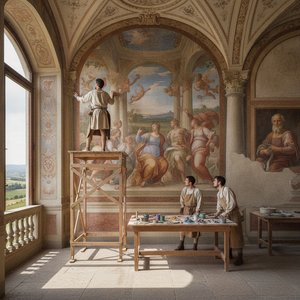
Explore the profound history and technical mastery of fresco painting. From ancient Roman murals to Michelangelo's Sistine Chapel, discover the enduring chemistry and artistry behind this timeless wall painting technique used by the world's greatest masters.


Sekite naujausias meno naujienas, išskirtinius pasiūlymus ir dekoravimo idėjas.
Pasakokite mums apie savo projektą, o mūsų meno ekspertai parengs jums 3 asmeniškus meno pasiūlymus.
Leiskite mums parinkti 3 variantus būtent jums – nemokamai!


 Peržiūrėti realybėje
 Pasidalinti
 Dalintis
 Išsamiau

 Atsisiųsti
 Panašūs eksponatai
 Rentgeno nuotrauka
 Automatinė diorama


 Skaityti daugiau







 Stiklo variantas prieinamas tik pasirinkus dydį iki 110 cm


![Stanze Vaticane - The Parnassus (detail) [07] — Rafaelis, High Renaissance](/media/artworks/images-thumb/3c/a1/3ca1620e84d3f2fe4e94d9bb954e0eca.jpg)


