


x

Rankiniu būdu tapytas aliejus ant droblio jūsų pageidaujamame dydį ir rėmuose – mūsų menininkų darbas pagal užsakymą. ( Perejti prie spausdinimo Perjungti į vaizdą)





























Pasirinkite iš mūsų nustatytų dydžių, atitinkančių originalaus meno kūrinio proporcijas.

Galite įvesti savo matmenis, kad jie atitiktų konkretų rėmą ar erdvę. Jei pasirinktas dydis neatitinka originalaus paveikslėlio proporcijų, mes arba apkropsime meno kūrinį, arba papildysime tapybą rankomis dažytい elementais. Prieš pradėdami gamybą, jūsų patvirtinimui atsiųsime skaitmeninį maketą.
Atkreipkite dėmesį, kad ekrane rodomas vaizdas neatspindi tikrojo apkarpymo ar papildymo. Tik maketas tiksliai parodys galutinę kompoziciją.
Nors galima rinktis ir individualius dydžius, rekomenduojame pasirinkti matmenis iš nustatytos sąrašo, kad būtų išlaikytos originalios proporcijos.
Pristatymas visame pasaulyje () per 3–4 savaites, o ne įprastai – per 5 savaites. (7 rugpjūtis). Kokybė lieka nepakeičiama.


'Study to ''Flying Carpet'''
Reprodukcijos matmenys
This evocative study, created in 1915 by the visionary artist Nicholas Roerich, offers a tantalizing glimpse into the genesis of his celebrated masterpiece, "Flying Carpet." More than just a preparatory sketch, it’s a potent distillation of Roerich's core artistic concerns – movement, atmosphere, and the profound human yearning for transcendence. Executed with remarkable economy of line in pencil on paper, the artwork immediately captivates with its dynamic composition and restrained palette, hinting at the grandeur that would eventually unfold in the finished canvas.
The color palette is strikingly limited, relying almost entirely on muted earth tones – shades of brown, beige, and grey. This monochromatic approach wasn't a limitation for Roerich; rather, it served to heighten the focus on line and form, emphasizing the expressive potential of the medium. The lack of strong contrasts contributes to an overall sense of quiet contemplation, inviting viewers to lose themselves in the subtle nuances of texture and movement.
Beyond its formal qualities, ‘Study to “Flying Carpet”’ is rich in symbolic meaning. The soaring birds undoubtedly represent aspiration, freedom, and the human desire to transcend earthly limitations. Their flight can be interpreted as a metaphor for spiritual ascent – a journey towards enlightenment or a deeper understanding of oneself. The beach scene, with its grounding elements of sand and water, provides a necessary counterpoint, reminding us of our connection to the earth and the importance of balance.
‘Study to “Flying Carpet”’ is more than just a preparatory sketch; it's a powerful testament to Nicholas Roerich’s artistic vision and his profound belief in the power of art to inspire, uplift, and connect us to something greater than ourselves. Its evocative quality and masterful use of line make it a captivating piece for collectors and interior designers seeking to infuse their spaces with a sense of movement, tranquility, and spiritual resonance.

1874 - 1947 , Rusija
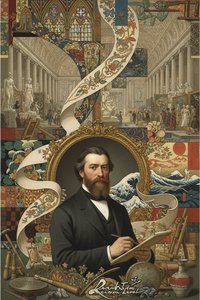
Explore the captivating world of Eugène Lami, a pivotal 19th-century French painter. Discover his eclectic style blending Romanticism & Academic traditions in history, fashion, and literary illustrations. Learn about his legacy today!

Atraskite meninių reprodukcijų transformacinę galią viešbučių interjeruose! Konceptualūs sprendimai, praktinės studijos ir profesionalios konsultacijos nuo Most-Famous-Paintings.com – kokybė, patikimumas ir individualus požiūris.

Explore the fascinating history of study and intellectual pursuit in Western art! Discover Renaissance scholars, iconic portraits like Holbein's Erasmus, and Leonardo’s studies – a journey through humanist ideals & artistic mastery. Learn more at Most-Famous-Paintings.

Explore the profound artistic significance of sketches throughout history. From Renaissance masters to modern innovators like Van Gogh & Guston, discover how these foundational works reveal technique, emotion, and vision. Learn more at Most-Famous-Paintings.

Explore the rich history of decorative arts with Most-Famous-Paintings.com. Discover key movements, influential artists, and expert guidance for building a discerning collection. Learn about ornamentation, functionality & cultural significance.


Sekite naujausias meno naujienas, išskirtinius pasiūlymus ir dekoravimo idėjas.
Pasakokite mums apie savo projektą, o mūsų meno ekspertai parengs jums 3 asmeniškus meno pasiūlymus.
Leiskite mums parinkti 3 variantus būtent jums – nemokamai!


 Peržiūrėti realybėje
 Pasidalinti
 Dalintis
 Išsamiau

 Atsisiųsti
 Panašūs eksponatai
 Rentgeno nuotrauka
 Automatinė diorama

 Skaityti daugiau







 Stiklo variantas prieinamas tik pasirinkus dydį iki 110 cm


