


x

Rankiniu būdu tapytas aliejus ant droblio jūsų pageidaujamame dydį ir rėmuose – mūsų menininkų darbas pagal užsakymą. ( Switch to Print Switch to Image)





























Pasirinkite iš mūsų nustatytų dydžių, atitinkančių originalaus meno kūrinio proporcijas.

Galite įvesti savo matmenis, kad jie atitiktų konkretų rėmą ar erdvę. Jei pasirinktas dydis neatitinka originalaus paveikslėlio proporcijų, mes arba apkropsime meno kūrinį, arba papildysime tapybą rankomis dažytい elementais. Prieš pradėdami gamybą, jūsų patvirtinimui atsiųsime skaitmeninį maketą.
Atkreipkite dėmesį, kad ekrane rodomas vaizdas neatspindi tikrojo apkarpymo ar papildymo. Tik maketas tiksliai parodys galutinę kompoziciją.
Nors galima rinktis ir individualius dydžius, rekomenduojame pasirinkti matmenis iš nustatytos sąrašo, kad būtų išlaikytos originalios proporcijos.
Pristatymas visame pasaulyje () per 3–4 savaites, o ne įprastai – per 5 savaites. (29 liepa). Kokybė lieka nepakeičiama.


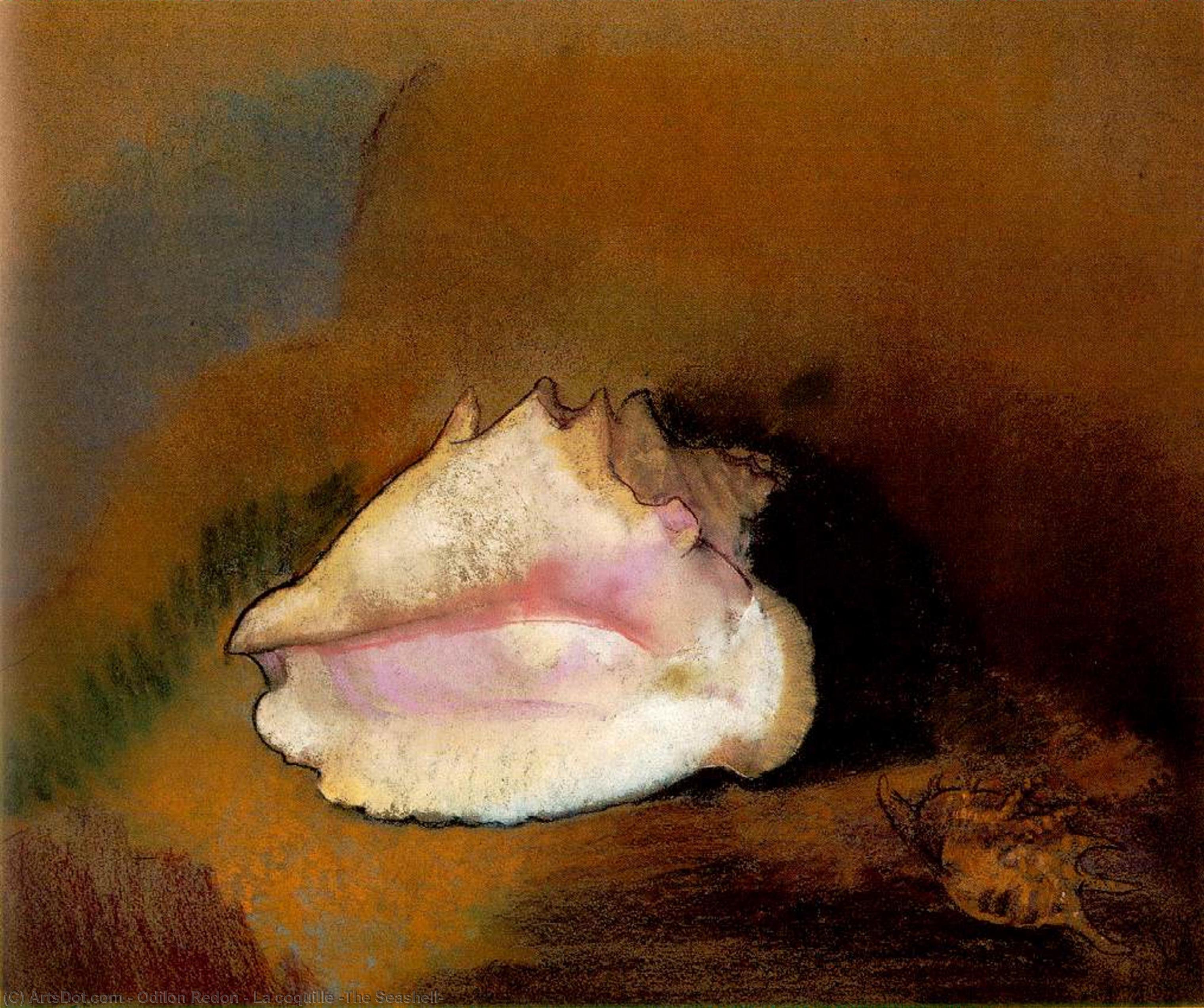
La coquille (The Seashell)
Reprodukcijos matmenys
To gaze upon Odilon Redon's "La coquille" is not merely to observe an object; it is to enter a dreamscape where the mundane architecture of nature becomes imbued with profound mystery. This painting, centered around a single, exquisitely rendered seashell, invites the viewer into an intimate dialogue between form and void. The shell itself, painted with delicate pinkish hues, seems caught in a moment of exquisite revelation—as if it is perpetually on the verge of opening its secrets to the light. Against this backdrop of oceanic fragility, Redon has chosen a rich, brooding brown background that acts less as mere setting and more as an enveloping twilight, deepening the sense of contemplation.
While its subject matter is deceptively simple—a seashell—the execution firmly plants this work within the evocative currents of Post-Impressionism. Redon, forever drawn to the unseen realms of imagination, elevates this natural specimen into something mythic. His technique here allows for an almost tactile appreciation of texture; one can almost feel the intricate ridges and delicate curves of the shell's interior structure. This close-up perspective forces a meditative focus, drawing parallels between the organic complexity found in nature and the labyrinthine depths of the human psyche. It speaks to the era’s fascination with symbolism, moving art away from mere representation toward emotional resonance.
The seashell has long been a potent symbol across cultures—a conduit between the sea and the shore, a receptacle for whispers carried by the tides. In Redon's hands, this symbolism deepens. The act of the shell appearing to open suggests emergence, revelation, or perhaps even vulnerability. It prompts us to consider what secrets lie just beneath the surface of things, whether those surfaces belong to an object, a relationship, or the self. For the collector or designer, owning such a piece is acquiring not just decoration, but a philosophical prompt—a constant reminder that beauty often resides in moments of partial unveiling.
For those seeking art that transcends simple ornamentation and instead acts as an emotional anchor for a room, "La coquille" offers unparalleled depth. The contrast between the vibrant, almost luminous pinks of the shell and the grounding darkness of the background creates a visual tension that is both calming and stimulating. Reproducing this work allows one to capture Redon's masterful ability to imbue the ordinary with the sublime. It pairs beautifully in spaces designed for quiet reflection—a study, a boudoir, or an entryway where moments of pause are cherished.


1840 - 1916 , Prancūzija

Atraskite 25 įspūdingiausius Metropoliteno meno muziejaus kūrinius! Claude Monet, van Gogh ir kiti meistrai – paveikslų istorijos, spalvų paletės bei interjero dekoravimo idėjos. Meno reprodukcijos aukščiausia kokybe Most-Famous-Paintings.com

Atraskite 25 įspūdingiausius Claude Monet šedevrus! Sužinokite apie impresionizmą, vandens lelijų paveikslus ir spalvų magiją. Meno reprodukcijos aukščiausia kokybe – Most-Famous-Paintings.com. Išsamesnės informacijos rasite internetu.
Atraskite 25 Paul Cézanno šedevrus! Išsami analizė, istorijos ir įkvėpimas interjero dekorui. Modernus menas, impresionizmas, natiurmortai – viskas Most-Famous-Paintings.com. Explore the full collection online!

Atraskite 25 Pierre'Auguste Renoir šedevrus! Impresionizmo meistro paveikslai, kupini šviesos ir grožio. Meno istorija, technikos paslaptys ir įkvėpimas jūsų interjerui. Aukštos kokybės reprodukcijos – Most-Famous-Paintings.com

Explore 25 iconic Sir Alfred Munnings paintings! Discover the beauty of British Impressionism, equine art & rural England. Find museum-quality reproductions and elevate your home decor with Most-Famous-Paintings. Explore the full collection online.


Sekite naujausias meno naujienas, išskirtinius pasiūlymus ir dekoravimo idėjas.
Pasakokite mums apie savo projektą, o mūsų meno ekspertai parengs jums 3 asmeniškus meno pasiūlymus.
Leiskite mums parinkti 3 variantus būtent jums – nemokamai!


 Preview
 Pasidalinti
 Dalintis
 Išsamiau

 Atsisiųsti
 Panašūs eksponatai
 Rentgeno nuotrauka
 Automatinė diorama

 Skaityti daugiau







 Stiklo variantas prieinamas tik pasirinkus dydį iki 110 cm


