x

 Užsisakyti kopiją Pirkti skaitmeninį paveikslą
 Pasidalinti
 Išsamiau
 Pridėti į mėgstamiausius
 Atsisiųsti
 Panašūs eksponatai
 Rentgeno nuotrauka
 Automatinė diorama
 Acrylic On CanvasWallArtSymbolist
 191219th Century
 144.0 x 63.0 cm
Muziejų lygio „giclée“ arba drobos spausdinimas: greita gamyba ir lankstios apdailos parinktys.





























Pasirinkite iš mūsų nustatytų dydžių, atitinkančių originalaus meno kūrinio proporcijas.

Galite nurodyti savo matmenis, kad vaizdas atitiktų konkretų rėmą ar erdvę. Jei pasirinktas dydis nesutaps su originalaus paveikslėlio proporcijomis, mes arba apkirpsime kūrinį, arba išplėsime vaizdą naudojant veideliu atspindėtą arba vientisą šoną. Skaitmeninis maketas bus išsiųstas jums patvirtinti prieš pradedant gamybą.
Atkreipkite dėmesį, kad ekrane matomas vaizdinys neatspindi tikrojo apkirpimo ar išplėtimo. Tik maketas tiksliai parodytų galutinę kompoziciją.
Nors galima rinktis ir individualius dydžius, rekomenduojame pasirinkti vieną iš išanksti nustatytų matmenų, kad būtų išlaikytos originalios proporcijos.
Pristatymas visame pasaulyje () per 2 weeks, o ne įprastas 4/5 savaičių laikotarpis. (21 liepa)


Pandora
Reprodukcijos matmenys
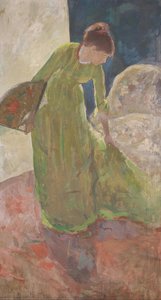
“Pandora,” painted in 1912 by the enigmatic French artist Odilon Redon, is more than just a portrait; it's a meticulously crafted descent into the realms of dream and subconscious. Born Bertrand-Jean Redon in Bordeaux in 1840, Redon dedicated his life to translating the unseen – the anxieties, desires, and symbolic landscapes residing within the human psyche – onto canvas. His work, particularly during this period, reveals a profound shift away from the prevailing academic realism of the time, embracing instead a deeply personal and often unsettling vision. This painting exemplifies his mastery of creating an atmosphere of quiet contemplation, inviting the viewer to confront their own inner world.
The central figure, a pale-skinned young woman with striking copper-orange hair, immediately draws the eye. Her posture—facing our right in profile with her head bowed as she examines the silver and brown box—suggests introspection and perhaps even a sense of foreboding. The turquoise-blue robe, falling over a white skirt, adds to the ethereal quality of the scene, while the gold headband subtly elevates her status, hinting at an almost otherworldly presence. Redon’s use of pastel colors – ice blue, pale lilac purple, rose-pink – creates a dreamlike atmosphere, further blurring the lines between reality and imagination.
Redon’s meticulous technique is evident in the layering of paint, creating a rich surface texture that invites close examination. The mottled parchment-white area to the right of the woman adds to the sense of mystery, suggesting an unexplored territory or perhaps a hidden memory. The organic shapes at the bottom edge – rendered in vibrant colors like scarlet red and turquoise – are not simply decorative; they ground the composition while simultaneously hinting at the primal forces that lie beneath the surface of consciousness. “Pandora” is profoundly evocative, prompting viewers to confront themes of mortality, temptation, and the inherent anxieties of human existence. The painting’s emotional impact stems from Redon's ability to tap into universal psychological truths through his distinctive visual language.
Most-Famous-Paintings offers a meticulously crafted hand-painted reproduction of “Pandora,” allowing you to bring this captivating artwork into your home or office. This high-quality reproduction faithfully captures Redon’s masterful technique and evocative atmosphere, making it an ideal addition to any art collection or interior design scheme. The piece's inherent mystery and symbolic depth will undoubtedly spark conversation and contemplation.


1840 - 1916 , Prancūzija

Atraskite 25 įspūdingiausius Metropoliteno meno muziejaus kūrinius! Claude Monet, van Gogh ir kiti meistrai – paveikslų istorijos, spalvų paletės bei interjero dekoravimo idėjos. Meno reprodukcijos aukščiausia kokybe Most-Famous-Paintings.com
Atraskite 25 įspūdingiausius Katsushika Hokusai kūrinius! Žiūrėkite *Didžiąją bangą*, *Fuji kalną* ir kitus Ukiyo-e stiliaus šedevrus. Meno reprodukcijos jūsų interjerui – Most-Famous-Paintings.com
Atraskite 25 Nacionalinės galerijos meno perlus! Išsami istorija apie Monet, Picasso ir kitų žymiausių dailininkų kūrinius. Įkvėpimo interjerui ir aukštos kokybės meno reprodukcijos – Most-Famous-Paintings.com

Explore 25 iconic Sir Alfred Munnings paintings! Discover the beauty of British Impressionism, equine art & rural England. Find museum-quality reproductions and elevate your home decor with Most-Famous-Paintings. Explore the full collection online.
Atraskite 25 įspūdingiausius Henri Matisse šedevrus! Sužinokite apie Fauvizmą, spalvų magiją ir prancūzų dailininko kūrybos istorijas. Meno reprodukcijos jūsų interjerui – Most-Famous-Paintings.com


Sekite naujausias meno naujienas, išskirtinius pasiūlymus ir dekoravimo idėjas.
Pasakokite mums apie savo projektą, o mūsų meno ekspertai parengs jums 3 asmeniškus meno pasiūlymus.
Leiskite mums parinkti 3 variantus būtent jums – nemokamai!


 Dalintis

 Skaityti daugiau







 Stiklo variantas prieinamas tik pasirinkus dydį iki 110 cm