x

 Preview
 Užsisakyti kopiją Pirkti skaitmeninį paveikslą
 Pasidalinti
 Išsamiau
 Pridėti į mėgstamiausius
 Atsisiųsti
 Panašūs eksponatai
 Rentgeno nuotrauka
 Automatinė diorama
Muziejų lygio „giclée“ arba drobos spausdinimas: greita gamyba ir lankstios apdailos parinktys.





























Pasirinkite iš mūsų nustatytų dydžių, atitinkančių originalaus meno kūrinio proporcijas.

Galite nurodyti savo matmenis, kad vaizdas atitiktų konkretų rėmą ar erdvę. Jei pasirinktas dydis nesutaps su originalaus paveikslėlio proporcijomis, mes arba apkirpsime kūrinį, arba išplėsime vaizdą naudojant veideliu atspindėtą arba vientisą šoną. Skaitmeninis maketas bus išsiųstas jums patvirtinti prieš pradedant gamybą.
Atkreipkite dėmesį, kad ekrane matomas vaizdinys neatspindi tikrojo apkirpimo ar išplėtimo. Tik maketas tiksliai parodytų galutinę kompoziciją.
Nors galima rinktis ir individualius dydžius, rekomenduojame pasirinkti vieną iš išanksti nustatytų matmenų, kad būtų išlaikytos originalios proporcijos.
Pristatymas visame pasaulyje () per 2 weeks, o ne įprastas 4/5 savaičių laikotarpis. (25 liepa)


Acrobat
Reprodukcijos matmenys
The image is a painting of a person in a contorted pose, with their body bent backwards and one leg up in the air. The figure appears to be a man or woman, but it's difficult to determine the exact gender due to the distortion of the body. The painting is done in oil on canvas, and it has a surrealist style. The colors used in the painting are predominantly shades of purple, with some gray tones as well. The figure appears to be standing on a surface that resembles a bed or a couch, which adds an interesting element to the composition. Overall, the image is striking and thought-provoking, capturing the viewer’s attention with its unusual and intriguing portrayal of the human form.
The Acrobat painting showcases Picasso's distinctive style—a masterful blend of Cubist fragmentation and Surrealist dreamlike imagery. Measuring 162 x 130 cm, this monochrome masterpiece immediately draws the eye with its unsettling asymmetry and bold geometric shapes. Picasso’s deliberate use of color—primarily shades of purple interwoven with subtle gray tones—creates an atmosphere of quiet contemplation while simultaneously conveying a sense of dynamism.
At first glance, the painting depicts a solitary acrobat suspended in mid-air against a stark white backdrop. However, Picasso's genius lies in his refusal to depict the figure realistically; instead, he employs Cubist techniques to dissect and reconstruct the human form, presenting it as a series of interlocking planes that defy conventional perspective.
This artwork is deeply rooted in Surrealism’s exploration of the subconscious mind. The acrobat's posture—a dramatic backbend with one leg extended—suggests an unnatural state of tension and vulnerability. Picasso skillfully captures this paradoxical juxtaposition, mirroring the anxieties inherent in the movement’s quest to liberate artistic expression from rational constraints.
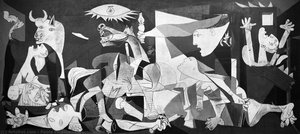
The Acrobat holds a prominent place in art history as Picasso's decisive step away from Impressionism and towards Surrealist experimentation. It exemplifies the revolutionary spirit of the era, demonstrating Picasso’s unwavering commitment to challenging established conventions and redefining visual representation. For deeper insights into Picasso’s artistic journey and his enduring legacy, consult Pablo Picasso’s profile on Most-Famous-Paintings. Explore other masterpieces at Most-Famous-Paintings's collection: Guernica and The Weeping Woman.


1881 - 1973 , Ispanija
Atraskite 25 garsiausius Pablo Picasso šedevrus! Išsami analizė, istorijos ir meno stiliai – kubizmas, abstrakcionizmas ir kt. Įkvėpkite interjerui su aukštos kokybės reprodukcijomis. Explore the full collection online!
Explore 10 Cubist masterpieces by Picasso, Braque & more! Delve into the history of this revolutionary art movement. Find museum-quality reproductions and elevate your home decor with Most-Famous-Paintings. Discover all masterpieces on Most-Famous-Paintings.com

Explore 10 Cubist masterpieces by Picasso, Braque & more! Discover the stories behind these revolutionary paintings and their impact on modern art. Find museum-quality reproductions for your home at Most-Famous-Paintings.com – where art comes to life.
Atraskite 10 legendinių kubizmo šedevrų! Pažinkite Picassą, Braką ir kitus menininkus. Sužinokite apie spalvas, stilių bei meno istoriją. Aukštos kokybės dailės reprodukcijos jūsų interjerui – Most-Famous-Paintings.com.

Atraskite 25 įspūdingiausius Metropoliteno meno muziejaus kūrinius! Claude Monet, van Gogh ir kiti meistrai – paveikslų istorijos, spalvų paletės bei interjero dekoravimo idėjos. Meno reprodukcijos aukščiausia kokybe Most-Famous-Paintings.com


Sekite naujausias meno naujienas, išskirtinius pasiūlymus ir dekoravimo idėjas.
Pasakokite mums apie savo projektą, o mūsų meno ekspertai parengs jums 3 asmeniškus meno pasiūlymus.
Leiskite mums parinkti 3 variantus būtent jums – nemokamai!


 Dalintis


 Skaityti daugiau







 Stiklo variantas prieinamas tik pasirinkus dydį iki 110 cm