x
Rankiniu būdu tapytas aliejus ant droblio jūsų pageidaujamame dydį ir rėmuose – mūsų menininkų darbas pagal užsakymą. ( Pirkti spaudinį Pirkti vaizdą)





























Pasirinkite iš mūsų nustatytų dydžių, atitinkančių originalaus meno kūrinio proporcijas.

Galite įvesti savo matmenis, kad jie atitiktų konkretų rėmą ar erdvę. Jei pasirinktas dydis neatitinka originalaus paveikslėlio proporcijų, mes arba apkropsime meno kūrinį, arba papildysime tapybą rankomis dažytい elementais. Prieš pradėdami gamybą, jūsų patvirtinimui atsiųsime skaitmeninį maketą.
Atkreipkite dėmesį, kad ekrane rodomas vaizdas neatspindi tikrojo apkarpymo ar papildymo. Tik maketas tiksliai parodys galutinę kompoziciją.
Nors galima rinktis ir individualius dydžius, rekomenduojame pasirinkti matmenis iš nustatytos sąrašo, kad būtų išlaikytos originalios proporcijos.
Pristatymas visame pasaulyje () per 3–4 savaites, o ne įprastai – per 5 savaites. (13 rugpjūtis). Kokybė lieka nepakeičiama.


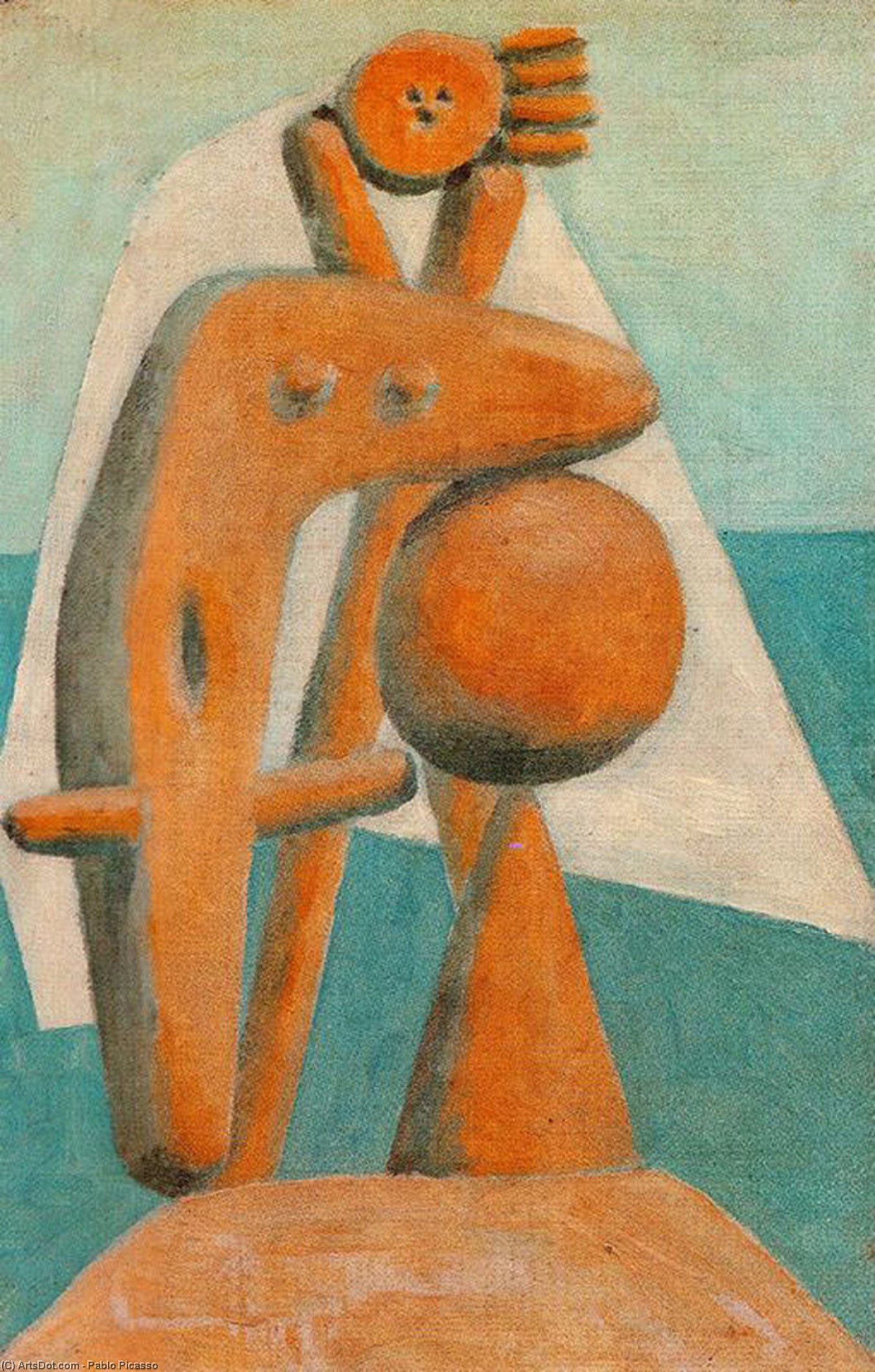
Seated bather
Reprodukcijos matmenys
Pablo Picasso's 'Seated Bather,' painted in 1930, transcends mere visual representation; it embodies the very essence of surrealism—a deliberate exploration of the subconscious mind and a rejection of conventional artistic boundaries. This enigmatic canvas invites contemplation, prompting viewers to delve into its layered symbolism and appreciate the masterful execution that cemented Picasso’s place as one of the most influential artists of the 20th century. At first glance, the composition presents a deceptively simple scene: a figure cradling a baby on a stone surface. However, beneath this apparent stillness lies a complex interplay of influences characteristic of Picasso's surrealist period, where the boundaries between reality and dream begin to dissolve.
The painting is rendered in a palette of muted, earthy tones—primarily ochre and brown—which creates an atmosphere of quiet, almost heavy contemplation. Picasso deliberately abandons traditional depth cues, opting for a flattened perspective that mimics the surface of a dreamscape. This technique, reminiscent of his earlier Cubist experiments with fragmentation, allows him to prioritize symbolic arrangement over anatomical accuracy. Scattered throughout the scene are objects imbued with profound significance: a boat positioned in the upper right corner evokes notions of journey and escape, while a chair anchors the composition to an earthly, albeit distorted, reality. Even the presence of two sports balls adds an unexpected element of dynamism, perhaps representing fertility or the latent potential for growth within the stillness.
To understand the technical brilliance of 'Seated Bather,' one must look at how Picasso bridged the gap between two monumental movements. While his work in the 1910s focused on the geometric deconstruction of form, by 1930, he was infusing that structural rigor with the psychological depth of Surrealism. The artist utilized techniques such as Grisaille, applying thin layers of monochrome paint to achieve subtle tonal variations that give the figures a sculptural, yet ethereal, quality. In this piece, the woman's form is sectioned into fragments; her eyes are mere extensions of the head, and her mouth lacks a traditional jawline, creating an unnerving, dreamlike anatomy that challenges the viewer's perception of the human body.
This stylistic fusion creates a tension between the recognizable and the abstract. The way the subject's body seems to flow with a liquid-like grace is strikingly similar to the melting forms found in the works of Salvador Dalí, yet it retains the structural bones of Picasso's Cubist heritage. For collectors and interior designers, this duality makes the piece incredibly versatile; it possesses the intellectual weight of high modernism while offering a soft, organic flow that can harmonize with contemporary or classical decor.
Beyond its technical merits, 'Seated Bather' serves as a profound emotional vessel. The painting captures a moment of intense, private intimacy, yet it is shot through with a sense of mystery that can feel both unsettling and deeply peaceful. Picasso’s use of natural colors for the figure provides a fleeting sense of realism, which then clashes beautifully with the surrealist distortions, forcing the viewer to engage more deeply with the canvas. It is a work that does not merely sit on a wall; it commands the space around it, acting as a focal point for conversation and introspection.
For those seeking to bring a piece of art history into their personal or professional spaces, a high-quality reproduction of this masterpiece offers more than just decoration. It provides an opportunity to inhabit the same psychological landscape that Picasso explored decades ago. Whether placed in a quiet study, a sophisticated gallery setting, or a modern living area, 'Seated Bather' remains a timeless testament to the power of the human imagination and the enduring allure of the unknown.

1881 - 1973 , Ispanija

Explore the revolutionary world of Cubism. Discover how masters Pablo Picasso and Georges Braque dismantled reality through geometric abstraction to redefine modern art history.

Explore the profound depths of Surrealism. From Dalí’s dreamscapes to Magritte’s enigmas, master the history of the subconscious mind through our expert art guide and discover museum-quality oil reproductions of the world's most iconic surrealist masterpieces.


Sekite naujausias meno naujienas, išskirtinius pasiūlymus ir dekoravimo idėjas.
Pasakokite mums apie savo projektą, o mūsų meno ekspertai parengs jums 3 asmeniškus meno pasiūlymus.
Leiskite mums parinkti 3 variantus būtent jums – nemokamai!


 Peržiūrėti realybėje
 Pasidalinti
 Dalintis
 Išsamiau

 Atsisiųsti
 Panašūs eksponatai
 Rentgeno nuotrauka
 Automatinė diorama

 Skaityti daugiau







 Stiklo variantas prieinamas tik pasirinkus dydį iki 110 cm