x


 Preview
 Užsisakyti kopiją Pirkti skaitmeninį paveikslą
 Pasidalinti
 Išsamiau
 Pridėti į mėgstamiausius
 Atsisiųsti
 Panašūs eksponatai
 Rentgeno nuotrauka
 Automatinė diorama
Muziejų lygio „giclée“ arba drobos spausdinimas: greita gamyba ir lankstios apdailos parinktys.





























Pasirinkite iš mūsų nustatytų dydžių, atitinkančių originalaus meno kūrinio proporcijas.

Galite nurodyti savo matmenis, kad vaizdas atitiktų konkretų rėmą ar erdvę. Jei pasirinktas dydis nesutaps su originalaus paveikslėlio proporcijomis, mes arba apkirpsime kūrinį, arba išplėsime vaizdą naudojant veideliu atspindėtą arba vientisą šoną. Skaitmeninis maketas bus išsiųstas jums patvirtinti prieš pradedant gamybą.
Atkreipkite dėmesį, kad ekrane matomas vaizdinys neatspindi tikrojo apkirpimo ar išplėtimo. Tik maketas tiksliai parodytų galutinę kompoziciją.
Nors galima rinktis ir individualius dydžius, rekomenduojame pasirinkti vieną iš išanksti nustatytų matmenų, kad būtų išlaikytos originalios proporcijos.
Pristatymas visame pasaulyje () per 2 weeks, o ne įprastas 4/5 savaičių laikotarpis. (27 liepa)


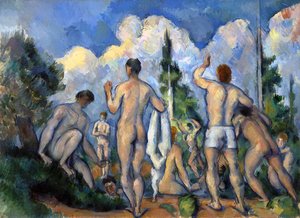
Bathers (Hermitage)
Reprodukcijos matmenys
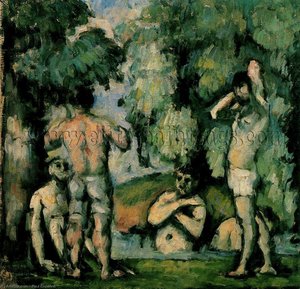
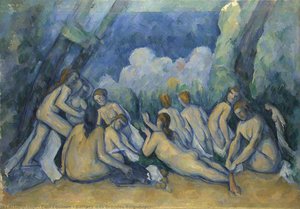
"Bathers (Hermitage)," painted by Paul Cézanne around 1891-1892, depicts a group of nude male figures relaxing in a natural setting. The composition is characterized by its deliberate arrangement of forms rather than a realistic portrayal of the scene. Five bathers are present: one standing prominently on the left, another on the right, and three seated or reclining between them. Cézanne's focus isn’t on narrative; instead, he explores the interplay of shapes, volumes, and planes within the landscape. The figures are integrated into the environment—trees rise behind them, birds fly overhead, and a sense of tranquility pervades the scene.
This artwork exemplifies Cézanne’s distinctive style within the Post-Impressionist movement. Departing from Impressionism’s emphasis on fleeting moments and optical effects, Cézanne sought to represent underlying structures and forms. He employed a technique of building up the image through short, visible brushstrokes, creating a textured surface that emphasizes the materiality of paint. The colors are not blended smoothly but rather applied in distinct planes, contributing to the painting’s geometric quality. Cézanne's approach can be seen as a precursor to Cubism, influencing artists like Picasso and Braque who would further deconstruct forms into abstract shapes.
“Bathers (Hermitage)” was created during a pivotal period in art history. The late 19th century witnessed the decline of traditional academic painting and the rise of new artistic movements challenging established conventions. Cézanne, along with artists like Van Gogh and Gauguin, pushed beyond Impressionism’s focus on capturing light and color to explore more subjective and expressive forms of representation. This work reflects a shift towards abstraction and a greater emphasis on the artist's individual vision—a key characteristic of modern art. The series of "Bathers" paintings was Cézanne's attempt to create a monumental, timeless depiction of human figures in nature, inspired by classical sculpture but reinterpreted through his unique lens.
While seemingly straightforward in its subject matter, “Bathers (Hermitage)” carries layers of symbolic meaning. The nude male figures evoke themes of vitality, physicality, and the connection between humanity and nature. Cézanne’s deliberate distortion of perspective and his emphasis on geometric forms create a sense of timelessness and universality. The painting's emotional impact is subtle yet profound—it invites viewers to contemplate the relationship between form and feeling, representation and reality. It evokes a sense of calm contemplation and appreciation for the beauty of the natural world.

1839 - 1906 , Prancūzija

Explore the transformative era of Post-Impressionism. Discover how masters like Van Gogh moved beyond light to embrace emotion, structure, and vibrant color, redefining modern art history through expressive brushwork and symbolic depth.


Sekite naujausias meno naujienas, išskirtinius pasiūlymus ir dekoravimo idėjas.
Pasakokite mums apie savo projektą, o mūsų meno ekspertai parengs jums 3 asmeniškus meno pasiūlymus.
Leiskite mums parinkti 3 variantus būtent jums – nemokamai!


 Dalintis


 Skaityti daugiau







 Stiklo variantas prieinamas tik pasirinkus dydį iki 110 cm