x

Įsigykite aukštos skiriamosios raiškos, patobulintą skaitmeninį vaizdą, gerokai pranašesnį už internetinę peržiūrą.
Kiekvieną failą mūsų specialistai kruopščiai paruošia naudojant pažangias technologijas ir profesionalų rankinį retušavimą. Užtikriname, kad kiekvienas vaizdas pasižymėtų išskirtiniu aiškumu, tikslia spalvų atspalviu ir smulkiomis detalėmis.
Baigiamas failas el. paštu pristatomas per 72 valandas; jis optimizuotas nedelsiant naudojimui profesionalioje, redakcinėje ir spausdinimo aplinkoje. Tai ta pati kokybė, kuria pasitiki aukščiausios klasės dizaino studijos, leidyklos ir galerijos.
Atsisiųskite didelės raiškos failą asmeniniam naudojimui, spausdinimui ir kūrybiniams projektams. ( Pirkti spaudinį Pirkti rankomis tapytą paveikslą)
Pasirinkę Most-Famous-Paintings.com, jūs ne tik gaunate paveikslėlį – jūs gaunate profesionaliai patobudintą skaitmeninį kūrinį, sukurtą itin tikniai ir užtikrinantį pasitenkinimą. Štai viską, kas automatiškai pritékia jūsų užsakymui:

Jūsų aukštos raiškos skaitmeninis vaizdo failas bus išsiųstas jums el. paštu per 72 valaudas nuo užsakymo – paruoštas naudojimui be jokių papildomų veiksmų.

Jūsų meno kūrinys profesionaliai optimizuojamas naudojant pažangius dirbtinio intelekto įrankius ir rankinį redagavimą, užtikrinant maksimalią detalę, aiškumą ir spalvų tikslumą.

Atsitiktinai ištrytikote ar praradote savo failą? Nebijokite – bet kuriuo metu atsiųsime jį jums vėl nemokamai.

Mėgaukitės savo meno kūriniu akimirka – skaitiniai failai visada yra neapmokestinami, todėl nereikės mokėti muitinės, mokesčių ar pristatymo mokesčių.

Naudodami profesionalią įrangą ir spalvų valdymo sistemas, užtikriname, kad jūsų skaitmeninis vaizdas kuo tiksliau atspindėtų originalias spalvas.

Jei nebuvate patenkinti savo skaitinio vaizdo, per 60 dienų jį pertaisysime arba grąkinsime 100% sumą – be jokių klausimų.

Nepat 만족inti? Gaukite visą sumokėtą sumą per 60 dienų nuo skaitmeninio failo gavimo – be jokių papildomų klausimų.

Pirkti 3 nuotraukas – pasiūla 10% - Pirkti 5 – pasiūla 15% - Pirkti 10 ir daugiau – pasiūla 20%. Puikiai tinka kūrybiniams projektams, galerijoms bei agentūroms.
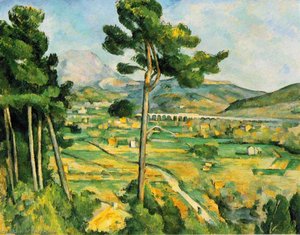
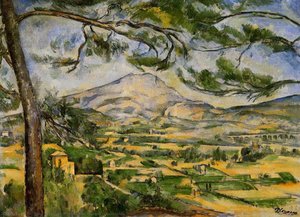
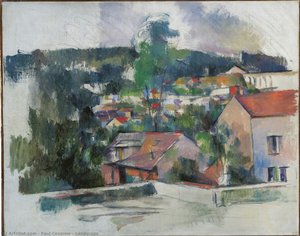
Paul Cézanne's "Untitled (2078)" isn’t merely a landscape; it’s an invitation to contemplate the very essence of perception. Painted in the twilight years of his career, around 1906, this work stands as a pivotal bridge between the fleeting impressions of Impressionism and the nascent explorations of Cubism – a testament to Cézanne's profound understanding of how we truly *see* the world. The canvas unfolds like a carefully constructed architectural study, dominated by a dense grove of trees that seem to both exist within and independently shape the surrounding space. It’s a scene rooted in the Provençal countryside near his beloved Aix-en-Provence, yet transcends simple representation, becoming instead an embodiment of Cézanne's relentless pursuit of formal structure and underlying geometry.
The style is undeniably Post-Impressionist, but one that deliberately rejects the ephemeral qualities favored by its predecessors. Cézanne wasn’t interested in capturing a momentary sunset or the shimmering effect of light; he sought to distill nature down to its fundamental components – cylinders, spheres, and cones – as he famously articulated. This is evident in the way the trees are rendered: not as soft, hazy forms, but as sharply defined planes stacked upon one another, creating an illusion of depth and solidity. The composition itself is vertically oriented, emphasizing the towering presence of the arboreal subjects and drawing the eye upwards into the atmospheric haze above.
Cézanne’s technique is immediately arresting – a deliberate departure from the smooth, blended brushstrokes of Impressionism. Instead, he employs a thick, broken application of paint known as *impasto*, building up layers of color with visible, tactile strokes. These aren't delicate whispers; they are assertive declarations, each mark contributing to the overall structure and form of the painting. Notice how the greens – ranging from deep forest hues to lighter, almost yellowish tones – are applied in distinct patches, creating a sense of texture and volume. The subtle use of ochre and yellow in the foreground grounds the scene, providing a warm counterpoint to the cool blues and greens of the sky and distant hills. The canvas itself feels alive with the artist’s hand; you can almost trace the individual movements as he built up the surface.
He utilized oil paints on canvas, meticulously layering them to achieve his desired effects. The deliberate roughness of the paint application adds a remarkable sense of immediacy and presence to the work – it feels as though Cézanne was working directly onto the canvas, capturing the essence of the scene in real-time. The scale of the *impasto* is particularly noteworthy; it’s not merely decorative but integral to the painting's structural integrity, reinforcing the idea that nature itself is a complex system of interlocking forms.
Beyond its formal qualities, “Untitled (2078)” resonates with a quiet sense of solitude and contemplation. The dense forest creates an enclosure, suggesting a retreat from the outside world – a space for introspection and connection with nature. The distant hills, rendered in muted tones, offer a subtle suggestion of human presence, perhaps a small dwelling or structure nestled within the landscape. This secondary element serves not as a focal point but rather as a reminder of our place within the larger natural order.
Cézanne’s work is deeply rooted in his personal experience and philosophical outlook. He sought to capture not just what he *saw*, but how he *felt* about what he saw – a profound appreciation for the beauty and enduring power of nature. The painting evokes a sense of timelessness, inviting viewers to lose themselves in its tranquil atmosphere and contemplate the mysteries of perception and existence. It’s a reminder that art can be both intellectually stimulating and emotionally resonant, offering a pathway to deeper understanding and connection.
Cézanne's influence on subsequent generations of artists is undeniable. His exploration of form, color, and perspective paved the way for the revolutionary developments of Cubism and other avant-garde movements. Artists like Picasso and Braque were profoundly inspired by his ability to deconstruct reality and represent it in a new and innovative way. “Untitled (2078)” stands as a prime example of this legacy – a work that continues to challenge our perceptions and inspire artists today. Reproductions, while capturing the essence of the original, can never fully replicate the tactile richness and emotional depth of Cézanne’s masterful brushwork.


1839 - 1906 , Prancūzija


Sekite naujausias meno naujienas, išskirtinius pasiūlymus ir dekoravimo idėjas.
Pasakokite mums apie savo projektą, o mūsų meno ekspertai parengs jums 3 asmeniškus meno pasiūlymus.
Leiskite mums parinkti 3 variantus būtent jums – nemokamai!


 Peržiūrėti realybėje
 Pasidalinti
 Dalintis
 Išsamiau

 Atsisiųsti
 Panašūs eksponatai
 Rentgeno nuotrauka
 Automatinė diorama

 Skaityti daugiau