


x


 Preview
 Pirkti atspaudą Užsisakyti kopiją
 Pasidalinti
 Išsamiau
 Pridėti į mėgstamiausius
 Atsisiųsti
 Panašūs eksponatai
 Rentgeno nuotrauka
 Automatinė diorama
Įsigykite aukštos skiriamosios raiškos, patobulintą skaitmeninį vaizdą, gerokai pranašesnį už internetinę peržiūrą.
Kiekvieną failą mūsų specialistai kruopščiai paruošia naudojant pažangias technologijas ir profesionalų rankinį retušavimą. Užtikriname, kad kiekvienas vaizdas pasižymėtų išskirtiniu aiškumu, tikslia spalvų atspalviu ir smulkiomis detalėmis.
Baigiamas failas el. paštu pristatomas per 72 valandas; jis optimizuotas nedelsiant naudojimui profesionalioje, redakcinėje ir spausdinimo aplinkoje. Tai ta pati kokybė, kuria pasitiki aukščiausios klasės dizaino studijos, leidyklos ir galerijos.
Atsisiųskite didelės raiškos failą asmeniniam naudojimui, spausdinimui ir kūrybiniams projektams.
Pasirinkę Most-Famous-Paintings.com, jūs ne tik gaunate paveikslėlį – jūs gaunate profesionaliai patobudintą skaitmeninį kūrinį, sukurtą itin tikniai ir užtikrinantį pasitenkinimą. Štai viską, kas automatiškai pritékia jūsų užsakymui:

Jūsų aukštos raiškos skaitmeninis vaizdo failas bus išsiųstas jums el. paštu per 72 valaudas nuo užsakymo – paruoštas naudojimui be jokių papildomų veiksmų.

Jūsų meno kūrinys profesionaliai optimizuojamas naudojant pažangius dirbtinio intelekto įrankius ir rankinį redagavimą, užtikrinant maksimalią detalę, aiškumą ir spalvų tikslumą.

Atsitiktinai ištrytikote ar praradote savo failą? Nebijokite – bet kuriuo metu atsiųsime jį jums vėl nemokamai.

Mėgaukitės savo meno kūriniu akimirka – skaitiniai failai visada yra neapmokestinami, todėl nereikės mokėti muitinės, mokesčių ar pristatymo mokesčių.

Naudodami profesionalią įrangą ir spalvų valdymo sistemas, užtikriname, kad jūsų skaitmeninis vaizdas kuo tiksliau atspindėtų originalias spalvas.

Jei nebuvate patenkinti savo skaitinio vaizdo, per 60 dienų jį pertaisysime arba grąkinsime 100% sumą – be jokių klausimų.

Nepat 만족inti? Gaukite visą sumokėtą sumą per 60 dienų nuo skaitmeninio failo gavimo – be jokių papildomų klausimų.

Pirkti 3 nuotraukas – pasiūla 10% - Pirkti 5 – pasiūla 15% - Pirkti 10 ir daugiau – pasiūla 20%. Puikiai tinka kūrybiniams projektams, galerijoms bei agentūroms.
Piet Mondrian’s “Composition,” produced around 1925, stands as a cornerstone of Neo-Plasticism—a movement that fundamentally reshaped the landscape of early twentieth-century art. More than just aesthetically pleasing, it embodies a profound philosophical assertion: that abstraction represents a more truthful reflection of reality than representational imagery.
As Dr Stephanie Chadwick eloquently explains in Smarthistory (Smarthistory), Mondrian believed that pure abstract art emancipated itself from the constraints of naturalistic depiction, liberating it to explore universal harmonies and principles.
Considered alongside references like *The Red Mill*, Mondrian’s formative landscapes reveal a young artist diligently studying nature—a meticulous process aimed at mastering technique. Yet, even amidst this careful observation, he harbored an insistent desire for simplification. He wasn't merely replicating what he saw; he sought to distill its essence into its purest form.
The painting itself is deceptively simple. A grid of horizontal and vertical lines dominates the canvas—a deliberate rejection of curvilinear forms favored by Impressionism and Cubism. Within this geometric framework reside squares of primary colors – red, blue, and yellow – interspersed with rectangles of black and white.
The meticulous execution is characteristic of Mondrian’s approach. Each square is precisely delineated, its edges sharply defined, conveying a sense of stability and order. The color palette—though restrained—is carefully considered; the hues are chosen to create visual balance and contribute to the overall meditative atmosphere.
“Composition” emerged during a period of intense intellectual ferment in Europe, fueled by breakthroughs in physics (Einstein’s theory of relativity) and psychology. Artists like Mondrian were grappling with questions about perception and representation, rejecting traditional artistic conventions in favor of new expressive languages.
The painting aligns perfectly with the tenets of Neo-Plasticism—a movement championed by artists including Kazimir Malevich and Theo van Doesburg. These pioneers sought to create a universal aesthetic language based on geometric abstraction, mirroring the underlying structure of the cosmos.
Mondrian’s use of color isn't arbitrary; it carries symbolic significance rooted in his spiritual beliefs. He drew inspiration from Zendavesta—the Zoroastrian sacred text—which posits that the universe is comprised of four elemental forces: fire, air, water, and earth.
The squares represent these elements, while the horizontal and vertical lines symbolize the opposing forces of heaven and earth. By eliminating extraneous details and reducing forms to their fundamental geometric shapes, Mondrian aimed to transcend subjective experience and capture a glimpse of objective reality—a quest for spiritual harmony expressed through visual language.
Despite its austere appearance, “Composition” possesses an undeniable emotional resonance. The balanced grid and harmonious color scheme evoke feelings of serenity and contemplation. It invites viewers to engage in a dialogue with the artwork itself—to consider its underlying principles and appreciate its subtle beauty.
As showcased at The Metropolitan Museum of Art (The Metropolitan Museum of Art), this piece exemplifies the movement’s ambition to communicate profound ideas through visual form, demonstrating how Mondrian successfully translated philosophical concepts into a powerfully evocative aesthetic experience.

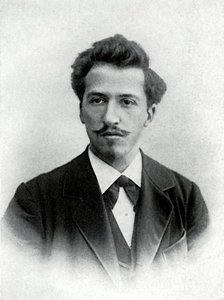
1872 - 1944 , Nyderlandai


Sekite naujausias meno naujienas, išskirtinius pasiūlymus ir dekoravimo idėjas.
Pasakokite mums apie savo projektą, o mūsų meno ekspertai parengs jums 3 asmeniškus meno pasiūlymus.
Leiskite mums parinkti 3 variantus būtent jums – nemokamai!


 Dalintis


 Skaityti daugiau


