x

Muziejų lygio „giclée“ arba drobos spausdinimas: greita gamyba ir lankstios apdailos parinktys. ( Pirkti rankomis tapytą paveikslą Pirkti vaizdą)





























Pasirinkite iš mūsų nustatytų dydžių, atitinkančių originalaus meno kūrinio proporcijas.

Galite nurodyti savo matmenis, kad vaizdas atitiktų konkretų rėmą ar erdvę. Jei pasirinktas dydis nesutaps su originalaus paveikslėlio proporcijomis, mes arba apkirpsime kūrinį, arba išplėsime vaizdą naudojant veideliu atspindėtą arba vientisą šoną. Skaitmeninis maketas bus išsiųstas jums patvirtinti prieš pradedant gamybą.
Atkreipkite dėmesį, kad ekrane matomas vaizdinys neatspindi tikrojo apkirpimo ar išplėtimo. Tik maketas tiksliai parodytų galutinę kompoziciją.
Nors galima rinktis ir individualius dydžius, rekomenduojame pasirinkti vieną iš išanksti nustatytų matmenų, kad būtų išlaikytos originalios proporcijos.
Pristatymas visame pasaulyje () per 2 weeks, o ne įprastas 4/5 savaičių laikotarpis. (20 rugpjūtis)


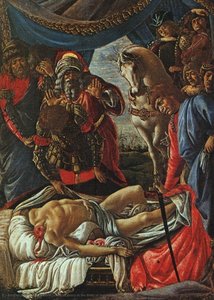
Discovery of murder Holophernes
Reprodukcijos matmenys
Sandro Botticelli’s “Discovery of Murder of Holophernes,” painted circa 1496-1497, is a profoundly unsettling and exquisitely rendered scene that transcends the simple depiction of a crime. This work, housed within the rich tapestry of the Early Renaissance, offers a glimpse into the anxieties and moral complexities of its time, revealing Botticelli’s mastery of composition, color, and psychological drama. The painting's immediate impact lies in its stark realism – a brutal confrontation with death that was remarkably uncommon in Florentine art of this period. It is not a glorification of heroism or a celebration of martial prowess; instead, it presents a scene of horrified discovery, capturing the raw emotion of those witnessing the aftermath of violence.
Botticelli employed his signature tempera-on-panel technique, a method favored by Florentine artists for its ability to produce vibrant colors and fine detail. The use of tempera, derived from egg yolk, allowed for meticulous layering and blending, creating the luminous quality characteristic of Botticelli’s work. Note the subtle gradations in color – particularly in the drapery and skin tones – demonstrating his keen observation of human form and his ability to render texture with remarkable accuracy. The artist's attention to detail extends to the horse, rendered with a surprising degree of realism for its time, further grounding the scene in a tangible reality.
Beyond its immediate narrative, “Discovery of Murder of Holophernes” is laden with symbolic meaning. The presence of the horse suggests both the barbarity of the act and the potential for retribution. The curtained backdrop evokes a theatrical stage, blurring the lines between reality and illusion, suggesting that this event might be part of a larger, more complex drama. The figures’ gestures – their expressions of shock, horror, and disbelief – convey a profound sense of vulnerability in the face of violence. It's important to note that Botticelli was deeply influenced by humanist thought, which emphasized human emotion and experience; this is reflected in the painting's intense psychological realism.
"Discovery of Murder of Holophernes" remains a powerfully evocative work, demonstrating Botticelli’s ability to capture not just physical likeness but also intense emotion. Its unflinching portrayal of death and its exploration of human vulnerability continue to resonate with viewers today. This reproduction offers an exceptional opportunity to experience the full force of Botticelli's artistic genius – a masterpiece that exemplifies the height of Renaissance art and continues to captivate audiences across centuries.

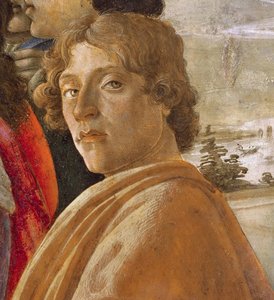
1445 - 1510 , Italija

Explore the profound history and technical mastery of woodcut relief printing. From ancient origins to German Expressionism, discover how artists use the subtractive process to create iconic works. A definitive guide for art students, collectors, and historians.


Sekite naujausias meno naujienas, išskirtinius pasiūlymus ir dekoravimo idėjas.
Pasakokite mums apie savo projektą, o mūsų meno ekspertai parengs jums 3 asmeniškus meno pasiūlymus.
Leiskite mums parinkti 3 variantus būtent jums – nemokamai!


 Peržiūrėti realybėje
 Pasidalinti
 Dalintis
 Išsamiau

 Atsisiųsti
 Panašūs eksponatai
 Rentgeno nuotrauka
 Automatinė diorama
 Skaityti daugiau







 Stiklo variantas prieinamas tik pasirinkus dydį iki 110 cm