x

Muziejų lygio „giclée“ arba drobos spausdinimas: greita gamyba ir lankstios apdailos parinktys. ( Pirkti rankomis tapytą paveikslą Pirkti vaizdą)





























Pasirinkite iš mūsų nustatytų dydžių, atitinkančių originalaus meno kūrinio proporcijas.

Galite nurodyti savo matmenis, kad vaizdas atitiktų konkretų rėmą ar erdvę. Jei pasirinktas dydis nesutaps su originalaus paveikslėlio proporcijomis, mes arba apkirpsime kūrinį, arba išplėsime vaizdą naudojant veideliu atspindėtą arba vientisą šoną. Skaitmeninis maketas bus išsiųstas jums patvirtinti prieš pradedant gamybą.
Atkreipkite dėmesį, kad ekrane matomas vaizdinys neatspindi tikrojo apkirpimo ar išplėtimo. Tik maketas tiksliai parodytų galutinę kompoziciją.
Nors galima rinktis ir individualius dydžius, rekomenduojame pasirinkti vieną iš išanksti nustatytų matmenų, kad būtų išlaikytos originalios proporcijos.
Pristatymas visame pasaulyje () per 2 weeks, o ne įprastas 4/5 savaičių laikotarpis. (16 rugpjūtis)


Adirondack Catch
Reprodukcijos matmenys
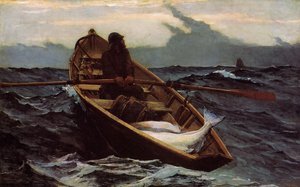
Winslow Homer’s “Adirondack Catch,” completed in 1889, stands as a quintessential example of American Realism—a movement that championed direct observation and unflinching depiction of everyday life. Unlike the grand narratives favored by European artists of his era, Homer focused on capturing the quiet beauty and rugged spirit of the Adirondack Mountains, specifically the practice of fishing.
The painting’s visual impact is immediately arresting due to Homer's masterful use of watercolor. He eschewed the meticulous blending techniques common in oil painting, opting instead for a looser brushstroke that allowed for subtle gradations of color—particularly capturing the diffused light filtering through the dense foliage of the mountains. This technique lends an ethereal quality to the scene, conveying not just what is seen but also how it *feels*. The composition itself is carefully balanced; Homer places the central tree and its hanging fish prominently in the frame, drawing the viewer’s eye immediately to this focal point.
Beyond its aesthetic beauty, “Adirondack Catch” carries deeper symbolic resonance. Fishing represents more than just sustenance; it embodies perseverance and connection with nature—themes central to Homer's artistic vision. The fish themselves are rendered with remarkable detail, highlighting Homer’s dedication to capturing the textures and nuances of his subject matter. They aren’t merely objects of sport but symbols of vitality and abundance within a challenging environment.
Winslow Homer emerged from a period of significant social and cultural transformation in America—the late 19th century saw rapid industrialization alongside growing interest in the wilderness. Homer’s work reflects this duality, portraying both the hardships faced by rural communities and the sublime grandeur of the natural world. Unlike many artists of his time who sought to emulate European artistic conventions, Homer remained firmly rooted in American traditions, prioritizing honest representation over stylistic imitation.
"Adirondack Catch" evokes a profound sense of tranquility despite its depiction of labor. Homer’s skillful use of color and brushwork creates an atmosphere of serene contemplation—a reminder that beauty can be found even in the simplest activities, like fishing under the watchful gaze of towering pines. The painting invites viewers to consider not only what is seen but also how it resonates with our own experience of nature and resilience.


1836 - 1910 , JAV


Sekite naujausias meno naujienas, išskirtinius pasiūlymus ir dekoravimo idėjas.
Pasakokite mums apie savo projektą, o mūsų meno ekspertai parengs jums 3 asmeniškus meno pasiūlymus.
Leiskite mums parinkti 3 variantus būtent jums – nemokamai!


 Peržiūrėti realybėje
 Pasidalinti
 Dalintis
 Išsamiau

 Atsisiųsti
 Panašūs eksponatai
 Rentgeno nuotrauka
 Automatinė diorama
 Skaityti daugiau







 Stiklo variantas prieinamas tik pasirinkus dydį iki 110 cm