x

Rankiniu būdu tapytas aliejus ant droblio jūsų pageidaujamame dydį ir rėmuose – mūsų menininkų darbas pagal užsakymą. ( Pirkti spaudinį Pirkti vaizdą)





























Pasirinkite iš mūsų nustatytų dydžių, atitinkančių originalaus meno kūrinio proporcijas.

Galite įvesti savo matmenis, kad jie atitiktų konkretų rėmą ar erdvę. Jei pasirinktas dydis neatitinka originalaus paveikslėlio proporcijų, mes arba apkropsime meno kūrinį, arba papildysime tapybą rankomis dažytい elementais. Prieš pradėdami gamybą, jūsų patvirtinimui atsiųsime skaitmeninį maketą.
Atkreipkite dėmesį, kad ekrane rodomas vaizdas neatspindi tikrojo apkarpymo ar papildymo. Tik maketas tiksliai parodys galutinę kompoziciją.
Nors galima rinktis ir individualius dydžius, rekomenduojame pasirinkti matmenis iš nustatytos sąrašo, kad būtų išlaikytos originalios proporcijos.
Pristatymas visame pasaulyje () per 3–4 savaites, o ne įprastai – per 5 savaites. (18 rugpjūtis). Kokybė lieka nepakeičiama.


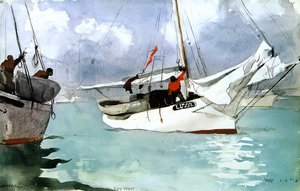
Sloop, Nassau
Reprodukcijos matmenys
Winslow Homer's “Sloop, Nassau,” painted in 1899 and currently residing at The Metropolitan Museum of Art in New York City, isn’t merely a depiction of a fishing boat; it’s an embodiment of American Romanticism distilled into the delicate strokes of watercolor. Homer, rejecting the formal conventions of European art academies, honed his artistic vision through observation of the natural world—specifically, the rugged coastline of Maine and the rhythms of rural life—a formative experience that would profoundly influence his oeuvre.
The composition itself is remarkably simple yet powerfully effective. Homer centers his gaze on the boat, positioning it strategically against a backdrop of smaller vessels and hazy shoreline. This deliberate balance contributes to the painting’s sense of stability and invites contemplation. Notice how Homer skillfully utilizes light—primarily diffused sunlight—to illuminate the boat and its occupants, casting gentle shadows that enhance the realism of the scene.
Beyond its aesthetic appeal, “Sloop, Nassau” resonates with deeper symbolic meanings rooted in Homer’s broader artistic concerns. The sea, a recurring motif throughout Homer's work, represents both freedom and vulnerability—themes central to the American experience of westward expansion and industrialization. The solitary boat symbolizes resilience and perseverance amidst challenging circumstances, mirroring the spirit of the pioneers who shaped the nation.
Furthermore, Homer’s restrained palette – dominated by blues, greens, and whites – evokes feelings of peace and solitude. These colors are carefully blended to create a harmonious visual experience that transcends mere representation; they aim to capture the emotional essence of the moment—a quiet communion with nature.
Painted during Homer’s peak creative period, “Sloop, Nassau” exemplifies the American Romantic movement's fascination with landscape and its exploration of human emotion. It stands alongside other iconic works by Homer, such as "The Gulf Stream" and "Chrysanthemums," demonstrating his unwavering commitment to portraying the grandeur and beauty of America’s natural environment.
Today, reproductions of “Sloop, Nassau” continue to inspire artists and designers alike. Its understated elegance and evocative atmosphere offer a timeless reminder of Homer's genius—a testament to the power of observation and the enduring allure of watercolor painting.


1836 - 1910 , JAV
Atraskite 25 įspūdingiausius Winslow Homer paveikslus! Žymiausi jo jūros peizažai, realizmo šedevrai ir istorinės scenos. Meno reprodukcijos interjerui – Most-Famous-Paintings.com. Išsamesnės informacijos apie Amerikos tapytoją ir kūrinius rasite pas mus.

Journey through 10 legendary watercolor masterpieces by Sargent, Turner & Homer! Explore iconic landscapes, portraits & floral art that redefined history. Find museum-quality reproductions and curated decor ideas at Most-Famous-Paintings.com.
Explore 10 defining American Realism masterpieces – Hopper, Homer & more. Discover the stories behind these iconic paintings and bring timeless art to your home with Most-Famous-Paintings's museum-quality reproductions. Explore the full collection online.

Explore the captivating world of watercolor painting! Discover its rich history, essential techniques, influential artists & collecting tips. A comprehensive guide for art enthusiasts from Most-Famous-Paintings.

Explore the captivating world of watercolor painting! Discover its rich history, essential techniques, influential artists & collecting tips from art experts. A comprehensive guide for enthusiasts.


Sekite naujausias meno naujienas, išskirtinius pasiūlymus ir dekoravimo idėjas.
Pasakokite mums apie savo projektą, o mūsų meno ekspertai parengs jums 3 asmeniškus meno pasiūlymus.
Leiskite mums parinkti 3 variantus būtent jums – nemokamai!


 Peržiūrėti realybėje
 Pasidalinti
 Dalintis
 Išsamiau

 Atsisiųsti
 Panašūs eksponatai
 Rentgeno nuotrauka
 Automatinė diorama


 Skaityti daugiau







 Stiklo variantas prieinamas tik pasirinkus dydį iki 110 cm