Биография художника
Aleksandra Ekster: A Life Bridging Worlds – The Artistic Odyssey of a Pioneer
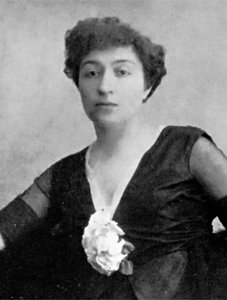
Aleksandra Ekster, a name now synonymous with the vibrant energy and radical experimentation of early 20th-century Russian art, was far more than simply a painter. She was a cultural architect, a visionary who skillfully wove together artistic currents between Russia and Europe, leaving an indelible mark on stage design, costume creation, and the very foundations of modern aesthetics. Born Aleksandra Aleksandrovna Grigorovich in Białystok – then part of the Russian Empire, now Poland – on January 6th, 1882, her life unfolded against a backdrop of profound social and artistic transformation, shaped by a privileged upbringing and an insatiable thirst for knowledge and creative expression. Her family’s wealth provided access to a rigorous education, nurturing not only linguistic skills and musical talent but, crucially, a deep appreciation for the visual arts – a foundation upon which her extraordinary career would be built. The move to Kyiv proved to be a pivotal moment, as it was there that she received formal artistic training at the Kyiv School of Art, encountering fellow burgeoning talents like Alexander Bogomazov and Alexander Archipenko – individuals who would become lifelong collaborators and intellectual sparring partners, shaping the trajectory of the Russian avant-garde. Even in her early works, Ekster demonstrated a remarkable ability to synthesize diverse influences, absorbing the formal innovations of Cubism while simultaneously injecting them with a distinctly Russian sensibility, reflecting the complex cultural landscape of her homeland.
Embracing Innovation: From Cubo-Futurism to Suprematism
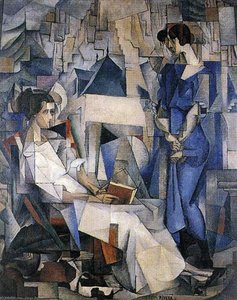
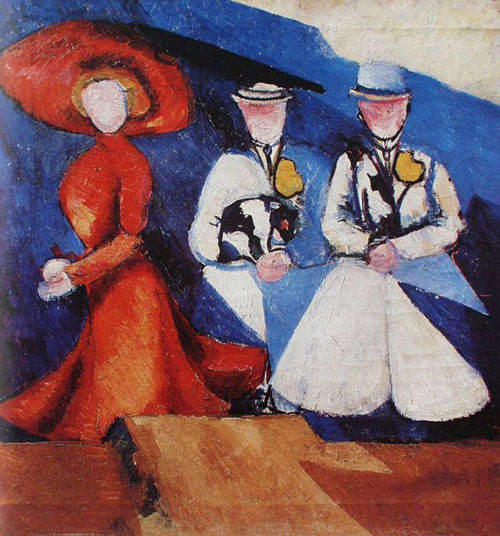
Ekster’s artistic journey was characterized by an unwavering commitment to innovation and a remarkable openness to diverse influences – a trait that defined not only her individual style but also the broader artistic climate she navigated. A pivotal sojourn in Paris with her husband, Nikolai Evgenyevich Ekster, beginning in 1907, proved transformative. The Parisian art scene was a crucible of experimentation, brimming with revolutionary ideas and challenging established conventions. Exposure to the ferment at the Académie de la Grande Chaumière ignited within her a passion for pushing boundaries, leading to a rapid assimilation of Cubist principles – evident in her early works through fractured forms, dynamic perspectives, and an exploration of multiple viewpoints. However, Ekster’s artistic vision quickly transcended mere imitation; she actively sought to integrate the dynamism of Futurism into her paintings, capturing the energy of modern life with bold brushstrokes and a fascination with movement and speed. This period also witnessed her forging connections with some of the most influential artists of the era – Pablo Picasso and Georges Braque, who introduced her to the inner circles of Gertrude Stein’s salon, and Sonia Delaunay-Terk, whose geometric abstractions would profoundly influence her own work. The exhibition *The Triangle* in 1910–1912 showcased her evolving style, demonstrating a willingness to engage with the radical currents sweeping through the Russian art world. Crucially, she participated in the Salon des Indépendants and the International Futurist Exhibition in Rome, solidifying her position as a key figure within the avant-garde movement. A particularly significant development was her embrace of Suprematism in 1915, aligning herself with Kazimir Malevich’s revolutionary exploration of pure geometric abstraction – a shift that would profoundly shape her artistic language and lead to groundbreaking collaborations.
A Stage for Revolution: Design and Theatrical Innovation
Beyond painting, Ekster's creative spirit extended into the realm of stage design, where she became a pivotal force in shaping the visual identity of Russian theatre during a period of immense social upheaval. Her work with Alexander Tairov’s Chamber Theatre in Moscow from 1918 to 1920 was particularly groundbreaking, marked by abstract sets and innovative costumes that challenged traditional theatrical conventions. She didn't merely decorate the stage; she actively collaborated with choreographers and dancers, creating immersive environments that enhanced the narrative and evoked powerful emotions. The design for *Salome*, a daring interpretation of the biblical tale, showcased her willingness to experiment with unconventional materials and forms, pushing the boundaries of theatrical spectacle. Furthermore, Ekster’s involvement in designing street decorations for Kyiv and Odessa during the revolutionary fervor demonstrated her commitment to using art as a tool for social transformation – a reflection of the ideals driving the Russian Revolution. Her work on costumes for Bronislava Nijinska's ballet studio further cemented her reputation as a visionary designer, anticipating future trends in fashion and visual communication.
From Constructivism to Parisian Refinement
Following the tumultuous years of the Russian Revolution, Ekster found herself in Paris, seeking refuge and new creative opportunities. This period witnessed a shift towards greater refinement in her artistic style, marked by delicate gouache illuminations – intricate compositions imbued with a lyrical quality that contrasted sharply with the bold geometric abstractions of her earlier work. She established studios at the Académie de l'Art Moderne and the Académie d’Art Contemporain Fernand Léger, sharing her expertise with a new generation of artists and continuing to explore innovative approaches to design and composition. The creation of *Callimaque*, a stunning translation of Callimachus’ hymns into French adorned with her exquisite illustrations, stands as a testament to this period – a masterpiece that exemplifies her mastery of color, form, and decorative elegance. Despite facing challenges in gaining widespread recognition during her lifetime, Ekster's legacy has steadily grown in recent decades, fueled by renewed interest in the history of Russian art and a growing appreciation for her pioneering contributions to stage design, painting, and art education.
A Lasting Legacy: Synthesis and Influence
Aleksandra Ekster’s significance lies not in adherence to a single style, but rather in her remarkable ability to synthesize diverse artistic currents – Cubo-Futurism, Suprematism, and Constructivism – into a uniquely personal visual language. Her work embodies the spirit of experimentation and innovation that defined the Russian avant-garde, while simultaneously reflecting a cosmopolitan sensibility shaped by her travels and interactions with artists across Europe. She was a master colorist, employing bold hues and dynamic compositions to create works that are both intellectually stimulating and emotionally resonant. Her contributions to stage design were equally groundbreaking, transforming the theatrical experience through abstract sets and innovative costumes. Ekster’s legacy extends beyond her paintings; she was a dedicated educator who inspired countless students to embrace artistic freedom and explore new possibilities. She remains a vital figure in the history of modern art – an artist who fearlessly embraced innovation and bridged cultural divides with her visionary art. Ekster's ability to seamlessly blend diverse influences and consistently push boundaries cemented her position as one of the most important artists of her generation.



 Заказать принт
 Поделиться
 Детали произведения
 Добавить в избранное
 Скачать
 Похожие работы
 Рентгенография
 Слайд-шоу






 Поделиться


 Читать далее




































 Вариант со стеклом доступен только для размеров менее 110 см