x

Печать (жикле) или холст музейного качества с быстрыми сроками изготовления и широким выбором вариантов отделки. ( Купить картину ручной работы Купить изображение)





























Выберите один из наших стандартных размеров, соответствующих оригинальным пропорциям произведения искусства.

Вы можете указать свои собственные размеры, чтобы репродукция идеально подошла под конкретную раму или пространство. Если выбранный вами размер не будет соответствовать пропорциям оригинала, мы либо обрежем произведение, либо дополним изображение зеркальным отражением краев или однотонной заливкой. Перед началом производства вам будет отправлен цифровой макет для утверждения.
Пожалуйста, обратите внимание, что предварительный просмотр на экране не отображает фактическую обрезку или расширение изображения. Только макет точно покажет финальную композицию.
Несмотря на возможность заказа индивидуальных размеров, мы рекомендуем выбирать размер из предопределенного списка, чтобы сохранить оригинальные пропорции.
Доставка по всему миру () за 2 недели вместо стандартных 4/5 недель. (18 Август)


Kairuan III
Размер репродукции
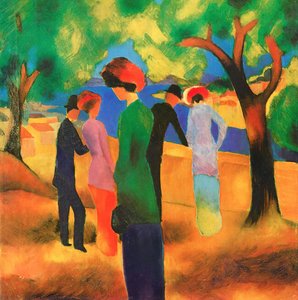
August Macke’s “Kairouan III,” painted in 1914, isn't merely a cityscape; it’s a fleeting moment captured with an almost feverish intensity. Created during a pivotal period of artistic experimentation – a time when German Expressionism was grappling with new forms and the burgeoning influence of movements like Orphism – this watercolor offers a glimpse into Macke’s evolving vision, a synthesis of observation and deeply felt emotion. The painting depicts a bustling street scene in Kairouan, Tunisia, a location that profoundly impacted Macke's artistic sensibilities during his travels. It’s a place he described as “a paradise,” a vibrant hub of color and life that served as a crucial catalyst for his later work.
Macke’s style at this time is characterized by a remarkable blend of influences. While rooted in the Impressionist techniques he initially absorbed, particularly the use of broken brushstrokes to capture light and atmosphere, “Kairouan III” demonstrates a clear shift towards a more expressive and simplified approach. The forms are not meticulously rendered but rather suggested with bold, confident strokes, prioritizing color and composition over photographic realism. This is evident in the flattened perspective, the exaggerated scale of certain buildings, and the almost dreamlike quality of the scene. The painting’s energy isn't derived from detailed observation, but from Macke’s subjective experience of the place – a distillation of its essence into a vibrant, emotionally charged composition.
“Kairouan III” is deeply intertwined with the principles of Orphism, a movement pioneered by Robert Delaunay and Sonia Delaunay. Orphism sought to liberate color from its traditional role as a descriptive element, instead using it purely for its aesthetic qualities – its ability to evoke emotion and create visual harmony. Macke embraced this approach wholeheartedly, employing a dazzling array of colors that seem almost luminous against the paper’s surface. The palette is dominated by intense blues, greens, yellows, and reds, layered in overlapping planes and creating a dynamic sense of movement and depth. Notice how he uses complementary colors – blue and orange, yellow and violet – to intensify each hue and generate visual excitement.
The technique itself contributes significantly to the painting’s effect. Macke employs loose, gestural brushstrokes, often applying paint directly from the tube with minimal blending. This creates a sense of immediacy and spontaneity, as if he were capturing the scene in real-time. The layering of colors is also crucial; each hue builds upon the previous one, creating a shimmering surface that seems to vibrate with energy. This technique isn’t about precise representation but rather about conveying the *feeling* of being immersed in this vibrant urban landscape.
While “Kairouan III” is primarily concerned with color and composition, it also subtly hints at deeper symbolic meanings. The densely packed buildings, rendered with a sense of both dynamism and claustrophobia, suggest the complexities of modern urban life. The figures – though largely indistinct – represent the human element within this environment, adding scale and suggesting activity without explicitly defining their roles or relationships. Macke’s focus is less on individual portraits and more on capturing the collective experience of a place.
Furthermore, the painting's title itself—Kairouan—references an ancient city in Tunisia, steeped in history and religious significance. This connection adds another layer of meaning to the work, suggesting a dialogue between the past and the present, tradition and modernity. Macke’s choice of subject matter reflects his interest in exploring themes of cultural exchange and the transformative power of travel.
August Macke's “Kairouan III” is more than just a beautiful painting; it’s a poignant testament to a brilliant artist whose life was tragically cut short during World War I. Painted in the midst of his most innovative period, this work encapsulates his evolving artistic vision and his profound engagement with color, form, and symbolism. It offers a rare glimpse into a world brimming with energy, emotion, and a deep appreciation for the beauty of everyday life – a world that vanished all too soon. Reproductions of “Kairouan III” capture not only its visual splendor but also the artist’s unique spirit, making it a compelling addition to any collection or a captivating focal point in any interior space.


1887 - 1914 , Германия

Погрузитесь в мир акварели! Откройте топ-10 легендарных картин Turner, Monet и других великих художников. История искусства, техники живописи и вдохновение для вашего интерьера. Репродукции музейного качества на Most-Famous-Paintings.com.

Explore the captivating world of watercolor painting! Discover its rich history, essential techniques, influential artists & collecting tips. A comprehensive guide for art enthusiasts from Most-Famous-Paintings.

Погрузитесь в мир Ренуара! 🎨 Откройте топ-25 шедевров импрессионизма, историю создания картин и вдохновляющую красоту. Купите репродукции высокого качества для вашего интерьера на Most-Famous-Paintings.com – музейное искусство онлайн!

Explore the captivating history of watercolor painting, from ancient techniques to modern masters like Kandinsky & Blake. Discover essential artists, collecting tips & the emotional power of this luminous medium. Expert insights for art enthusiasts.

Explore the captivating world of watercolor painting! Discover its rich history, essential techniques, influential artists & collecting tips from art experts. A comprehensive guide for enthusiasts.


Будьте в курсе последних новостей из мира искусства, эксклюзивных предложений и идей для оформления интерьера.
Расскажите нам о вашем проекте, и наши эксперты по искусству предложат вам 3 персонализированных варианта произведений искусства.
Мы подберем для вас 3 варианта — бесплатно!


 Предпросмотр
 Поделиться
 Поделиться
 Детали произведения

 Скачать
 Похожие работы
 Рентгенография
 Слайд-шоу


 Читать далее







 Вариант со стеклом доступен только для размеров менее 110 см