x

Картина маслом на холсте в выбранном вами размере и раме, написанная на заказ нашими художниками. ( Купить принт Купить изображение)





























Выберите один из наших стандартных размеров, соответствующих оригинальным пропорциям произведения искусства.

Вы можете указать собственные размеры, чтобы картина идеально вписалась в выбранную раму или пространство. Если выбранный вами размер не соответствует пропорциям оригинала, мы либо обрежем полотно, либо расширим его за счет дополнительных элементов, написанных вручную. Цифровой макет будет отправлен вам на утверждение перед началом производства.
Обратите внимание, что предварительный просмотр на экране не отражает фактическую обрезку или расширение. Только макет точно покажет окончательную композицию.
Хотя доступны индивидуальные размеры, мы рекомендуем выбирать вариант из предопределенного списка, чтобы сохранить исходные пропорции.
Доставка по всему миру () за 3–4 недели вместо стандартных 5 недель. (13 Август). Без компромиссов в качестве.


Sunflowers 2
Размер репродукции
In the hauntingly beautiful realm of Austrian Expressionism, few works capture the visceral tension between life and mortality as poignantly as Egon Schiele’s "Sunflowers 2." Painted during the turbulent years of 1917-18, this masterpiece transcends a mere botanical study to become a profound psychological landscape. At first glance, the viewer is met with a dense, vibrant arrangement of sunflowers, yet a closer gaze reveals a narrative far more complex than simple floral beauty. Schiele presents us with a composition where the vitality of the blooms is inextricably linked to the unsettling presence of decay. The petals appear fragmented and brittle, almost as if they might crumble at a touch, mirroring the fragile nature of existence itself. Amidst this botanical drama, a solitary bird perches delicately, acting as a silent witness to the cyclical dance of growth and dissolution that defines the natural world.
The emotional weight of the piece is anchored by Schiele’s masterful use of Expressionist technique. Eschewing the soft, light-drenched aesthetics of the Impressionists, Schiele utilized bold, angular lines to carve emotion directly into the canvas. His brushwork is far from smooth; instead, he employs a heavy impasto, applying thick layers of oil paint that lend a rugged, tactile quality to the sunflowers. This textural depth creates a sense of movement and unrest, as if the very surface of the painting is breathing with the artist's inner turmoil. The color palette—a sophisticated interplay of muted greens, earthy browns, and sudden bursts of golden yellow—serves to heighten the atmospheric tension, making the artwork feel less like a static image and more like a living, breathing entity caught in a moment of existential reflection.
To understand "Sunflowers 2" is to understand the psyche of Egon Schiele himself. Living through an era marked by the shadows of World War I and personal loss, Schiele infused his subjects with a sense of profound isolation and vulnerability. The sunflowers, while traditionally symbols of adoration and longevity, are reinterpreted here through a lens of memento mori. They represent the beauty found within the ephemeral; they are magnificent even as they wilt. This preoccupation with the intersection of eros and death—a recurring theme in Schiele's oeuvre—is palpable in every jagged stroke. The painting invites collectors and enthusiasts to contemplate the unsettling truth that beauty is often most profound when it is most fleeting.
For the discerning interior designer or art collector, this piece offers more than just visual splendor; it provides a focal point of deep intellectual and emotional resonance. A high-quality reproduction of "Sunflowers 2" brings a sophisticated, avant-garde energy to any space, acting as a conversation piece that challenges the viewer to look beneath the surface. Whether placed in a contemporary gallery setting or a classic study, the painting’s raw intensity and masterful command of form command attention, offering a timeless window into one of the most transformative periods in art history.
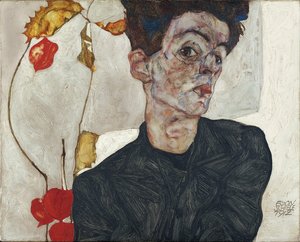
1890 - 1918 , Австрия

Explore the profound history of Expressionism. From Edvard Munch to Jackson Pollock, discover how artists used distortion and color to convey raw emotion. A definitive guide for art lovers seeking deep historical context and mastery in fine art reproductions.

Explore the profound history of Surrealist Expressionism. Discover how artists blended dream logic with raw emotion to navigate post-war trauma through masterful, evocative imagery and psychological depth.

Explore the profound emotional depth of Expressionist portraiture. From Edvard Munch to Francis Bacon, discover how masters used distortion and color to reveal inner truths. Learn about this pivotal movement and find museum-quality oil reproductions for your collection.
Explore the profound depth of Figurative Expressionism. From Edvard Munch to William H. Johnson, learn how masters use the human form to capture raw emotion through color and distortion in this expert art history guide.


Будьте в курсе последних новостей из мира искусства, эксклюзивных предложений и идей для оформления интерьера.
Расскажите нам о вашем проекте, и наши эксперты по искусству предложат вам 3 персонализированных варианта произведений искусства.
Мы подберем для вас 3 варианта — бесплатно!


 Предпросмотр
 Поделиться
 Поделиться
 Детали произведения

 Скачать
 Похожие работы
 Рентгенография
 Слайд-шоу

 Читать далее







 Вариант со стеклом доступен только для размеров менее 110 см