


x

 Заказать принт Заказать репродукцию
 Поделиться
 Детали произведения
 Добавить в избранное
 Скачать
 Похожие работы
 Рентгенография
 Слайд-шоу
Приобретите цифровое изображение высокого разрешения в улучшенном качестве, которое значительно превосходит онлайн-превью.
Каждый файл тщательно подготавливается нашими специалистами с использованием передовых инструментов и экспертной ручной ретуши. Мы гарантируем исключительную четкость, точную цветопередачу и детальную проработку каждого изображения.
Финальный файл доставляется по электронной почте в течение 72 часов и оптимизирован для немедленного использования в профессиональной среде, при верстке и печати. Это тот же уровень качества, которому доверяют ведущие дизайнерские студии, издательства и галереи.
Скачайте файл высокого разрешения для личного использования, печати и творческих проектов.
Выбирая Most-Famous-Paintings.com, вы получаете не просто изображение — вы приобретаете профессионально обработанное цифровое произведение искусства, созданное с безупречной точностью и под защитой гарантии качества. Вот всё, что автоматически входит в ваш заказ:

Ваш цифровой файл в высоком разрешении будет отправлен вам по электронной почте в течение 72 часов после оформления заказа — и сразу станет доступен для использования.

Ваше произведение искусства проходит профессиональную оптимизацию с использованием передовых инструментов ИИ и ручной обработки, что гарантирует максимальную детализацию, четкость и точность цветопередачи.

Случайно удалили или потеряли файл? Не беспокойтесь — мы отправим его вам повторно в любое время и совершенно бесплатно.

Наслаждайтесь вашим произведением искусства мгновенно без таможенных пошлин, сборов или затрат на доставку — цифровые загрузки всегда не облагаются налогом.

Мы гарантируем, что ваше цифровое изображение максимально точно передает оригинальные цвета благодаря использованию профессиональных инструментов и систем управления цветом.

Если вы останетесь не удовлетворены покупкой цифрового изображения, мы внесем в него правки или вернем 100% стоимости в течение 60 дней — без лишних вопросов.

Не удовлетворены покупкой? Мы гарантируем полный возврат средств в течение 60 дней после получения вашего цифрового файла — без лишних вопросов.

Купите 3 изображения, сэкономьте 10% — Купите 5, сэкономьте 15% — Купите 10+, сэкономьте 20%. Отличное решение для творческих проектов, галерей и агентств.
Fernand Léger’s “Self,” painted in 1930, isn't merely a portrait; it’s a distilled essence of the early 20th century – a visual embodiment of the machine age grappling with human identity. This striking pencil drawing, now housed within the Fernand Léger National Museum in Biot, France, offers a profound glimpse into the artist’s evolving style and his fascination with the intersection of form, technology, and the individual. Léger, born Joseph Fernand Henri Léger in 1881 in Argentan, Normandy, began his artistic journey as an architect before embracing painting, profoundly influenced by the radical innovations of Cézanne and the burgeoning currents of Cubism.
The composition immediately commands attention. The subject, a self-portrait, is rendered with a deliberate austerity – a simplification of features that borders on abstraction. Léger strips away extraneous detail, reducing the face to its fundamental geometric components: sharp triangles for the nose and eyes, rectangular planes for the mouth and chin, and a simplified outline of the head itself. This fragmentation isn’t chaotic; rather, it creates a sense of dynamic energy, as if the subject is simultaneously present and dissolving into pure form. The cropped composition, focusing tightly on the upper torso, intensifies this effect, drawing the viewer directly into the artist's gaze – an intense, direct stare that speaks to both confidence and introspection.
“Self” is a quintessential example of Léger’s “Tubism,” a style he developed in the early 1910s. Inspired by the cylindrical forms of industrial machinery, Tubism sought to represent objects – and indeed, human figures – as composed of interlocking cylinders, cones, and cubes. This approach wasn't simply an aesthetic choice; Léger saw it as a way to capture the essence of modern life, dominated by factories, trains, and the relentless march of technology. The angular lines and stark contrasts in tone reflect this mechanical sensibility, creating a visual rhythm that echoes the precision and efficiency of machines.
The use of pencil is crucial here. Léger’s meticulous application of line – often with varying pressure and thickness – imbues the drawing with a remarkable sense of texture and depth. The grainy quality of the graphite suggests a hand-drawn immediacy, contrasting sharply with the stylized forms. This combination of raw material and deliberate construction speaks to Léger's desire to bridge the gap between traditional artistic techniques and the new visual language of modernity.
Beyond its formal qualities, “Self” carries a potent symbolic weight. The direct gaze of the subject is particularly arresting – it’s not a passive portrait but an active engagement with the viewer. This confrontational quality suggests a questioning of identity in a rapidly changing world. Léger himself described his work as reflecting "the crude beauty" of everyday life, and “Self” embodies this sentiment perfectly. The simplification of features can be interpreted as a rejection of idealized representations, suggesting instead a focus on the essential, stripped-down reality of human existence.
Furthermore, the drawing’s monochromatic palette – primarily shades of gray – reinforces its sense of austerity and detachment. It evokes the starkness of industrial landscapes and the impersonal nature of modern life. The lack of color directs attention to the formal elements of the composition, highlighting Léger's mastery of line and form.
Fernand Léger’s “Self” stands as a pivotal work in his oeuvre and a significant contribution to the development of modern art. His exploration of Cubism, combined with his fascination with technology and his unique approach to portraiture, paved the way for subsequent generations of artists – including Pop Art pioneers like Andy Warhol – who sought to integrate the visual language of mass culture into their work. “Self” remains a powerful testament to Léger’s artistic vision and his enduring legacy as one of the most influential figures of the 20th century.
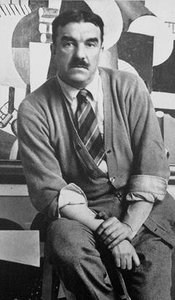
1881 - 1955 , Франция


Будьте в курсе последних новостей из мира искусства, эксклюзивных предложений и идей для оформления интерьера.
Расскажите нам о вашем проекте, и наши эксперты по искусству предложат вам 3 персонализированных варианта произведений искусства.
Мы подберем для вас 3 варианта — бесплатно!


 Поделиться


 Читать далее


