
Продавайте свое искусство
Список желаний Корзина Cart
x
ПредпросмотрПредпросмотр Предпросмотр в ARПредпросмотр в AR Купить принт Купить принтКупить картину ручной работы Купить картину ручной работы ПоделитьсяПоделиться
Детали произведенияДетали произведения Добавить в избранное Добавить в избранное СкачатьСкачать Похожие работыПохожие работы РентгенографияРентгенография Слайд-шоуСлайд-шоу

Shepherdess with Sheep

Фрэнк Марк (1880-1916) – немецкий экспрессионист, известный своими яркими живописными лошадьми и сине-голубым «Голубым Рейдером». Его работы полны духовности и символизма.

Приобретите цифровое изображение высокого разрешения в улучшенном качестве, которое значительно превосходит онлайн-превью.

Каждый файл тщательно подготавливается нашими специалистами с использованием передовых инструментов и экспертной ручной ретуши. Мы гарантируем исключительную четкость, точную цветопередачу и детальную проработку каждого изображения.

Финальный файл доставляется по электронной почте в течение 72 часов и оптимизирован для немедленного использования в профессиональной среде, при верстке и печати. Это тот же уровень качества, которому доверяют ведущие дизайнерские студии, издательства и галереи.

Цифровое изображение

Скачайте файл высокого разрешения для личного использования, печати и творческих проектов. (Купить принт Купить принтКупить картину ручной работы Купить картину ручной работы)

Итоговая стоимость

$ 24,90

Включено в каждый заказ цифровых изображений

Гарантия экспертной цифровой доставки

Выбирая Most-Famous-Paintings.com, вы получаете не просто изображение — вы приобретаете профессионально обработанное цифровое произведение искусства, созданное с безупречной точностью и под защитой гарантии качества. Вот всё, что автоматически входит в ваш заказ:

shipping_icon
Мгновенная доставка по e-mail

Ваш цифровой файл в высоком разрешении будет отправлен вам по электронной почте в течение 72 часов после оформления заказа — и сразу станет доступен для использования.

canvas_icon
Цифровой файл с ИИ-улучшением

Ваше произведение искусства проходит профессиональную оптимизацию с использованием передовых инструментов ИИ и ручной обработки, что гарантирует максимальную детализацию, четкость и точность цветопередачи.

insurance_icon
Бессрочная бесплатная повторная доставка

Случайно удалили или потеряли файл? Не беспокойтесь — мы отправим его вам повторно в любое время и совершенно бесплатно.

tax_icon
Без импортных пошлин — навсегда

Наслаждайтесь вашим произведением искусства мгновенно без таможенных пошлин, сборов или затрат на доставку — цифровые загрузки всегда не облагаются налогом.

color_icon
Гарантия точности цветопередачи

Мы гарантируем, что ваше цифровое изображение максимально точно передает оригинальные цвета благодаря использованию профессиональных инструментов и систем управления цветом.

return_icon
Гарантия удовлетворения в течение 60 дней

Если вы останетесь не удовлетворены покупкой цифрового изображения, мы внесем в него правки или вернем 100% стоимости в течение 60 дней — без лишних вопросов.

guarantee_icon
100% Гарантия возврата средств

Не удовлетворены покупкой? Мы гарантируем полный возврат средств в течение 60 дней после получения вашего цифрового файла — без лишних вопросов.

discount_icon
Скидки на оптовые заказы

Купите 3 изображения, сэкономьте 10% — Купите 5, сэкономьте 15% — Купите 10+, сэкономьте 20%. Отличное решение для творческих проектов, галерей и агентств.

Основные сведения

  • Location: Private Collection
  • Movement: Expressionism
  • Medium: Watercolor
  • Artistic style: Bold lines, vibrant hues
  • Subject or theme: Nature, spirituality
  • Notable elements: Symbolic colors
  • Influences: Van Gogh

Тест по искусству

В каждом вопросе только один правильный ответ.

Вопрос 1:
What artistic movement is Franz Marc’s ‘Shepherdess with Sheep’ most closely associated with?
Вопрос 2:
In Marc's painting, what do the dominant blue tones primarily symbolize?
Вопрос 3:
The painting’s watercolor technique contributes to which of the following effects?
Вопрос 4:
Franz Marc believed that art could serve what purpose?
Вопрос 5:
The composition of ‘Shepherdess with Sheep’ features the woman positioned towards which side of the scene?

Описание коллекции

A Moment of Serene Transcendence: Franz Marc’s “Shepherdess with Sheep”

Franz Marc's "Shepherdess with Sheep," painted in 1908, isn’t merely a depiction of a rural scene; it’s a profound meditation on spirituality and the interconnectedness of nature. This watercolor, born from the heart of the Expressionist movement, invites us into a world where color sings and form embodies emotion—a realm meticulously crafted by an artist deeply attuned to the soul of the natural world. Marc, a pivotal figure in German art’s late 19th and early 20th centuries, sought to move beyond representational accuracy, aiming instead to capture the *feeling* of existence through his palette and brushstrokes. “Shepherdess with Sheep” exemplifies this ambition perfectly, offering a glimpse into a world where the boundaries between humanity and nature blur, creating an atmosphere of quiet contemplation.

The Language of Color: Symbolism in Action

Marc’s masterful use of color is central to understanding the painting's emotional resonance. The dominant blue tones—a deep, almost melancholic azure—are not simply descriptive; they represent masculinity and a profound spiritual depth, anchoring the scene with an underlying sense of longing. Juxtaposed against this coolness are vibrant yellows, radiating from the woman and subtly woven throughout the sheep’s wool, symbolizing femininity, emotion, and perhaps even the warmth of life itself. The strategic placement of small, deliberate red accents—found in the rocks and hinting at the earth—ground the composition with a physicality that balances the ethereal quality of the blues and yellows. Marc believed color possessed an inherent symbolic power, and he expertly deployed it to create layers of meaning within his work.

Expressionist Technique: Delicacy and Boldness

The painting’s distinctive style is rooted in the Expressionist movement's desire to convey subjective experience. Marc employed a loose, almost childlike watercolor technique, allowing washes of color to bleed into one another, creating an atmospheric haze that softens the forms and imbues the scene with a dreamlike quality. Yet, within this fluidity lies a surprising boldness—the strong outlines defining the woman’s form and the sheep's silhouettes assert themselves against the background, preventing the image from dissolving into pure abstraction. This interplay of delicacy and strength mirrors the painting’s central theme: the harmonious coexistence of vulnerability and resilience.

A Vision of Harmony: Historical Context and Marc’s Philosophy

Created during a period of significant social and artistic upheaval, “Shepherdess with Sheep” reflects Franz Marc's broader philosophical concerns. He viewed modern society as decadent and spiritually barren, yearning for an art that could reconnect humanity to the fundamental truths of nature. Marc’s paintings often depicted animals—particularly those inhabiting rural landscapes—as symbols of purity, innocence, and a return to a simpler, more authentic way of life. The shepherdess herself embodies this ideal – a figure removed from the complexities of urban existence, immersed in the quiet beauty of the countryside. This painting isn't just a pretty picture; it’s an articulation of Marc’s belief that art could serve as a vital force for spiritual renewal.

Most-Famous-Paintings offers exquisite, hand-painted reproductions of Franz Marc’s “Shepherdess with Sheep,” meticulously crafted by skilled artists who understand the nuances of Marc's style and symbolism. Each reproduction captures the painting’s luminous colors and evocative atmosphere, allowing you to bring this timeless masterpiece into your home or office – a testament to the enduring power of art to inspire and uplift.

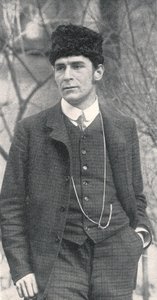
Биография художника

A Life Immersed in Color and Spirit

Franz Moritz Wilhelm Marc, born in Munich in 1880, was a painter whose brief but intensely focused career irrevocably altered the course of German Expressionism. His story is one of profound spiritual seeking translated into a vibrant visual language, a quest to understand the essence of life through the purity he found in the natural world—particularly within the animal kingdom. Initially influenced by his father, Wilhelm Marc, a landscape painter, young Franz’s artistic path wasn't immediately certain. He briefly considered theology, grappling with questions of faith and existence before ultimately dedicating himself to art at the Academy of Fine Arts in Munich. These early explorations into religious thought would remain deeply embedded within his work, shaping his belief that art could be a conduit for spiritual experience. His academic training provided him with technical foundations, but it was encounters with the works of Vincent van Gogh during visits to Paris that truly ignited his artistic vision. Van Gogh’s emotive use of color and raw expression resonated profoundly with Marc, liberating him from conventional techniques and setting him on a path toward a more subjective and emotionally charged style.

The Blue Rider and a New Artistic Vision

Marc's artistic development wasn’t solitary; it flourished within the dynamic context of early 20th-century Munich. He experimented with various artist groups, including the Neue Künstlervereinigung München, before co-founding *Der Blaue Reiter* (The Blue Rider) in 1911 alongside Wassily Kandinsky. This wasn’t merely a group or an exhibition series; it was a philosophical and artistic revolution. *Der Blaue Reiter* sought to move beyond mere representation, aiming instead to express inner spiritual truths through abstraction and symbolic color. The journal of the same name became a platform for disseminating these ideas, showcasing not only their own work but also that of other forward-thinking artists and exploring diverse cultural influences from folk art to primitive sculpture. Marc’s contributions during this period were pivotal. He moved away from depicting landscapes as static scenes, instead focusing on animals—horses, deer, foxes—as vessels of spiritual energy. These weren’t simply animal portraits; they were symbolic representations of innocence, harmony, and a connection to the natural world that he believed humanity had lost. The influence of Robert Delaunay’s exploration of abstract forms and vibrant colors further propelled Marc toward simplification and heightened emotional expression in his work. Paintings like *The Tiger* (1912) and *Red Deer* (1912) exemplify this shift, showcasing bold color choices and a growing focus on the inherent qualities of his subjects rather than realistic depiction.

Symbolism, Color, and the Essence of Being

Marc’s artistic style is immediately recognizable for its distinctive use of color and form. He didn't employ color descriptively; instead, he imbued it with symbolic meaning. Blue represented spirituality and masculinity, yellow signified joy and femininity, and red embodied violence and materiality. These weren’t arbitrary choices but a carefully constructed system designed to convey specific emotional and philosophical ideas. His animals aren’t merely subjects; they are embodiments of these concepts. The simplification of forms—reducing figures to their essential shapes—further emphasized the underlying spiritual essence he sought to capture. *The Tower of Blue Horses* (1913), sadly lost during World War II, is perhaps the most iconic example of this approach, a powerful and evocative composition that encapsulates his artistic vision. He believed animals possessed an inherent purity and connection to nature that humans had forfeited through societal constraints and intellectualization. By portraying them with such reverence and symbolic weight, Marc sought to remind viewers of this lost harmony and inspire a deeper appreciation for the natural world. His work wasn’t about depicting *what* he saw but rather *how* he felt—a deeply personal and spiritual response to his surroundings.

Influences and Development

Marc's artistic journey was shaped by a confluence of influences. Initially, his father’s landscape paintings provided a foundation in observation and technique. However, it was the encounter with Vincent van Gogh that truly transformed his approach. Van Gogh’s expressive brushwork, intense colors, and emotional honesty resonated deeply with Marc, liberating him from academic constraints and encouraging him to prioritize feeling over representation. The Impressionists, particularly Monet, also played a role in broadening his palette and exploring new ways of capturing light and atmosphere. Furthermore, Marc's time in Paris exposed him to the burgeoning avant-garde movements, including Cubism and Fauvism, which subtly influenced his later work. He was fascinated by the works of Paul Gauguin, particularly Gauguin’s use of symbolism and vibrant colors to convey spiritual themes. The philosophical ideas of Eastern religions—particularly Buddhism—also exerted a significant influence on Marc's thinking, informing his belief in the interconnectedness of all things and the importance of living in harmony with nature.

A Tragic End and Lasting Legacy

The outbreak of World War I in 1914 dramatically altered Marc’s life and artistic trajectory. Despite seeking exemption due to his status as an artist, he was drafted into the German army, serving as a cavalryman. The horrors of war deeply affected him, yet even amidst the chaos, he continued to paint, finding solace and meaning in his art. Tragically, Franz Marc died on March 4, 1916, at the Battle of Verdun, a devastating loss for the art world. His untimely death cut short a career brimming with potential, but it also cemented his place as a pivotal figure in modern art history. His work continues to resonate today, influencing generations of artists and captivating audiences with its emotional depth and spiritual resonance. Marc’s paintings are exhibited in major museums worldwide, including the Lenbachhaus in Munich, which holds an extensive collection of his work. He is remembered not only as a pioneer of German Expressionism but also as a visionary artist who dared to explore the profound connection between art, spirituality, and the natural world—a legacy that continues to inspire awe and contemplation. His artistic vision remains a testament to the power of art to transcend the material realm and touch upon something deeper within the human spirit.
Франц Марк

Франц Марк

1880 - 1916 , Германия

Основные сведения

  • Artistic Movement Or Style: Немецкий экспрессионизм
  • Artists Or Movements Influenced By This Artist:
    • Абстрактное искусство
    • Синий Rider
  • Artists Who Influenced This Artist:
    • Ван Гог
    • Деланье
  • Date Of Birth: 8 февраля 1880 г.
  • Date Of Death: 4 марта 1916 г.
  • Full Name: Франц Moritz Wilhelm Marc
  • Nationality: Германец
  • Notable Artworks:
    • Кот на красном полотне
    • Чёрный жеребец
    • Башня синих лошадей
  • Place Of Birth: Мюнхен, Германия

