x


 Заказать репродукцию Купить цифровое изображение
 Поделиться
 Детали произведения
 Добавить в избранное
 Скачать
 Похожие работы
 Рентгенография
 Слайд-шоу
 Acrylic On CanvasWallArtRomanticism
 1799
1799 70.0 x 56.0 cm
 Walker Art Gallery
Печать (жикле) или холст музейного качества с быстрыми сроками изготовления и широким выбором вариантов отделки.





























Выберите один из наших стандартных размеров, соответствующих оригинальным пропорциям произведения искусства.

Вы можете указать свои собственные размеры, чтобы репродукция идеально подошла под конкретную раму или пространство. Если выбранный вами размер не будет соответствовать пропорциям оригинала, мы либо обрежем произведение, либо дополним изображение зеркальным отражением краев или однотонной заливкой. Перед началом производства вам будет отправлен цифровой макет для утверждения.
Пожалуйста, обратите внимание, что предварительный просмотр на экране не отображает фактическую обрезку или расширение изображения. Только макет точно покажет финальную композицию.
Несмотря на возможность заказа индивидуальных размеров, мы рекомендуем выбирать размер из предопределенного списка, чтобы сохранить оригинальные пропорции.
Доставка по всему миру () за 2 недели вместо стандартных 4/5 недель. (20 Июль)


A Monkey
Размер репродукции
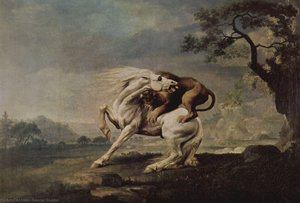
George Stubbs' "A Monkey," painted in 1799, isn’t merely a depiction of an animal; it’s a carefully constructed tableau brimming with layered meaning. The subject itself – a monkey seated upon what appears to be a weathered rock or piece of wood – possesses an almost unnerving stillness. Its head is turned slightly away from the viewer, lending it a contemplative air, as if lost in its own thoughts. The pose, combined with the subtle tension in its muscles and the alert expression around its eyes, suggests a creature both intelligent and wary. This isn’t a playful romp through a jungle; there's an underlying sense of observation, perhaps even judgment, radiating from this primate. The artist masterfully captures a fleeting moment of awareness, inviting us to contemplate the animal’s inner world.
Stubbs was renowned for his unparalleled anatomical accuracy, particularly in his depictions of animals. “A Monkey” exemplifies this skill, showcasing a meticulous attention to detail in rendering the monkey’s fur, musculature, and skeletal structure. This dedication stemmed from his early training as an assistant to a surgeon, Charles Atkinson at York County Hospital, where he dissected horses to understand their anatomy. This scientific rigor is evident in the painting's realistic portrayal of the animal’s form—a hallmark of the burgeoning Romantic movement. The emphasis on observation and detailed representation, rather than idealized beauty, was revolutionary for its time.
The painting reflects a shift away from Neoclassical ideals that prioritized order and restraint towards a celebration of nature's power and complexity – a core tenet of Romanticism.Beyond its anatomical brilliance, “A Monkey” is rich in symbolic potential. The monkey’s grasp of two apples—one held delicately in its hand, the other resting nearby—immediately evokes the biblical story of Adam and Eve. This imagery suggests themes of temptation, knowledge, and perhaps even a critique of humanity's relationship with nature. The shadowed background further reinforces this sense of mystery and foreboding. The artist’s choice to depict the monkey in a contemplative pose, rather than engaging in playful activity, adds another layer of complexity—suggesting an awareness of its own situation and the potential consequences of its actions.
Furthermore, some scholars suggest that the painting may be a commentary on the role of artists and their relationship to nature, mirroring the themes explored in Jean Siméon Chardin’s “The Monkey Painter,” which depicts a monkey holding a paintbrush.“A Monkey” stands as a testament to George Stubbs' extraordinary talent and his pivotal role in shaping the course of British art. Its meticulous detail, evocative atmosphere, and symbolic depth continue to captivate viewers today. Reproductions of this iconic painting offer an opportunity to experience firsthand the artistry and intellectual curiosity that defined one of England’s greatest painters. It is a piece that invites repeated viewing, revealing new nuances with each encounter—a true masterpiece of anatomical precision and Romantic vision.


1724 - 1806 , Великобритания

Explore the rich history of animal painting across cultures & movements. Discover iconic artists, symbolism, collecting trends & expert art consultation at Most-Famous-Paintings.com.

Explore the life & work of Ramsay Richard Reinagle (1775-1862), a key figure in British sporting art and animal portraiture. Discover his landscapes, panoramas, and contributions to zoological illustration with Most-Famous-Paintings.

Explore the emotional depth of Romantic landscape painting (18th-19th century). Discover key artists like Friedrich & Cole, and the concepts of the sublime. Expert insights for art lovers & collectors.

Explore the rich history of 18th & 19th-century art! Discover Romanticism, Realism, and iconic masters like Delacroix & Courbet. Expert insights & high-quality reproductions at Most-Famous-Paintings.

Откройте для себя 25 шедевров Жоржа Брака – пионера кубизма! Узнайте историю создания культовых картин, технику и влияние французского художника на искусство XX века. Репродукции высокого качества для вашего интерьера на Most-Famous-Paintings.com.


Будьте в курсе последних новостей из мира искусства, эксклюзивных предложений и идей для оформления интерьера.
Расскажите нам о вашем проекте, и наши эксперты по искусству предложат вам 3 персонализированных варианта произведений искусства.
Мы подберем для вас 3 варианта — бесплатно!


 Поделиться

 Читать далее







 Вариант со стеклом доступен только для размеров менее 110 см