Список желаний Корзина Cart
x
ПредпросмотрПредпросмотр Предпросмотр в ARПредпросмотр в AR Купить картину ручной работы Купить картину ручной работыКупить изображение Купить изображение ПоделитьсяПоделиться
Детали произведенияДетали произведения Добавить в избранное Добавить в избранное СкачатьСкачать Похожие работыПохожие работы РентгенографияРентгенография Слайд-шоуСлайд-шоу

untitled (2087)

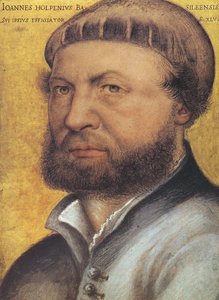
Admire Hans Holbein’s "Untitled (2087)", a stunning Renaissance portrait of a writing man. Oil on canvas, rich detail & timeless elegance – explore this captivating masterpiece.

Ганс Гольбейн Младший (1497-1543): мастер Северного Возрождения, создавший реалистичные портреты Тюдоров и шедевры детализированной живописи.

Жикле / Арт-принт

Печать (жикле) или холст музейного качества с быстрыми сроками изготовления и широким выбором вариантов отделки. (Купить картину ручной работы Купить картину ручной работыКупить изображение Купить изображение)

P118B $10
P118H $10
P118W $10
P438Z $10
P508JH $12
P508YH $12
P805H $10
P805Z $10
P919BZ $10
P919G $10
P919XJ $10
P959ZH $10
P968JZ $12
W106C $8
W218G $10
W218JH $8
W218Y $10
W307PJ $10
W316G $10
W316PJ $8
W316Y $10
W398PJ $8
W4111J $10
W500HY $15
W500JH $15
W692G $12
W849H $8
W940BG $15
W953PJ $8

Standard
custom
CM
INCH

Выберите один из наших стандартных размеров, соответствующих оригинальным пропорциям произведения искусства.

ширина
высота

Вы можете указать свои собственные размеры, чтобы репродукция идеально подошла под конкретную раму или пространство. Если выбранный вами размер не будет соответствовать пропорциям оригинала, мы либо обрежем произведение, либо дополним изображение зеркальным отражением краев или однотонной заливкой. Перед началом производства вам будет отправлен цифровой макет для утверждения.
Пожалуйста, обратите внимание, что предварительный просмотр на экране не отображает фактическую обрезку или расширение изображения. Только макет точно покажет финальную композицию.
Несмотря на возможность заказа индивидуальных размеров, мы рекомендуем выбирать размер из предопределенного списка, чтобы сохранить оригинальные пропорции.

Доставка по всему миру () за 2 недели вместо стандартных 4/5 недель. (23 Август)

why_choose_icon
Бесплатная экспресс-доставка по всему миру
why_choose_icon
Высококачественный льняной холст
why_choose_icon
Полное страхование доставки
why_choose_icon
Гарантия возмещения таможенных пошлин
why_choose_icon
Гарантия точного соответствия цветов
why_choose_icon
Политика возврата в течение 60 дней (только при наличии дефектов)
why_choose_icon
Гарантия возврата 100% средств
why_choose_icon
Предложение оптовых скидок

Общая стоимость

$ 68

reproduction

untitled (2087)

Жикле / Арт-принт

Размер репродукции

-

Итоговая стоимость

$ 68

Основные сведения

  • artist: Hans Holbein the Younger
  • notable_elements: Writing with a quill pen, hands, upper torso
  • medium: oil on canvas
  • title: untitled (2087)
  • subject: Portrait of a man writing

Тест по искусству

В каждом вопросе только один правильный ответ.

Вопрос 1:
Hans Holbein the Younger is most renowned for his work within which artistic movement?
Вопрос 2:
Based on the description, what is a primary focus of this portrait?
Вопрос 3:
What painting technique is suggested by the description of 'smooth brushstrokes and rich color saturation'?
Вопрос 4:
The act of writing in this portrait subtly symbolizes what concepts?

Описание предмета коллекционирования

A Moment of Contemplation: Exploring Hans Holbein the Younger’s “untitled (2087)”

This captivating portrait by Hans Holbein the Younger, circa 1530-1540, offers a compelling glimpse into the world of Renaissance scholarship and power. The artwork depicts a man intently engaged in the act of writing with a quill pen on parchment – a scene rendered with remarkable realism and psychological depth.

Subject & Composition

The composition is deliberately focused, cropping tightly around the subject’s upper torso and hands. This intimate framing draws the viewer into the immediacy of the moment, emphasizing the concentration and precision required for writing. The man's gaze is directed downwards, lost in thought as he forms letters on the page. While his identity remains unknown, the quality of his attire – a richly textured velvet robe – suggests a person of considerable status, perhaps a scholar, diplomat, or member of the court.

Style & Technique

Holbein’s mastery of Northern Renaissance realism is on full display here. The painting showcases his exceptional skill in rendering textures: the smooth sheen of velvet, the delicate roughness of parchment, and the tactile quality of the quill itself. His technique, employing layers of oil paint applied with meticulous brushwork, creates a luminous surface and a remarkable sense of three-dimensionality. The directional lighting further enhances these textural details, casting subtle shadows that define form and volume. The artist’s attention to detail is characteristic of his work during his time as court painter to King Henry VIII.

Historical Context & Symbolism

During the 16th century, writing was not merely a practical skill but a symbol of learning, authority, and communication. The act itself held significant weight, representing the preservation of knowledge, the execution of official decrees, or the crafting of persuasive arguments. Holbein, working within the humanist circles of his time, understood this symbolism implicitly. The painting subtly evokes these associations, suggesting that the man is engaged in a task of importance – perhaps composing a letter, drafting a legal document, or recording historical events. The choice of parchment over more modern writing surfaces further reinforces the connection to tradition and scholarship.

Emotional Impact & Interpretation

“untitled (2087)” evokes a sense of quiet contemplation and solemnity. The focused intensity of the subject’s concentration, combined with the muted color palette and subtle lighting, creates an atmosphere of intellectual rigor and perhaps even a hint of melancholy. The painting invites viewers to reflect on the power of words, the weight of responsibility, and the enduring human pursuit of knowledge. It is a work that rewards close observation, revealing new layers of meaning with each viewing.

For Collectors & Designers

This artwork – or a high-quality reproduction thereof – would be a striking addition to any collection focused on Renaissance portraiture or Northern European art. Its restrained elegance and intellectual depth make it particularly well-suited for libraries, studies, or formal living spaces. The rich color palette complements both traditional and contemporary interiors, adding a touch of historical sophistication and artistic gravitas. The intimate scale of the composition allows it to be appreciated in a variety of settings, from grand estates to more modest homes.

Биография художника

A Life Etched in Detail: The World of Hans Holbein the Younger

Born around 1497 in Augsburg, Germany, Hans Holbein the Younger emerged as a defining figure of the Northern Renaissance—a master portraitist whose work continues to resonate with breathtaking realism and psychological depth. His upbringing within an artistically gifted family laid the foundation for his exceptional talent; his father, Hans Holbein the Elder, was a respected painter and printmaker who instilled in young Hans a meticulous approach to observation and technique. This early training wasn’t merely about mastering brushstrokes or mixing pigments—it was about learning to *see*, to capture not just likeness but the very essence of a subject. Holbein's initial artistic explorations occurred within his father’s workshop, where he honed his skills before embarking on a journey that would lead him through Switzerland and ultimately to the heart of the English court.

From Basel to the Tudor Court: A Rising Star

After completing his apprenticeship, Holbein traveled extensively throughout Switzerland, establishing himself as an independent artist with a growing reputation. He spent several formative years in Basel, creating not only striking portraits but also religious works and intricate woodcut designs—most notably the haunting series depicting the *Dance of Death*. These early pieces reveal a burgeoning mastery of composition and a developing fascination with capturing the complexities of human emotion. His father’s influence was paramount; Holbein absorbed the meticulous techniques of his elder brother, Matthias Holbein, who practiced in Basel, mastering the art of etching and printmaking alongside painting. This dual skillset would prove invaluable throughout his career, allowing him to produce both monumental paintings and exquisitely detailed prints—a hallmark of his distinctive style. It was in 1526 that fate intervened, drawing Holbein towards England, an event that would irrevocably alter his artistic trajectory. He arrived bearing a letter of introduction from Erasmus, the renowned humanist scholar, which opened doors to the influential circles of English society. His talent quickly captivated prominent figures like Sir Thomas More, who became both a patron and a subject for several compelling portraits. This connection proved pivotal, leading Holbein’s ascent to prominence within the Tudor court—a position he held, with some interruptions, until his untimely death in 1543.

The Art of Perception: Style and Masterpieces

Holbein's artistic style is characterized by an extraordinary commitment to realism, achieved through painstaking attention to detail in rendering textures, fabrics, and the subtle nuances of facial features. He didn’t simply *paint* portraits; he meticulously constructed them, layer upon layer, capturing not just physical appearances but also the personality and inner life of his sitters. His innovative compositions further enhanced the impact of his work, often employing symbolic objects or backgrounds to convey deeper meaning. The Ambassadors (1533) stands as a testament to this approach—a complex and symbolically rich double portrait showcasing both Holbein’s technical brilliance and intellectual depth. The anamorphic skull subtly embedded within the painting serves as a stark *memento mori*, reminding viewers of the inevitability of death. This masterful use of perspective and shading exemplifies Holbein's dedication to capturing the illusion of three dimensions—a technique that would become synonymous with Renaissance portraiture. He skillfully blended the precision of German artistic traditions with the compositional principles of the Italian Renaissance, demonstrating a remarkable breadth of knowledge and artistic influence.

Notable Achievements: A Legacy of Detail

Holbein’s prolific output spanned across various mediums, cementing his reputation as one of the most versatile artists of his time. Beyond portraiture, he produced monumental frescoes for churches in Basel and Strasbourg—demonstrating his ability to execute ambitious projects with unwavering dedication. His religious works are imbued with profound spiritual contemplation, reflecting the humanist ideals prevalent during the Reformation. Furthermore, Holbein’s etchings achieved unparalleled renown, establishing him as a pioneer of printmaking and influencing countless artists who followed. The *Dance of Death* series—a macabre depiction of mortality—became an enduring symbol of the era, showcasing Holbein's mastery of etching technique and his ability to convey complex emotions through visual imagery. His meticulous attention to detail—evident in every brushstroke and engraving—transformed artistic representation forever. He didn’t merely record appearances—he captured moments in time, preserving them for posterity.

Historical Significance: Shaping the Tudor Image

Hans Holbein the Younger's portraits played a crucial role in shaping the image of Henry VIII and his court during the tumultuous Reformation period. His depictions of the king conveyed both regal authority and human vulnerability—a nuanced portrayal that reflected the complexities of Tudor politics and religion. Holbein’s work served as invaluable documentation of the era, capturing not only visual likenesses but also conveying the social and cultural context of Elizabethan England. He remains one of the most admired and studied painters of the Renaissance—a master whose artistry continues to inspire and enthrall audiences worldwide.
Ганс Гольбейн Младший

Ганс Гольбейн Младший

1497 - 1543 , Германия

Основные сведения

  • Artistic Movement Or Style: Северное Возрождение
  • Artists Or Movements Influenced By This Artist: ['Более поздние портретисты']
  • Artists Who Influenced This Artist: ['Альбрехт Дюрер']
  • Date Of Birth: c. 1497
  • Date Of Death: October or November 1543
  • Full Name: Hans Holbein der Jüngere
  • Nationality: Германия и Швейцария
  • Notable Artworks: ['«Портрет Эразма Роттердамского», «Сэр Брайан Тюк», «Великое произведение искусства эпохи Тюдоров! Портрет Томаса Ховарда, 3-го герцога Норфолка от Ханса Гольбеинца']
  • Place Of Birth: Augsburg, Германия
Откройте для себя произведения искусства, подобранные по темам, стилям и характеристикам.