Wishlist Корзина Cart
Заказать принт Заказать принтКупить цифровое изображение Купить цифровое изображение ПоделитьсяПоделиться
Детали произведенияДетали произведения Добавить в избранное Добавить в избранное СкачатьСкачать Похожие работыПохожие работы РентгенографияРентгенография Слайд-шоуСлайд-шоу

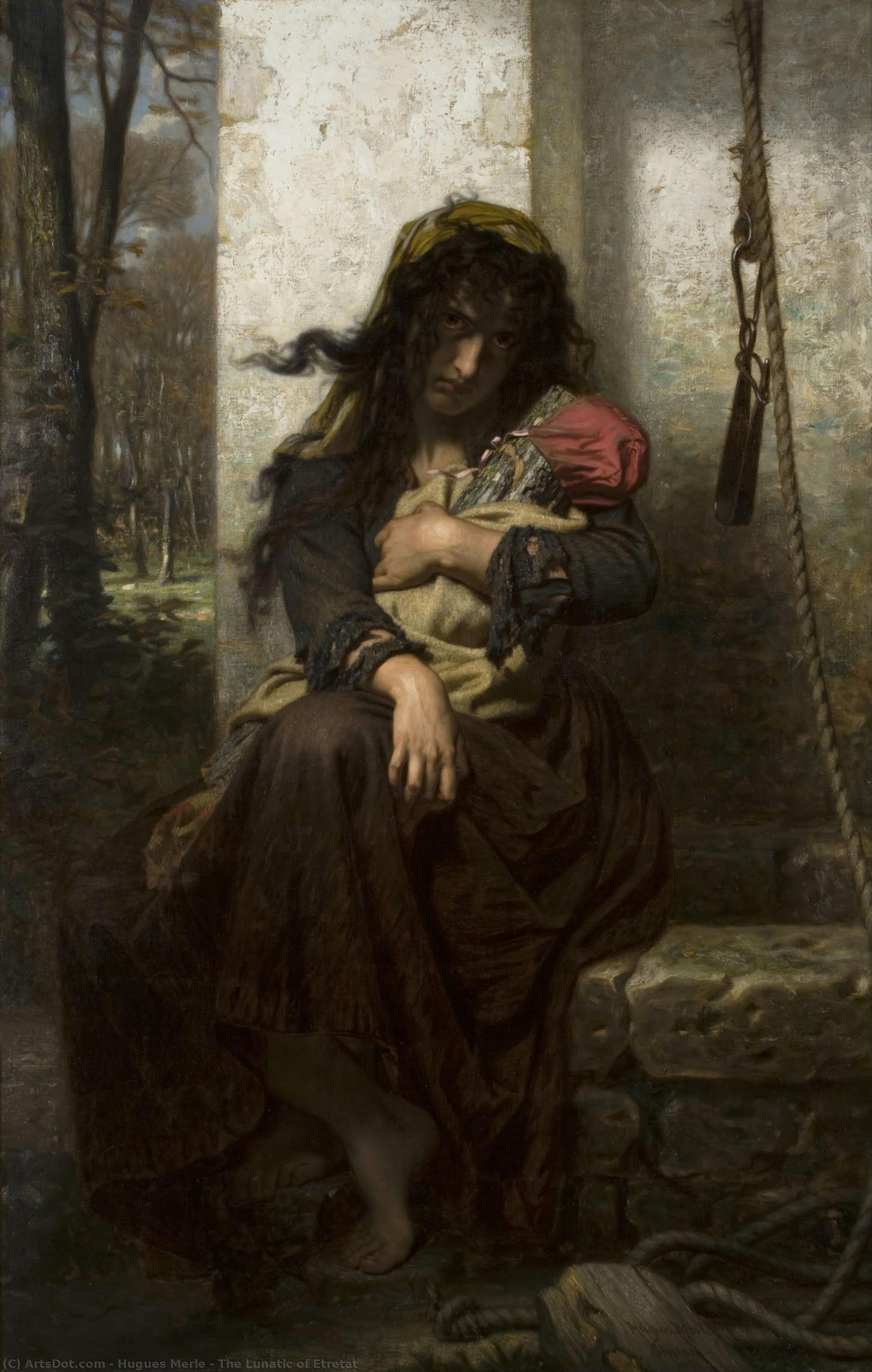
The Lunatic of Etretat

Explore 'The Lunatic of Étretat' by Hugues Merle (1871). A haunting portrait capturing grief, despair, and potential political allegory – a masterpiece of Romanticism.

"RussianMetaDescription": "Хугес Мёрл (1823-1881) – французский академический живописец, известный своими трогательными и моральными сценами в стиле Бугеро. Его работы отражают жизнь 19 века, полные нежности и веры."

Масляная репродукция ручной работы

Картина маслом на холсте в выбранном вами размере и раме, написанная на заказ нашими художниками.

P118B $10
P118H $10
P118W $10
P438Z $10
P508JH $12
P508YH $12
P805H $10
P805Z $10
P919BZ $10
P919G $10
P919XJ $10
P959ZH $10
P968JZ $12
W106C $8
W218G $10
W218JH $8
W218Y $10
W307PJ $10
W316G $10
W316PJ $8
W316Y $10
W398PJ $8
W4111J $10
W500HY $15
W500JH $15
W692G $12
W849H $8
W940BG $15
W953PJ $8

Standard
custom
CM
INCH

Выберите один из наших стандартных размеров, соответствующих оригинальным пропорциям произведения искусства.

ширина
высота

Вы можете указать собственные размеры, чтобы картина идеально вписалась в выбранную раму или пространство. Если выбранный вами размер не соответствует пропорциям оригинала, мы либо обрежем полотно, либо расширим его за счет дополнительных элементов, написанных вручную. Цифровой макет будет отправлен вам на утверждение перед началом производства.
Обратите внимание, что предварительный просмотр на экране не отражает фактическую обрезку или расширение. Только макет точно покажет окончательную композицию.
Хотя доступны индивидуальные размеры, мы рекомендуем выбирать вариант из предопределенного списка, чтобы сохранить исходные пропорции.

Примеры того, что можно изменить: заменить лицо на фото клиента; добавить домашнее животное (например, заменить кошку на собаку); добавить скрытое послание на фон; изменить пейзаж или детали фона.
После оформления заказа команда Most-Famous-Paintings.com свяжется с клиентом по электронной почте для уточнения деталей и предоставит предварительный макет

Доставка по всему миру () за 3–4 недели вместо стандартных 5 недель. (18 Июль). Без компромиссов в качестве.

why_choose_icon
Бесплатная экспресс-доставка по всему миру
why_choose_icon
Высококачественный льняной холст
why_choose_icon
Полное страхование доставки
why_choose_icon
Гарантия возмещения таможенных пошлин
why_choose_icon
Гарантия точного соответствия цветов
why_choose_icon
Политика возврата в течение 60 дней (только при наличии дефектов)
why_choose_icon
Гарантия возврата 100% средств
why_choose_icon
Предложение оптовых скидок

Общая стоимость

-

reproduction

The Lunatic of Etretat

Техника репродукции

Размер репродукции

-

Итоговая стоимость

-

Основные сведения

  • Dimensions: 152 x 99 cm
  • Location: Arnot Art Museum
  • Movement: Romanticism
  • Artist: Hugues Merle
  • Title: The Lunatic of Étretat
  • Year: 1871
  • Subject or theme: Suffering, madness

Тест по искусству

В каждом вопросе только один правильный ответ.

Вопрос 1:
What is the primary emotional tone conveyed by Hugues Merle’s ‘The Lunatic of Étretat’?
Вопрос 2:
The wooden log held by the woman in the painting is most likely symbolic of:
Вопрос 3:
Considering the historical context of 1871, when ‘The Lunatic of Étretat’ was painted, what broader societal issue might Merle be alluding to through his work?
Вопрос 4:
What artistic movement does ‘The Lunatic of Étretat’ primarily belong to?
Вопрос 5:
What is the significance of the woman's ‘sanpaku’ eyes (three whites) in the painting?

Описание произведения

The Haunting Beauty of *The Lunatic of Étretat*: A Portrait of Victorian Anguish

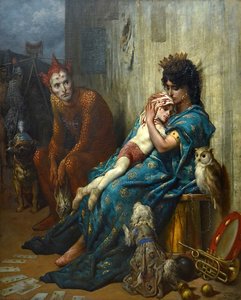
Hugues Merle’s 1871 painting, *The Lunatic of Étretat*, is not merely a portrait; it's a visceral exploration of grief, societal anxieties, and the burgeoning Romantic sensibility grappling with the realities of post-war France. The scene unfolds within a stark, almost desolate landscape – a weathered stone wall hints at a crumbling past, while a rough rope suggests both restraint and potential escape. At the heart of this tableau sits a woman whose face is a carefully constructed mask of suffering, yet beneath it lies an undeniable vulnerability. Her gaze, directed just beyond the viewer’s line, speaks volumes without uttering a word – a haunting blend of despair, longing, and perhaps even a touch of defiant sorrow.

Merle, trained under Léon Cogniet in the traditions of Academic realism, skillfully employs a technique that balances meticulous observation with an expressive emotionality. The brushstrokes are deliberate yet fluid, creating a sense of movement within the figure’s posture and the folds of her clothing. Notice how he uses light to sculpt the face – highlighting the hollows of her cheeks and emphasizing the intensity in her eyes. This isn't a cold, clinical depiction; Merle imbues the scene with warmth through subtle color choices and an almost tactile quality to his rendering of fabric and texture.

A Symbol of National Distress?

The painting’s historical context is crucial to understanding its deeper resonance. Completed in 1871, just a year after France's humiliating defeat in the Franco-Prussian War, *The Lunatic of Étretat* can be interpreted as a reflection of the nation’s collective trauma. Merle himself was deeply affected by this period of upheaval, and many art historians believe that the woman’s anguish mirrors the broader sense of loss and disillusionment felt throughout France. The log she cradles – not a sleeping infant, but a piece of wood – has been widely interpreted as a potent symbol: perhaps representing lost territory, shattered dreams, or even the remnants of a broken family. It's a tangible reminder of what was irrevocably lost.

Furthermore, the inclusion of the “sanpaku” eyes—the unsettlingly wide-open sockets – adds another layer of complexity. This traditional Japanese aesthetic, often associated with misfortune and imbalance, suggests a deeper psychological disturbance beyond simple grief. Merle’s use of this element elevates the painting from a straightforward portrait to a study in emotional instability and potential madness, aligning it with the Romantic fascination with the darker aspects of human experience.

Decoding the Woman's Grief

While interpretations abound, *The Lunatic of Étretat* resists easy categorization. Is she truly mad, consumed by delusion? Or is she a carefully constructed representation of female hysteria – a common diagnosis at the time that often pathologized women’s emotional responses? The painting deliberately avoids offering definitive answers, instead inviting viewers to contemplate the complexities of grief and the societal pressures placed upon women in 19th-century France. Her posture suggests both vulnerability and a fierce determination to endure, hinting at a resilience born from profound suffering.

The overall effect is profoundly moving. Merle doesn’t simply depict sadness; he captures its essence – the weight of unspoken sorrow, the yearning for something lost, and the quiet dignity with which one confronts unimaginable pain. *The Lunatic of Étretat* remains a powerful testament to the enduring capacity of art to explore the darkest corners of the human heart and to reflect the anxieties of an era.

Биография художника

Hugues Merle: A Painter of Sentiment and Tradition

Hugues Merle, born in 1823 in the small village of Saint-Marcellin near Cherbourg, stands as a significant figure within the landscape of 19th-century French painting. His artistic journey unfolded against the backdrop of a nation grappling with rapid change, yet he remained steadfastly committed to the principles of Academic realism and sentimental narrative—a style that resonated deeply with the public sensibilities of his time. While often overshadowed by more flamboyant contemporaries, Merle’s work offers a quiet beauty and profound emotional depth, revealing a keen understanding of human experience and a masterful command of technique.

Early Years and Artistic Training

Little is known about Merle's early life beyond his birth in Saint-Marcellin, a location steeped in history as it lay along an ancient pilgrimage route to Santiago de Compostela. The Abbey of Saint Antoine, a prominent landmark nearby, likely provided him with exposure to the artistic traditions of medieval sculpture and fresco painting—elements that subtly informed his later work. Around 1843, Merle arrived in Paris, seeking formal training at the prestigious studio of Léon Cogniet (1794-1880). Cogniet, a respected figure within the Académie des Beaux-Arts, instilled in Merle the core tenets of Academic painting: meticulous draftsmanship, precise observation, and a focus on historical or allegorical subjects. Crucially, Cogniet’s approach emphasized rapid sketching as a means to develop composition—a technique that allowed Merle to quickly capture the essence of his chosen scenes. This foundation proved invaluable, shaping Merle's artistic style and establishing him within the established framework of French art.

The Salon Years and Rising Recognition

Merle’s debut at the Paris Salon in 1847 marked a pivotal moment in his career. The Salon was more than just an exhibition; it served as a crucial proving ground for aspiring artists, determining their reputations and launching their careers. Merle consistently exhibited throughout his life, steadily gaining recognition for his skillful technique and emotionally resonant compositions. His paintings rarely embraced grand historical epics or revolutionary statements—instead, they offered intimate glimpses into domestic life, often portraying women and children engaged in activities that evoked feelings of tenderness, piety, or virtue. This focus on the sentimental resonated powerfully with a public eager for art that affirmed traditional values and provided solace amidst the uncertainties of a rapidly changing world. His talent was quickly recognized; he received second-class prizes at the Salon in 1861 and 1863—accolades that signaled his growing stature within the artistic community.

The Influence of Paul Durand-Ruel and Artistic Circles

A crucial turning point in Merle’s career arrived through his association with Paul Durand-Ruel (1831-1922), one of the most influential art dealers of the 19th century. Beginning around 1862, Durand-Ruel began acquiring paintings by Merle, recognizing the artist's talent and potential. More than a simple commercial transaction, this partnership fostered a deep connection between the dealer and the artist—a relationship that propelled Merle into the heart of Parisian artistic circles. Durand-Ruel played a key role in introducing Merle to William-Adolphe Bouguereau (1825-1903), another leading Academic painter whose work shared similar themes and stylistic qualities. This connection solidified Merle’s position within the art world, fostering a sense of camaraderie and mutual respect. The esteem was reciprocal; Durand-Ruel even commissioned several portraits of himself, his wife, and their son from Merle during the mid-1860s—a clear indication of the trust and admiration he held for the artist.

Themes, Style, and Lasting Legacy

Merle’s paintings are characterized by a profound sensitivity to human emotion and a masterful command of realism. He excelled at depicting scenes of family life, religious devotion, and moral virtue, often choosing subjects that celebrated the bonds between mothers and children or explored themes of innocence and piety. Works like *Reading The Bible*, *The Neapolitan Girl*, and *Maternal Love* exemplify his ability to imbue everyday moments with a sense of grace and emotional depth. His dedication to realistic representation—characterized by meticulous attention to detail in rendering figures and textures—frequently drew comparisons to Bouguereau, highlighting the refinement of his technique. Merle’s work is not overtly dramatic or revolutionary; rather, it offers viewers quiet contemplation and a glimpse into the values cherished by 19th-century French society. His legacy lies not in grand pronouncements but in the subtle beauty and enduring emotional resonance of his paintings—a testament to an artist who remained true to his artistic principles throughout his career.

Notable Works

  • Jephtha’s Daughter: A romanticized oil painting showcasing classical beauty and sorrow.
  • Susannah At Her Bath: A stunning Pre-Raphaelite style depiction of a nude figure in serene waters, demonstrating realism and soft lighting.
  • The Neapolitan Girl: An academic-style portrait capturing the essence of a young woman in traditional Italian attire.
  • Reading The Bible: A serene depiction of women engaged in scripture, evoking feelings of piety and tranquility.
  • Maternal Love: An emotionally resonant scene celebrating the profound bond between mother and child.
Гюг Же Merle

Гюг Же Merle

1822 - 1881 , Франция

Основные сведения

  • Artistic Movement Or Style: Академизм
  • Artists Or Movements Influenced By This Artist: ['William-Adolphe Bouguereau']
  • Artists Who Influenced This Artist: ['Léon Cogniet']
  • Date Of Birth: 1823
  • Date Of Death: 1881
  • Full Name: Hugues Merle
  • Nationality: Француз
  • Notable Artworks:
    • Jephtha’s Daughter
    • Susannah At Her Bath
    • The Neapolitan Girl
    • Maternal Love
    • Les Orphelines
  • Place Of Birth: Saint Martin, Франция