


x
 1833
1833 58.0 x 40.0 cm
Печать (жикле) или холст музейного качества с быстрыми сроками изготовления и широким выбором вариантов отделки. ( Купить картину ручной работы Купить изображение)
Выберите один из наших стандартных размеров, соответствующих оригинальным пропорциям произведения искусства.

Вы можете указать свои собственные размеры, чтобы репродукция идеально подошла под конкретную раму или пространство. Если выбранный вами размер не будет соответствовать пропорциям оригинала, мы либо обрежем произведение, либо дополним изображение зеркальным отражением краев или однотонной заливкой. Перед началом производства вам будет отправлен цифровой макет для утверждения.
Пожалуйста, обратите внимание, что предварительный просмотр на экране не отображает фактическую обрезку или расширение изображения. Только макет точно покажет финальную композицию.
Несмотря на возможность заказа индивидуальных размеров, мы рекомендуем выбирать размер из предопределенного списка, чтобы сохранить оригинальные пропорции.
Доставка по всему миру () за 2 недели вместо стандартных 4/5 недель. (18 Август)


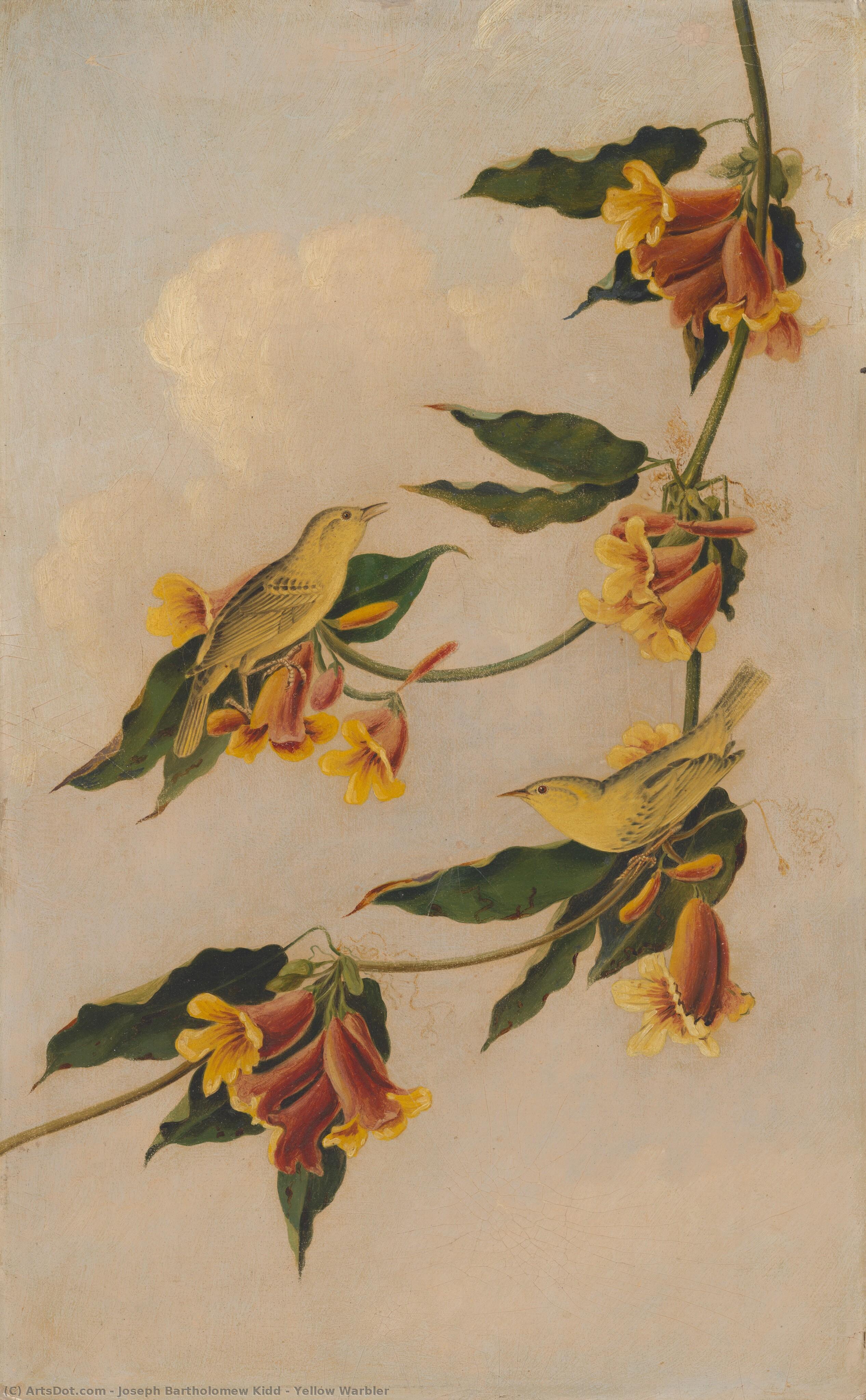
Yellow Warbler
Размер репродукции

Born in the historic heart of Edinburgh around 1808, Joseph Bartholomew Kidd emerged as a vital voice within the vibrant Scottish artistic landscape of the Victorian era. His early years were defined by a profound connection to the rugged, sublime beauty of his native Highlands, a passion nurtured under the expert tutelage of the renowned painter John Thomson of Duddingston. This formative mentorship instilled in Kidd a deep reverence for the natural world and provided him with the technical foundation necessary to master the delicate nuances of watercolor. As a young artist, he possessed an uncanny ability to translate the atmospheric shifts of the Scottish landscape onto paper, capturing not just the physical geography of his homeland, but its very soul.
Kidd’s meteoric rise within the academic circles of Scotland remains one of the most impressive chapters of his career. His dedication to the craft and his burgeoning reputation led to his election as one of the original associates of the Royal Scottish Academy in 1826. This prestigious recognition placed him at the epicenter of Edinburgh's intellectual and creative community, a position he solidified when he achieved full academician status in 1829. During this period, his work served as a bridge between traditional landscape painting and the burgeoning Romantic movement, where the wild, untamed elements of nature were celebrated with both scientific precision and emotional depth.
The trajectory of Kidd’s life took a dramatic turn around 1836 when he relocated to London. This migration marked a significant stylistic evolution, as he moved away from the sweeping vistas of the Highlands toward the more intimate and meticulous realms of portraiture and instructional drawing. Settling in Greenwich, where he served as a teacher of drawing at the Naval College, Kidd’s focus shifted toward the minute details of life. It was during this era that his artistic legacy became inextricably linked with one of the most monumental scientific endeavors of the nineteenth century: the reproduction of the avian illustrations of John James Audubon.
Tasked with recreating Audubon's breathtaking watercolor studies, Kidd demonstrated a level of technical virtuosity that transcended mere copying. He did not simply replicate the forms of North American birds; he breathed life into them. In works such as his depictions of the Ivory-billed Woodpeckers, Kidd utilized his mastery of watercolor to render the texture of plumage, the ruggedness of bark, and the subtle play of light with extraordinary accuracy. He often went beyond the original compositions by integrating rich, evocative landscape backgrounds, effectively transforming scientific illustrations into narrative scenes that told stories of a vanishing wilderness. This period of his work represents a beautiful intersection of art and ornithology, where the precision of a naturalist meets the soul of a Romantic painter.
Though Kidd eventually resigned his membership in the Royal Scottish Academy to pursue his life in England, his influence continued to resonate through his commitment to meticulous observation. His later years were characterized by a quiet dedication to teaching and the refinement of his illustrative skills, leaving behind a body of work that serves as both a historical record and an aesthetic triumph. Whether capturing the dramatic etchings of Highland scenery or the delicate features of a Yellow Warbler, Kidd’s oeuvre remains a testament to the power of the observant eye.
The significance of Joseph Bartholomew Kidd lies in his ability to navigate different artistic worlds—from the academic prestige of Edinburgh to the scientific frontiers of American naturalism. His work continues to captivate modern audiences, offering a window into a period when art and science were deeply intertwined. Through his brushes, we are invited to witness:

1808 - 1889 , United Kingdom


Будьте в курсе последних новостей из мира искусства, эксклюзивных предложений и идей для оформления интерьера.
Расскажите нам о вашем проекте, и наши эксперты по искусству предложат вам 3 персонализированных варианта произведений искусства.
Мы подберем для вас 3 варианта — бесплатно!


 Предпросмотр
 Поделиться
 Поделиться
 Детали произведения

 Скачать
 Похожие работы
 Рентгенография
 Слайд-шоу
 Читать далее




































 Вариант со стеклом доступен только для размеров менее 110 см



