x

Картина маслом на холсте в выбранном вами размере и раме, написанная на заказ нашими художниками. ( Купить принт Купить изображение)
Выберите один из наших стандартных размеров, соответствующих оригинальным пропорциям произведения искусства.

Вы можете указать собственные размеры, чтобы картина идеально вписалась в выбранную раму или пространство. Если выбранный вами размер не соответствует пропорциям оригинала, мы либо обрежем полотно, либо расширим его за счет дополнительных элементов, написанных вручную. Цифровой макет будет отправлен вам на утверждение перед началом производства.
Обратите внимание, что предварительный просмотр на экране не отражает фактическую обрезку или расширение. Только макет точно покажет окончательную композицию.
Хотя доступны индивидуальные размеры, мы рекомендуем выбирать вариант из предопределенного списка, чтобы сохранить исходные пропорции.
Доставка по всему миру () за 3–4 недели вместо стандартных 5 недель. (19 Август). Без компромиссов в качестве.


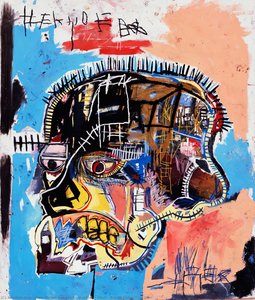
Untitled (881)
Размер репродукции

In the vibrant, turbulent landscape of postwar European art, few figures command as much expressive power as Pierre Alechinsky. Born in 1927 in Schaerbeek, Belgium, to a Russian Jewish father and a Belgian Walloon mother, Alechinsky emerged from a heritage of cultural complexity that would later inform his profound fascination with the intersection of East and West. His early artistic training at the École Nationale Supérieure d'Architecture et des Arts Décoratifs de la Cambre provided him with a rigorous technical foundation in illustration, printing, and photography—tools that would eventually serve as the scaffolding for his more spontaneous, gestural explorations. As he navigated the intellectual ferment of the mid-20th century, Alechinsky became a central protagonist in the CoBrA movement, a group of avant-garde rebels dedicated to spontaneity, myth, and the rejection of academic rigidity.
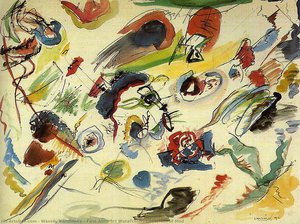
The essence of Alechinsky’s work lies in its rhythmic, almost musical quality, a trait deeply rooted in his mastery of Tachisme and lyrical abstraction. His artistic language is not merely painted but inscribed, drawing heavily from the fluid elegance of Oriental calligraphy. This fascination was not a superficial adoption of style but a deep, spiritual engagement with the way ink moves across a surface. During his time as a correspondent for the Japanese journal Bokubi (the Beauty of Ink), he immersed himself in the traditions of Japan, an experience that fundamentally reshaped his perception of line and space. To witness an Alechinsky canvas is to see a dance of characters and symbols that seem to float within a chaotic yet controlled universe, where the weight of a single stroke can anchor a composition of swirling, abstract forms.
Alechinsky’s career is marked by an extraordinary versatility that transcends the boundaries of traditional media. While he is celebrated for his monumental paintings, his expertise in printmaking—honed under the legendary Stanley William Hayter at Atelier 17—allowed him to explore the nuances of texture and layering with unparalleled precision. His work often functions as a visual dialogue between different eras and geographies; one might find the raw, visceral energy of Abstract Expressionism colliding with the playful, narrative elements of comic book aesthetics or pop art. This unique synthesis creates a sense of "unsettling beauty," where motifs such as skulls, boats, or even bold, transformative creatures emerge from a sea of gestural marks.
The evolution of his style can be viewed through several key developmental pillars:
Beyond the aesthetic allure of his canvases, Pierre Alechinsky holds a position of immense historical significance within the canon of modern art. He represents a bridge between the radical, often destructive impulses of postwar abstraction and a more constructive, communicative form of expressionism. By reclaiming the line as a vessel for both personal emotion and universal symbol, he helped move abstraction away from pure formlessness toward a new kind of lyrical literacy. His work remains a testament to the idea that art can be simultaneously chaotic and deeply structured, much like the human experience itself.
Today, Alechinsky’s influence continues to resonate through the global art community, reminding us that the most profound artistic breakthroughs often occur at the crossroads of different cultures. His legacy is not found merely in museums or galleries, but in the enduring power of the gesture—a reminder that every stroke of the brush is an act of profound, unrepeatable creation.

1927 -
Explore the profound emotional depth of Lyrical Abstraction. Discover how masters like Raymond Parker used color and form to bridge Impressionism and Abstract Expressionism. Learn about this pivotal movement through our expert-led art history guide.

Explore the profound history of Surrealist Expressionism. Discover how artists blended dream logic with raw emotion to navigate post-war trauma through masterful, evocative imagery and psychological depth.

Explore the profound emotional depth of Color Field painting. Discover the history of mid-century abstraction, from Rothko to Newman, and learn how pure color transforms the viewer's experience through our expert art history guide.

Explore the profound history and emotional depth of Abstract Expressionism. From Jackson Pollock to Mark Rothko, master the nuances of the New York School through our expert art history guide. Discover museum-quality hand-painted reproductions for your collection.

Explore the profound impact of Abstract Expressionism. Discover how post-war artists used gesture and emotion to redefine modern art through Action Painting and the New York School. A definitive guide for students and collectors seeking deep historical context.


Будьте в курсе последних новостей из мира искусства, эксклюзивных предложений и идей для оформления интерьера.
Расскажите нам о вашем проекте, и наши эксперты по искусству предложат вам 3 персонализированных варианта произведений искусства.
Мы подберем для вас 3 варианта — бесплатно!


 Предпросмотр
 Поделиться
 Поделиться
 Детали произведения

 Скачать
 Похожие работы
 Рентгенография
 Слайд-шоу
 Читать далее




































 Вариант со стеклом доступен только для размеров менее 110 см