


x


 Preview
 Заказать принт Купить цифровое изображение
 Поделиться
 Детали произведения
 Добавить в избранное
 Скачать
 Похожие работы
 Рентгенография
 Слайд-шоу
Картина маслом на холсте в выбранном вами размере и раме, написанная на заказ нашими художниками.





























Выберите один из наших стандартных размеров, соответствующих оригинальным пропорциям произведения искусства.

Вы можете указать собственные размеры, чтобы картина идеально вписалась в выбранную раму или пространство. Если выбранный вами размер не соответствует пропорциям оригинала, мы либо обрежем полотно, либо расширим его за счет дополнительных элементов, написанных вручную. Цифровой макет будет отправлен вам на утверждение перед началом производства.
Обратите внимание, что предварительный просмотр на экране не отражает фактическую обрезку или расширение. Только макет точно покажет окончательную композицию.
Хотя доступны индивидуальные размеры, мы рекомендуем выбирать вариант из предопределенного списка, чтобы сохранить исходные пропорции.
Доставка по всему миру () за 3–4 недели вместо стандартных 5 недель. (24 Июль). Без компромиссов в качестве.


Composition with two lines
Размер репродукции
Piet Mondrian's "Composition with Two Lines" is not merely an arrangement of black lines against a white field; it represents a pivotal moment in the evolution of abstract art, and a distillation of a lifelong pursuit of spiritual harmony. Created sometime before his death in 1944, though its precise date remains elusive, this work embodies the core principles of Neoplasticism – an artistic movement Mondrian himself championed. To understand this painting is to delve into a philosophy that sought to transcend the chaotic reality of the visible world and arrive at a universal language of form and color.
Mondrian’s journey toward abstraction was not sudden, but rather a gradual shedding of representational constraints. Born in Amersfoort, Netherlands, in 1872, he initially trained as a teacher while simultaneously honing his artistic skills. His early works were steeped in the traditions of Dutch landscape painting, echoing the muted tones and naturalistic depictions of the Hague School. However, even then, a fascination with underlying structure began to emerge. He experimented with various styles – Pointillism, Fauvism – each step pushing him further away from simply *depicting* nature towards *interpreting* its essential forms. The move to Paris in 1912 proved transformative, exposing him to the radical ideas of Cubism and sparking a period of intense experimentation. He began deconstructing objects into their geometric components, dismantling traditional perspective and challenging the very notion of pictorial space.
By the 1920s, Mondrian had fully embraced what he termed Neoplasticism – “New Plastic Art.” This wasn’t simply about removing recognizable imagery; it was a deliberate attempt to express a deeper spiritual reality through pure abstraction. He believed that by reducing art to its most fundamental elements—horizontal and vertical lines representing opposing forces, and the primary colors of red, blue, and yellow alongside black, white, and gray – he could achieve a universal aesthetic harmony. “Composition with Two Lines” exemplifies this philosophy in its purest form. The intersecting black lines aren’t arbitrary; they represent a dynamic equilibrium, a balance between opposing energies. The stark white background isn't emptiness but rather an essential void, allowing the lines to breathe and resonate. It is important to note that Mondrian wasn’t aiming for cold calculation, but rather a carefully considered arrangement meant to evoke a sense of order and serenity.
The enduring appeal of “Composition with Two Lines,” and indeed all of Mondrian's Neoplastic works, lies in their ability to transcend the purely visual. While seemingly austere, these paintings possess a quiet power that invites contemplation. They are not about *what* is depicted, but rather *how* it is perceived. The simplicity encourages viewers to engage with the work on an emotional and intellectual level, prompting questions about balance, harmony, and the nature of reality itself. This painting continues to inspire artists, designers, and architects today, its influence visible in everything from fashion to furniture. A reproduction of “Composition with Two Lines” isn’t just a decorative element; it's an invitation to bring a piece of art history – and a philosophy of pure abstraction – into your space.

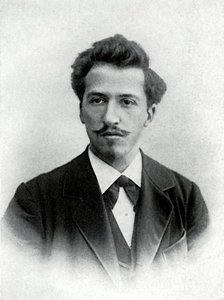
1872 - 1944 , Нидерланды
Погрузитесь в мир геометрической абстракции! От Кандинского до Малевича – 10 шедевров, изменивших искусство. Узнайте историю создания и значение культовых картин. Репродукции музейного качества на Most-Famous-Paintings.com. Вдохновение для вашего интерьера!
Изучите силу монохромного дизайна! Экспертные советы по созданию элегантных интерьеров в черном, белом и сером цветах. Вдохновение, тренды и практические решения для вашего дома.

Explore the captivating history of geometric abstraction in art, from ancient roots to contemporary masters. Expert insights for collectors & enthusiasts. Discover key artists, movements & investment potential.

Откройте для себя 10 легендарных шедевров акрилом на холсте, изменивших мир искусства! Узнайте истории великих художников и их культовых работ. Репродукции картин премиум-качества для вашего интерьера – Most-Famous-Paintings.com

Откройте для себя 10 легендарных шедевров акрилом, изменивших мир искусства! Узнайте истории великих художников и их культовых работ. Вдохновение для вашего интерьера и эксклюзивные репродукции картин на Most-Famous-Paintings.com.


Будьте в курсе последних новостей из мира искусства, эксклюзивных предложений и идей для оформления интерьера.
Расскажите нам о вашем проекте, и наши эксперты по искусству предложат вам 3 персонализированных варианта произведений искусства.
Мы подберем для вас 3 варианта — бесплатно!


 Поделиться


 Читать далее







 Вариант со стеклом доступен только для размеров менее 110 см


