x

Печать (жикле) или холст музейного качества с быстрыми сроками изготовления и широким выбором вариантов отделки. ( Купить картину ручной работы Купить изображение)





























Выберите один из наших стандартных размеров, соответствующих оригинальным пропорциям произведения искусства.

Вы можете указать свои собственные размеры, чтобы репродукция идеально подошла под конкретную раму или пространство. Если выбранный вами размер не будет соответствовать пропорциям оригинала, мы либо обрежем произведение, либо дополним изображение зеркальным отражением краев или однотонной заливкой. Перед началом производства вам будет отправлен цифровой макет для утверждения.
Пожалуйста, обратите внимание, что предварительный просмотр на экране не отображает фактическую обрезку или расширение изображения. Только макет точно покажет финальную композицию.
Несмотря на возможность заказа индивидуальных размеров, мы рекомендуем выбирать размер из предопределенного списка, чтобы сохранить оригинальные пропорции.
Доставка по всему миру () за 2 недели вместо стандартных 4/5 недель. (18 Август)


Francesco d'Este
Размер репродукции
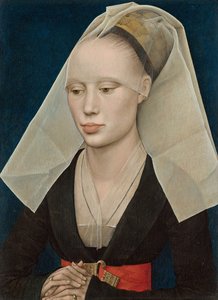
Rogier van der Weyden’s “Francesco d’Este,” completed around 1460, stands as a testament to the artistic fervor of Early Netherlandish painting—a period characterized by profound spiritual contemplation and meticulous realism. This portrait transcends mere likeness; it embodies the ideals of Renaissance nobility intertwined with devout piety, capturing a moment frozen in time with remarkable sensitivity.
The subject is Francesco d’Este, son of Leonello d'Este, Duke of Modena. Commissioned during his formative years, the painting depicts him as a young man embarking on military training—a common practice for aristocratic princes at the time—yet radiating an aura of composure and intellectual curiosity. Van der Weyden skillfully arranges the figure within a richly decorated interior space; Francesco occupies the central position, gazing directly at the viewer with an intense gaze that conveys both confidence and introspection.
Van der Weyden’s signature style—renowned for its unparalleled attention to detail and expressive portrayal of human emotion—is vividly evident in “Francesco d’Este.” Like many of his contemporaries, he adhered to the principles of naturalism championed by Filippo Brunelleschi and Donatello, striving to represent reality with unwavering accuracy. However, unlike purely observational depictions, Van der Weyden infused his canvases with psychological depth, conveying not just what was seen but also what was felt.
The painting’s remarkable luminosity stems from Van der Weyden's masterful use of oil paint—a relatively new medium at the time—allowing for subtle gradations of color and a velvety texture that imbues the scene with palpable warmth. Observe how he renders the folds of Francesco’s shirt with painstaking precision, capturing the interplay of light and shadow to create an illusion of three-dimensionality. The textured wall behind him serves as a counterpoint to the figure's stillness, adding visual interest and reinforcing the painting’s overall sense of grandeur.
Beyond its formal beauty, “Francesco d’Este” carries symbolic significance reflecting the cultural milieu of its time. The inclusion of a ring—a symbol of marital status and social standing—underscores Francesco's noble lineage and aspirations. Furthermore, the serene setting evokes biblical imagery, hinting at the spiritual values upheld by the Este family and highlighting Van der Weyden’s commitment to conveying moral virtue through art.
“Francesco d’Este” remains a cornerstone of Early Netherlandish painting—a masterpiece that continues to inspire admiration for its technical brilliance and emotional resonance. Its enduring appeal lies in Van der Weyden's ability to capture not just the outward appearance of his subject but also the inner spirit, cementing his place as one of the most influential artists of the fifteenth century.

1400 - 1464 , Бельгия

Погрузитесь в мир Раннего Нидерландского Возрождения! Узнайте истории создания шедевров Яна ван Эйка, Кампена и других великих мастеров. Купите высококачественные репродукции картин для вашего интерьера на Most-Famous-Paintings.com.
Погрузитесь в мир Винсента Ван Гога! 25 шедевров постимпрессионизма – от 'Звездной ночи' до 'Подсолнухов'. Узнайте историю создания, технику и значение каждой картины. Репродукции музейного качества на Most-Famous-Paintings.com. Откройте для себя всю коллекцию онлайн!

Explore the revolutionary art of Rogier van der Weyden, a pivotal figure of the Early Netherlandish Renaissance. Discover his emotional realism, innovative compositions, and lasting impact on painting history.

Погрузитесь в мир Раннего нидерландского живописи! Откройте 10 шедевров Яна ван Эйка, Рогира ван дер Вейдена и других мастеров. История искусства, техника исполнения и вдохновение для вашего интерьера на Most-Famous-Paintings.com.

Explore the revolutionary art of Hugo van der Goes – a master of Early Netherlandish painting renowned for his dramatic realism, psychological depth & profound influence on Renaissance artists. Discover his iconic works and lasting legacy.


Будьте в курсе последних новостей из мира искусства, эксклюзивных предложений и идей для оформления интерьера.
Расскажите нам о вашем проекте, и наши эксперты по искусству предложат вам 3 персонализированных варианта произведений искусства.
Мы подберем для вас 3 варианта — бесплатно!


 Предпросмотр
 Поделиться
 Поделиться
 Детали произведения

 Скачать
 Похожие работы
 Рентгенография
 Слайд-шоу


 Читать далее







 Вариант со стеклом доступен только для размеров менее 110 см