
Продавайте свое искусство
Список желаний Корзина Cart
x
ПредпросмотрПредпросмотр Предпросмотр в ARПредпросмотр в AR Купить картину ручной работы Купить картину ручной работыКупить изображение Купить изображение ПоделитьсяПоделиться
Детали произведенияДетали произведения Добавить в избранное Добавить в избранное СкачатьСкачать Похожие работыПохожие работы РентгенографияРентгенография Слайд-шоуСлайд-шоу

Discovery of murder Holophernes

Sandro Botticelli’s dramatic ‘Discovery of the Murder of Holophernes’ captures a tense Florentine scene with figures reacting to a gruesome crime, showcasing the artist's graceful style from the Early Renaissance – explore this captivating masterpiece and bring it home.

Сандро Боттичелли (1445-1510) – великий художник Ренессанса, создатель «Рождения Венеры» и «Весны». Его элегантный стиль, мифологические сюжеты и влияние на искусство продолжают восхищать!

Жикле / Арт-принт

Печать (жикле) или холст музейного качества с быстрыми сроками изготовления и широким выбором вариантов отделки. (Купить картину ручной работы Купить картину ручной работыКупить изображение Купить изображение)

P118B $10
P118H $10
P118W $10
P438Z $10
P508JH $12
P508YH $12
P805H $10
P805Z $10
P919BZ $10
P919G $10
P919XJ $10
P959ZH $10
P968JZ $12
W106C $8
W218G $10
W218JH $8
W218Y $10
W307PJ $10
W316G $10
W316PJ $8
W316Y $10
W398PJ $8
W4111J $10
W500HY $15
W500JH $15
W692G $12
W849H $8
W940BG $15
W953PJ $8

Standard
custom
CM
INCH

Выберите один из наших стандартных размеров, соответствующих оригинальным пропорциям произведения искусства.

ширина
высота

Вы можете указать свои собственные размеры, чтобы репродукция идеально подошла под конкретную раму или пространство. Если выбранный вами размер не будет соответствовать пропорциям оригинала, мы либо обрежем произведение, либо дополним изображение зеркальным отражением краев или однотонной заливкой. Перед началом производства вам будет отправлен цифровой макет для утверждения.
Пожалуйста, обратите внимание, что предварительный просмотр на экране не отображает фактическую обрезку или расширение изображения. Только макет точно покажет финальную композицию.
Несмотря на возможность заказа индивидуальных размеров, мы рекомендуем выбирать размер из предопределенного списка, чтобы сохранить оригинальные пропорции.

Доставка по всему миру () за 2 недели вместо стандартных 4/5 недель. (22 Август)

why_choose_icon
Бесплатная экспресс-доставка по всему миру
why_choose_icon
Высококачественный льняной холст
why_choose_icon
Полное страхование доставки
why_choose_icon
Гарантия возмещения таможенных пошлин
why_choose_icon
Гарантия точного соответствия цветов
why_choose_icon
Политика возврата в течение 60 дней (только при наличии дефектов)
why_choose_icon
Гарантия возврата 100% средств
why_choose_icon
Предложение оптовых скидок

Общая стоимость

$ 68

reproduction

Discovery of murder Holophernes

Жикле / Арт-принт

Размер репродукции

-

Итоговая стоимость

$ 68

Основные сведения

  • Artist: Sandro Botticelli
  • Title: Discovery of murder Holophernes
  • Movement: Early Renaissance
  • Influences:
    • Classical antiquity
    • Florentine art
  • Dimensions: 287 x 324 mm (11.3 x 12.8 in)
  • Notable elements: Dramatic scene, figures
  • Year: c. 1496-1500

Описание предмета коллекционирования

Sandro Botticelli's Dramatic Revelation: The Discovery of Murder of Holophernes

Sandro Botticelli’s “Discovery of Murder of Holophernes,” painted circa 1496-1497, is a profoundly unsettling and exquisitely rendered scene that transcends the simple depiction of a crime. This work, housed within the rich tapestry of the Early Renaissance, offers a glimpse into the anxieties and moral complexities of its time, revealing Botticelli’s mastery of composition, color, and psychological drama. The painting's immediate impact lies in its stark realism – a brutal confrontation with death that was remarkably uncommon in Florentine art of this period. It is not a glorification of heroism or a celebration of martial prowess; instead, it presents a scene of horrified discovery, capturing the raw emotion of those witnessing the aftermath of violence.

  • Subject Matter: The painting’s subject – the gruesome discovery of Holophernes, the Assyrian governor, murdered by his wife – was drawn from Ovid's *Metamorphoses*, a cornerstone of Renaissance learning. This engagement with classical literature wasn't merely decorative; it provided Botticelli with a framework for exploring themes of betrayal, revenge, and the precariousness of human life.
  • Composition: Botticelli’s masterful use of composition draws the viewer directly into the scene. The figures are arranged in a dynamic diagonal line, leading the eye from the dead body to the horrified onlookers. The curtained backdrop adds depth and theatricality, enhancing the sense of an unfolding drama.

Technique and Materials: A Window into Botticelli’s Studio

Botticelli employed his signature tempera-on-panel technique, a method favored by Florentine artists for its ability to produce vibrant colors and fine detail. The use of tempera, derived from egg yolk, allowed for meticulous layering and blending, creating the luminous quality characteristic of Botticelli’s work. Note the subtle gradations in color – particularly in the drapery and skin tones – demonstrating his keen observation of human form and his ability to render texture with remarkable accuracy. The artist's attention to detail extends to the horse, rendered with a surprising degree of realism for its time, further grounding the scene in a tangible reality.

  • Color Palette: Botticelli’s palette is dominated by cool blues and greens, punctuated by warmer tones in the flesh and clothing. This restrained color scheme contributes to the painting's somber mood, emphasizing the tragedy of the event.
  • Brushwork: The brushstrokes are generally smooth and controlled, reflecting Botticelli’s meticulous approach to his craft. However, there are moments of expressive impasto – particularly in the folds of the drapery – that add a sense of dynamism and movement to the scene.

Symbolism and Interpretation: Layers of Meaning

Beyond its immediate narrative, “Discovery of Murder of Holophernes” is laden with symbolic meaning. The presence of the horse suggests both the barbarity of the act and the potential for retribution. The curtained backdrop evokes a theatrical stage, blurring the lines between reality and illusion, suggesting that this event might be part of a larger, more complex drama. The figures’ gestures – their expressions of shock, horror, and disbelief – convey a profound sense of vulnerability in the face of violence. It's important to note that Botticelli was deeply influenced by humanist thought, which emphasized human emotion and experience; this is reflected in the painting's intense psychological realism.

  • Classical Allusions: The scene’s connection to Ovid’s *Metamorphoses* invites viewers to contemplate themes of transformation, fate, and the consequences of human actions.
  • Moral Ambiguity: While the painting depicts a clear crime, it does not offer easy moral judgments. The viewer is left to grapple with the complexities of human nature and the unsettling realization that violence can erupt unexpectedly.

Emotional Impact and Artistic Legacy

"Discovery of Murder of Holophernes" remains a powerfully evocative work, demonstrating Botticelli’s ability to capture not just physical likeness but also intense emotion. Its unflinching portrayal of death and its exploration of human vulnerability continue to resonate with viewers today. This reproduction offers an exceptional opportunity to experience the full force of Botticelli's artistic genius – a masterpiece that exemplifies the height of Renaissance art and continues to captivate audiences across centuries.

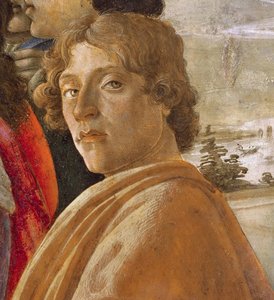
Биография художника

Early Life and Florentine Beginnings

Sandro Botticelli, born Alessandro di Mariano di Vanni Filipepi around 1445 in Florence, Italy, emerged during a period of extraordinary cultural ferment—the Early Renaissance. His life was deeply rooted in the city’s artistic and social fabric; he never strayed far from his neighborhood of Ognissanti, a testament to both familial ties and the vibrant creative ecosystem that nurtured him. His father, Mariano Filipepi, initially a goldsmith and later a tanner, provided an early exposure to craftsmanship and meticulous detail—qualities that would profoundly influence Botticelli’s artistic approach. Though initial reports suggested training as a goldsmith, he soon found his calling under the tutelage of Fra Filippo Lippi, a leading painter of the time. This apprenticeship proved pivotal, immersing him in the techniques and aesthetics of the Florentine school while also connecting him to influential patrons like the Medici family. Botticelli’s early years were shaped by the bustling atmosphere of Florence, a city brimming with artistic innovation and political intrigue—a backdrop that would profoundly impact his creative vision.

A Style Defined by Grace and Myth

Botticelli’s artistic style is instantly recognizable for its lyrical beauty, characterized by elegant linearity, flowing contours, and a delicate use of color. He masterfully bridged the gap between the late Gothic traditions and the burgeoning Renaissance aesthetic, absorbing influences from masters like Fra Angelico and Paolo Uccello yet forging a uniquely personal vision. His figures possess an ethereal quality, often depicted with elongated proportions and graceful poses that convey both serenity and a subtle melancholy. A defining feature of his work is the frequent incorporation of classical mythology—a reflection of the humanist interests sweeping through Renaissance Florence. He didn’t merely illustrate these ancient tales; he imbued them with new layers of meaning, exploring themes of love, beauty, and spiritual longing. Botticelli's approach to composition was revolutionary for its time, moving away from the rigid conventions of medieval art towards a more dynamic and expressive style. His use of color was equally innovative, favoring delicate pastel hues that created an atmosphere of dreamlike beauty.

Iconic Masterpieces and Artistic Development

Botticelli’s legacy rests upon a handful of iconic paintings that continue to captivate audiences centuries later. The Birth of Venus, completed around 1486, stands as perhaps his most celebrated work—an allegorical depiction of the goddess emerging from a seashell, embodying Renaissance ideals of beauty and harmony. Its graceful composition, delicate color palette, and evocative symbolism have made it an enduring symbol of the era. Equally renowned is Primavera, created around 1482, a complex and enigmatic painting celebrating spring and love, populated with symbolic figures drawn from classical mythology. These works showcase Botticelli’s mastery of composition, his ability to create atmospheric depth, and his profound understanding of human emotion. His artistic journey unfolded in distinct phases. The early 1470s saw him focusing on religious subjects, honing his technical skills and establishing a reputation for skillful execution. The 1480s marked the peak of his creative powers, with the creation of his most famous mythological paintings. However, the late 1490s witnessed a shift in his style, influenced by the fervent preaching of Girolamo Savonarola—a Dominican friar who condemned what he saw as the decadence and moral corruption of Florence. This period resulted in more austere and emotionally charged works, reflecting a growing spiritual intensity.

Major Works

  • The Birth of Venus (c. 1486): An iconic depiction embodying Renaissance ideals of beauty.
  • Primavera (c. 1482): A complex allegorical painting celebrating spring and love.
  • Adoration of the Magi (1475-1476): Demonstrates early mastery of composition and perspective.
  • Mystic Nativity (1501): Reflects a shift towards spiritual themes in his later career.

Legacy and Rediscovery

Following his death in 1510, Botticelli’s reputation gradually faded into obscurity. For nearly three centuries, his work was largely forgotten, overshadowed by the achievements of High Renaissance masters like Leonardo da Vinci and Michelangelo. However, a remarkable rediscovery occurred in the late 19th century with the rise of the Pre-Raphaelite Brotherhood—a group of English artists who rejected academic conventions and sought inspiration in the art of the early Italian Renaissance. They were captivated by Botticelli’s linear grace, vibrant colors, and poetic sensibility, recognizing him as a kindred spirit. This renewed appreciation sparked a widespread reassessment of his work, establishing him as one of the most important artists of the Early Renaissance. Today, Botticelli is celebrated for his unique artistic vision, his masterful technique, and his enduring ability to evoke beauty, emotion, and spiritual contemplation. His influence can be seen in subsequent generations of artists who have sought to capture the same sense of grace and elegance in their own work. He remains a symbol of Florentine artistic achievement and a testament to the power of Renaissance humanism.
Боттичелли

Боттичелли

1445 - 1510 , Италия

Основные сведения

  • Artistic Movement Or Style: Раннего Возрождения
  • Artists Or Movements Influenced By This Artist: ['Прерафаэлиты']
  • Artists Who Influenced This Artist:
    • Фра Филиппо Липпи
    • Паоло Учелло
  • Date Of Birth: 1445
  • Date Of Death: 1510
  • Full Name: Alessandro di Mariano Filipepi
  • Nationality: Итальянский
  • Notable Artworks:
    • Рождение Венеры
    • Весна
    • Поклонение волхвов
  • Place Of Birth: Флоренция, Италия
Откройте для себя произведения искусства, подобранные по темам, стилям и характеристикам.




































