x

Картина маслом на холсте в выбранном вами размере и раме, написанная на заказ нашими художниками. ( Купить принт Купить изображение)





























Выберите один из наших стандартных размеров, соответствующих оригинальным пропорциям произведения искусства.

Вы можете указать собственные размеры, чтобы картина идеально вписалась в выбранную раму или пространство. Если выбранный вами размер не соответствует пропорциям оригинала, мы либо обрежем полотно, либо расширим его за счет дополнительных элементов, написанных вручную. Цифровой макет будет отправлен вам на утверждение перед началом производства.
Обратите внимание, что предварительный просмотр на экране не отражает фактическую обрезку или расширение. Только макет точно покажет окончательную композицию.
Хотя доступны индивидуальные размеры, мы рекомендуем выбирать вариант из предопределенного списка, чтобы сохранить исходные пропорции.
Доставка по всему миру () за 3–4 недели вместо стандартных 5 недель. (14 Август). Без компромиссов в качестве.


St.thomas aquinas
Размер репродукции
Sandro Botticelli's “St. Thomas Aquinas” is more than just a portrait; it’s a carefully constructed meditation on faith, reason, and the human intellect. Painted around 1480-85 during the height of the Florentine Renaissance, this captivating work offers a rare glimpse into the mind of one of history's most influential theologians. The painting immediately draws the viewer in with its intimate composition – a close-up study of a bearded man, rendered with Botticelli’s signature grace and attention to detail. He is presented not as a distant figure of religious authority, but as an approachable scholar, engaged in contemplation within a space that subtly speaks to his intellectual pursuits.
Botticelli's mastery lies in his ability to imbue seemingly simple subjects with profound symbolic weight. The subject himself, St. Thomas Aquinas (1225-1274), was a Dominican friar and philosopher whose synthesis of Aristotelian philosophy and Christian theology profoundly shaped Western thought. Here, Botticelli doesn’t depict Aquinas in grand ecclesiastical robes; instead, he presents him as a man of learning, holding a quill pen – a symbol of writing and the dissemination of knowledge – alongside an open book. The inclusion of this small container, likely containing ink, further emphasizes his role as a scholar dedicated to preserving and expanding upon established wisdom.
Examining the painting’s technique reveals Botticelli's deep understanding of Renaissance artistic conventions. The composition follows a classic pyramidal structure, providing stability and visual harmony. The lighting, originating from an unseen source above and slightly to the side, creates dramatic chiaroscuro – strong contrasts between light and shadow – that sculpts the subject’s face and robes with remarkable realism. Note the deliberate roughness of the brushwork, particularly in the depiction of skin and fabric; this impasto technique adds texture and depth, grounding the image in a tangible reality.
Botticelli's use of color is equally significant. The palette is dominated by rich browns, golds, reds, and blacks – colors associated with piety, wisdom, and the authority of the Church. The golden halo encircling Aquinas’ head serves as a potent symbol of his holiness and divine connection, while the dark background effectively isolates the figure, directing the viewer's attention to his contemplative expression.
To fully appreciate “St. Thomas Aquinas,” it’s essential to consider Botticelli’s place within the broader context of the Florentine Renaissance. He began his career as a goldsmith's assistant, developing a meticulous eye for detail and an appreciation for craftsmanship – qualities that would later inform his painting style. His early training under Fra Filippo Lippi, a leading painter of the time, provided him with invaluable experience in mastering the techniques of oil painting on canvas.
Botticelli’s artistic style evolved significantly throughout his career. Initially influenced by the Gothic tradition, he gradually embraced the principles of linear perspective and classical ideals that characterized the High Renaissance. “St. Thomas Aquinas” represents a transitional phase in his work, blending elements of both styles while retaining his distinctive sense of elegance and grace. The painting’s subject matter – religious figures and mythological scenes – reflects Botticelli's patronage by powerful families like the Medici, who commissioned works that celebrated their wealth and status.
“St. Thomas Aquinas” is a testament to Botticelli’s artistic skill and his ability to capture the essence of human intellect and faith. The painting evokes a sense of solemnity, piety, and wisdom – qualities that continue to resonate with viewers today. It's not merely a portrait; it’s an invitation to contemplate the enduring legacy of St. Thomas Aquinas and the power of knowledge to illuminate the human spirit. Reproductions of this iconic work offer a beautiful way to bring this profound image into your home or office, serving as a constant reminder of the pursuit of wisdom and understanding.

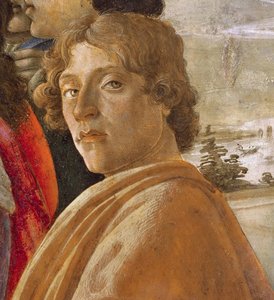
1445 - 1510 , Италия

Explore the profound history and technical brilliance of oil on panel painting. From Renaissance masters to modern techniques, discover why this rigid support offers unparalleled precision and permanence for fine art lovers and collectors.


Будьте в курсе последних новостей из мира искусства, эксклюзивных предложений и идей для оформления интерьера.
Расскажите нам о вашем проекте, и наши эксперты по искусству предложат вам 3 персонализированных варианта произведений искусства.
Мы подберем для вас 3 варианта — бесплатно!


 Предпросмотр
 Поделиться
 Поделиться
 Детали произведения

 Скачать
 Похожие работы
 Рентгенография
 Слайд-шоу

 Читать далее







 Вариант со стеклом доступен только для размеров менее 110 см