x

Giclée tlač alebo plátno múzeálnej kvality s rýchlou výrobou a flexibilnými možnosťami povrchovej úpravy. ( Kúpiť ručne maľovaný obraz Kúpiť obrázok)





























Vyberte si z našich preddefinovaných rozmerov, ktoré zodpovedajú pôvodným pomeroḿ diela.

Môžete zadať vlastné rozmery, aby sa reprodukcia prispôsobila konkrétnemu rámu alebo priestoru. Ak zvolená veľkosť nebude zodpovedať proporciám originálu, dielo buď orežeme, alebo obraz rozšírime pomocou zrkadlenia či farebného doplnenia okrajov. Pred začatím výroby vám pošleme digitálnu ukážku na schválenie.
Máte na vedomí, že náhľad na obrazovke neodzrkadľuje skutočné orezanie alebo rozšírenie. Len digitálna ukážka presne zobrazí finálnu kompozíciu.
Hoci sú k dispozícii vlastné rozmery, pre zachovanie pôvodných proporcií odporúčame vybrať si rozmer z vopred definovaného zoznamu.
Celosvetová doprava () do 2 týždňov namiesto štandardných 4/5 týždňov. (16 august)


the city
Veľkosť reprodukcie
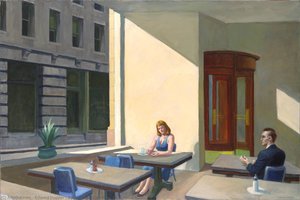
The City, painted by Edward Hopper in 1927, is a striking black and white depiction of early 20th-century American urban life. This artwork isn't merely a representation of buildings and streets; it’s an evocative exploration of solitude within the bustling metropolis.
The painting presents a typical city street, dominated by imposing structures that stretch upwards. Numerous windows suggest countless lives unfolding behind closed doors, yet remain largely anonymous and unknowable. Hopper populates the scene with a few pedestrians – figures absorbed in their own worlds, walking with heads down or lost in thought. A casually leaning bicycle and a stoic fire hydrant punctuate the streetscape, while a clock subtly emphasizes the relentless passage of time.
The City exemplifies Hopper’s signature style – American Realism imbued with profound emotional depth. His masterful use of stark black and white creates a dramatic, almost cinematic effect. The absence of color intensifies the sense of isolation and quiet contemplation. Hopper's precise rendering of architectural details—windows, clocks, fire hydrants—demonstrates meticulous observation. He wasn’t simply recording what he saw; he was distilling it to its essence, revealing psychological truths about modern urban existence.
Created during a period of rapid urbanization and social change in the United States, The City reflects a growing sense of alienation within burgeoning metropolises. Hopper was influenced by writers like Ralph Waldo Emerson, whose transcendentalist ideals explored individualism and introspection. He also drew inspiration from French Impressionists such as Manet and Degas, particularly their ability to capture fleeting moments of modern life with honesty.
The painting’s power lies in its subtle symbolism. The towering buildings represent the overwhelming scale of urban life, while the solitary figures embody a sense of anonymity and disconnection. The clock serves as a constant reminder of time's relentless march, adding to the feeling of transience and perhaps even anxiety. The City evokes nostalgia for a bygone era but also acknowledges the inherent loneliness that can accompany modern existence. It’s a work that invites quiet contemplation on the human condition.
This striking artwork would be a captivating addition to various interior settings:
To best showcase The City, consider displaying it in a well-lit space with ample wall area. A simple, neutral frame will enhance its impact without distracting from Hopper’s masterful composition. Its monochromatic palette makes it exceptionally versatile for pairing with various color schemes.
To gain a deeper understanding of Hopper’s artistic vision, explore other works that share similar themes of urban life and isolation, such as Office in a Small City, City Roofs, August in the City, and Approaching the City. These pieces offer further insight into his unique perspective on American modernity.


1931 - 1967 , USA

Explore the profound artistry of black and white photography. From the chemistry of gelatin silver to the chiaroscuro of the Old Masters, discover how monochrome captures the eternal essence of light, form, and emotion for the discerning art collector.


Zostaňte v obraze s najnovšími správami zo sveta umenia, exkluzívnymi ponukami a nápormi na dekoráciu.
Povedzte nám o svojom projekte a naši odborníci na umenie vám pripravia 3 personalizované návrhy umeleckých diel.
Nechajte si od nás vybrať 3 možnosti priamo pre vás – zadarmo!


 Náhľad
 Odoslať
 Zdieľať
 Podrobnosti o dielo

 Stiahnuť
 Podobné diela
 RTG skúška
 Prezentácia

 Zobraziť viac







 Možnosť skla je dostupná len pri rozmeroch pod 110 cm